Average response time: under 24 hours
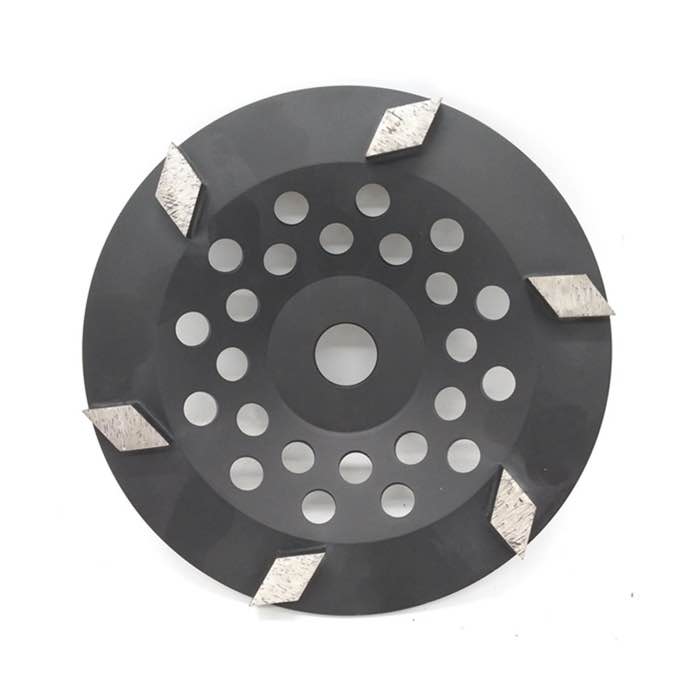
To grind concrete steps and edges smooth, use a hand grinder with a diamond cup wheel or grinding disc, work in overlapping passes, and keep the tool flat against the surface. Start with a coarse grit to remove the rough spots, then move to a finer disc for the smooth finish. For edges and corners, use the edge of the wheel carefully and finish by hand with a rubbing block where the grinder cannot reach. Always wear a dust mask and eye protection; concrete dust is a health hazard. For the right tooling on this job, see double rhombus grinding discs.
A 125mm or 230mm angle grinder with a diamond cup wheel removes material fast on steps and edges. A cup wheel grinds flat surfaces well and its edge handles corners. For a finer finish, switch to a diamond grinding disc with a higher grit, or a resin pad on a polisher. A trapezoid grinding disc on a floor machine is for large flat areas; for steps, a handheld cup wheel is the right tool. Related tooling is available in our single rhombus grinding discs range.
Clean the step and mark any high spots with chalk. Hold the grinder flat, start the wheel away from the surface, and bring it into contact at full speed. Work in overlapping passes across the step, keeping the pressure light and even. Check the surface often by eye and by hand: it is easier to remove a little more than to repair a dip you ground too deep. Keep the wheel moving so you do not burn one spot, and clear the dust so you can see the surface.
Edges need care because a spinning wheel can chip the corner or grab. Angle the grinder so the wheel kisses the edge, and move along it in one direction. Round sharp corners slightly with the wheel edge, then finish by hand with a rubbing block or abrasive paper on a block for the last smoothness. Nosing edges that must stay straight should be ground lightly; heavy grinding ruins the profile. When the edge meets a corner, work from both directions and blend the passes.
After the coarse grinding, step down to a finer disc to remove the coarse scratches, then check the result in raking light. Wet the surface to see the true color and any remaining marks. Vacuum the dust, and apply a sealer or densifier if the steps are exposed concrete. If the steps are old and spalling, remove the loose material before grinding, and patch deep holes with repair mortar rather than grinding them out.
A: A 125mm or 230mm angle grinder with a diamond cup wheel, plus a finer disc for the finish. For tight spots, a rubbing block by hand.
A> Work the edge gently with the wheel angled outward, move in one direction, and finish with a hand block instead of forcing the grinder into the corner.
A: Yes. After grinding, use resin polishing pads from coarse to fine grit on a polisher to bring up a matte or glossy finish on the steps.
Grinding steps and edges smooth is a hand-grinder job: flat overlapping passes with a cup wheel, careful one-direction edge work, and a finer disc plus hand block for the finish. Take it slow, check the surface in raking light, and the steps come out smooth, even and professional.
Written and reviewed by JOY TECH — an SGS & BV audited, CE/RoHS certified diamond tools manufacturer founded in 2004, exporting to 50+ countries.
Our factory and QMS are audited by SGS and Bureau Veritas. Products meet CE/RoHS requirements and every piece is 100% inspected before packing.
Verified Certificates
