Average response time: under 24 hours
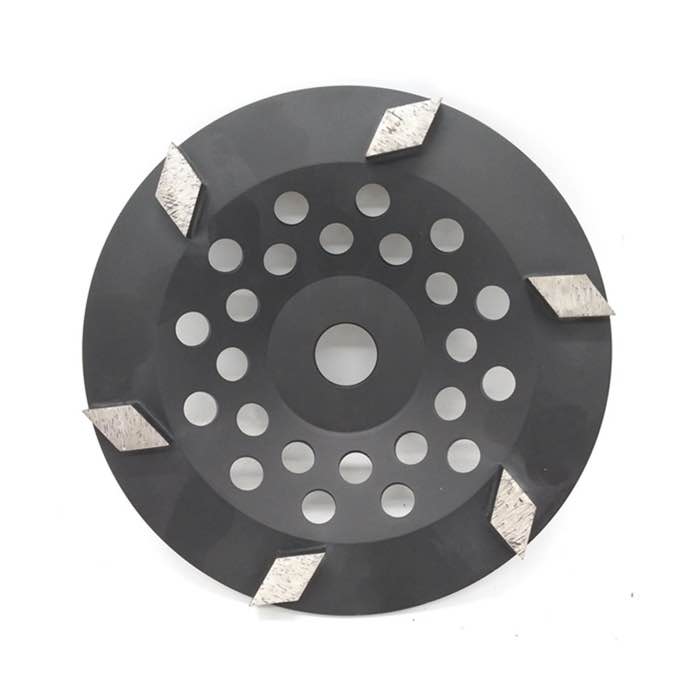
You can grind concrete without a floor grinder using a hand-held angle grinder with a diamond cup wheel or a diamond grinding disc, a rubbing block or abrasive stone for small patches, shot blasting for large areas, or a self-leveling compound to skip grinding altogether. For anything over a few square meters, a rental walk-behind grinder is still the fastest option, but these alternatives handle small floors, edges, and one-off repairs well. For the right tooling on this job, see diamond cup wheel grinding discs, hand grinder tooling.
The most practical alternative is a 125mm or 230mm angle grinder fitted with a diamond cup wheel or grinding disc. It removes grinding marks, levels small high spots and smooths edges, though it is slower than a floor machine and harder to keep flat over large areas. Work in overlapping passes, keep the tool flat, and let the diamonds cut. For a small room, a bathroom or a patch, a hand grinder gives you most of the result at a fraction of the cost.
For tiny patches and tight spots, a rubbing block or abrasive stone removes burrs, form marks and minor roughness by hand. Use a coarse grit stone for material removal, then finer grits to smooth. It is slow, dusty and hard on the hands, but it works where power tools cannot reach and costs almost nothing. This is the right tool for smoothing a small high spot, a corner or a repaired patch before coating.
For large floors without a grinder, shot blasting removes coatings and levels the surface with steel shot, and a scarifier or planer cuts deeper with rotating cutters. Both are available as rentals and work faster than a hand grinder on big areas. They leave a rough profile rather than a smooth grind, which is perfect before coatings, but they are not polishing tools. Choose shot blasting for coating removal and profile, and a hand grinder for smoothing.
If the problem is a low floor or small unevenness rather than a high spot, self-leveling compound skips grinding entirely. Clean and prime the floor, pour the compound and let it find its own level. This is faster, cleaner and cheaper than grinding for most residential floors. Use grinding only where you must remove material, and leveling where you must add it.
A: Concrete is too hard for sandpaper; you need diamond tooling. A hand grinder with a diamond disc is the closest thing to sanding that works.
A: For a small patch, a rubbing block. For a room, a rented hand grinder with a diamond cup wheel. For a whole floor, rent a walk-behind machine; it is still cheaper than buying one.
A: Not effectively. A drill spins too fast and has no flat surface control. Use a grinder with diamond tooling designed for concrete.
You do not need a floor grinder to get smooth concrete. A hand grinder with diamond tooling covers small jobs, a rubbing block handles patches, shot blasting cleans big floors, and self-leveling compound skips grinding where material must be added. Match the method to the size of the job, and you will spend less while still getting the surface you need.
Written and reviewed by JOY TECH — an SGS & BV audited, CE/RoHS certified diamond tools manufacturer founded in 2004, exporting to 50+ countries.
Our factory and QMS are audited by SGS and Bureau Veritas. Products meet CE/RoHS requirements and every piece is 100% inspected before packing.
Verified Certificates
