Yes, you can smooth a rough, stubbly concrete pool deck without tearing it out. Diamond grinding removes the thin, weakened laitance and sharp surface layer that catches bare feet, leaving a flat, even, anti-slip surface. Start with coarse 30/46-grit metal-bond discs on a walk-behind grinder, work the whole deck, then progress through 80, 150 and optionally 300-grit resin pads. For a typical 40-60 m² residential deck this is a one- to two-day job and costs a fraction of replacement or resurfacing.
Aggressive exposed aggregate, weathering, and efflorescence make the deck surface feel like sandpaper under bare feet. Two problems usually coexist: sharp aggregate protruding from the matrix, and a crumbling laitance layer. Grinding is the right cure because it cuts both flat at once. The goal is not a mirror polish — you actually want to keep a subtle texture for wet-weather slip resistance.
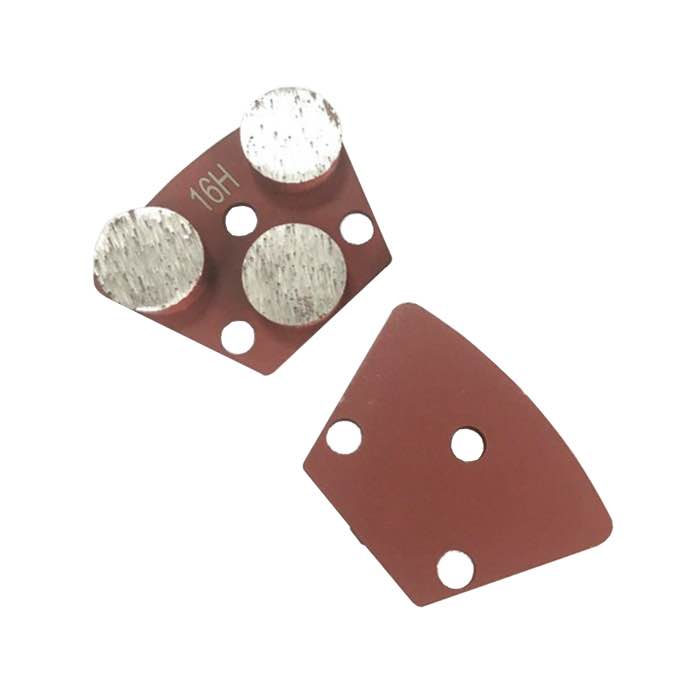
Use a 270-580 mm planetary or single-disc walk-behind grinder matched to your plate system. A common starter set on a Husqvarna-style machine is a coarse metal disc such as a Husqvarna single-bar segment disc at 30 grit for aggressive stock removal, followed by 60/80 grit to begin flattening. For edge and stair work, switch to an angle grinder fitted with a 5-inch L-segment cup wheel.
| Pass | Bond / Grit | Purpose |
|---|---|---|
| 1 | Metal 30/46 | Flatten, remove stubble, open surface |
| 2 | Metal 80 | Remove 30-grit scratches |
| 3 | Resin 150 | Smooth, prepare for sealer |
| 4 (optional) | Resin 300 | Finish for a softer, brushed feel |
Grind in overlapping 30-40% passes, keeping the machine moving. For outdoor decks, dry grinding with an industrial HEPA dust extractor is normal; wet grinding is an option if drainage is arranged. Pay attention to the expansion joints — do not bridge over them with the plate, and avoid holding the grinder in one spot, which creates a low spot. Work the perimeter edges by hand so the walk-behind does not leave a visible ring.
Bare polished outdoor concrete wears and stains. Once the surface is fully cleaned and dry, apply a penetrating silane/siloxane sealer or a matte acrylic sealer. This is the step that locks in the smoothed finish and protects against pool chemicals. Do not seal within 48 hours of rain or heavy dew.
Before you touch the grinder, walk the deck and map the problems. Tap hollow-sounding slabs with a hammer and mark them — delaminated areas will flake out during grinding and must be cut out and re-patched. Sweep or pressure-wash the deck and let it dry for at least two days; grinding a wet deck clogs the disc and spreads slurry. Fill cracks wider than 3 mm with a flexible concrete caulk, and fill popouts with a fast-setting cement patch, letting it cure 24 hours before grinding. Skip this prep and the grinder will chase holes for two days instead of smoothing the deck.
For decks under 60 m², a single-disc 250-300 mm grinder is enough but slow. For larger decks, a 580-700 mm planetary grinder covers twice the area per hour and leaves a flatter result because the counter-rotating heads cancel swirl. Whichever machine you rent, confirm the plate system matches your discs (Husqvarna Redi-Lock, Lavina, WerkMaster, etc.) before leaving the yard. Plan two passes of coarse metal grinding: the first knocks off the rough layer, the second evens out low spots the first pass missed.
Grinding can subtly change the deck slope. Watch that water still runs toward drains and away from the pool edge, not toward the house. After grinding, hose a small section and observe the puddle path. If water now ponds near a doorway, feather that area down until it drains. This is also the moment to round sharp control-joint edges slightly so they do not catch bare feet.
A: No — if you stop around 150-300 grit and use a non-slip additive in the sealer, the deck stays grippy. Stop at 50 grit if you want a more aggressive texture; go beyond 300 grit only indoors.
A: Usually 0.5-1.5 mm is enough to take off the rough layer. Do not grind deeper than 2 mm on a thin residential slab, or you risk weakening the top.
A: For a small deck, yes with a cup wheel, but you will leave swirl marks. Renting a walk-behind grinder gives a flat, even result and is far faster.
A: Wait until the deck is fully cleaned and the sealer has cured (usually 24-48 h). Wash away slurry before it runs into the pool.
Rough pool decks are rarely beyond saving. A controlled diamond-grinding sequence with the right metal and resin bonds restores a comfortable, barefoot-friendly surface and buys you years before any resurfacing is due. Contact JOY TECH for a quote on trapezoid discs, cup wheels and resin pads matched to your grinder and concrete hardness.
