Average response time: under 24 hours
Yes, you can polish a basement floor with moisture issues — but test first, and only polish if moisture is below about 85% RH; use a lithium densifier plus resin pads, and avoid topical sealers. Polishing itself is safe on a damp (not actively wet) slab and actually improves the surface for waterproofing later.
Tape a 18-inch plastic sheet to the floor for 24-48 hours. Condensation underneath means the slab is still releasing vapor — wait or ventilate. For real numbers, use a moisture meter or RH probe; below 85% RH is polishable, above that treat moisture first.
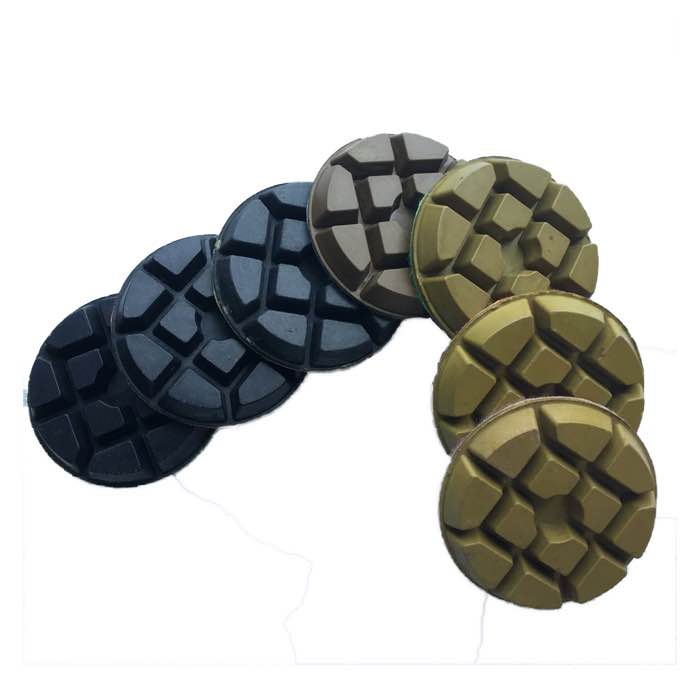
Use resin polishing pads sized to your grinder for a smooth, even result.
A: No — stop the water intrusion first. Polishing on a wet surface smears and won't bond.
A: Densifier reduces absorption but isn't a waterproofing membrane. For real waterproofing use a penetrating sealer after polishing.
A: Give it a week of dry, ventilated conditions and re-test — the plastic sheet test tells you when it's ready.
A: Satin (800-1500) — gloss shows moisture stains and is more slippery on damp concrete.
A damp basement is polishable once moisture is under control: test, densify, grind and polish with resin pads, then seal with a breathable product. This gives a hard, low-dust floor that holds up. Shop 3-inch resin polishing pads and burnishing pads for the full basement workflow.
