Quick Answer
Yes, you can polish a garage floor yourself with a variable-speed grinder or a small floor machine and 3–5'' diamond pads: grind with metal bond, refine, densify, then resin-polish to the gloss you want. Realistic DIY results range from satin to semi-gloss — a true mirror is harder without a planetary grinder.
What You Need
- Variable-speed angle grinder or a 110V floor polisher with a diamond head.
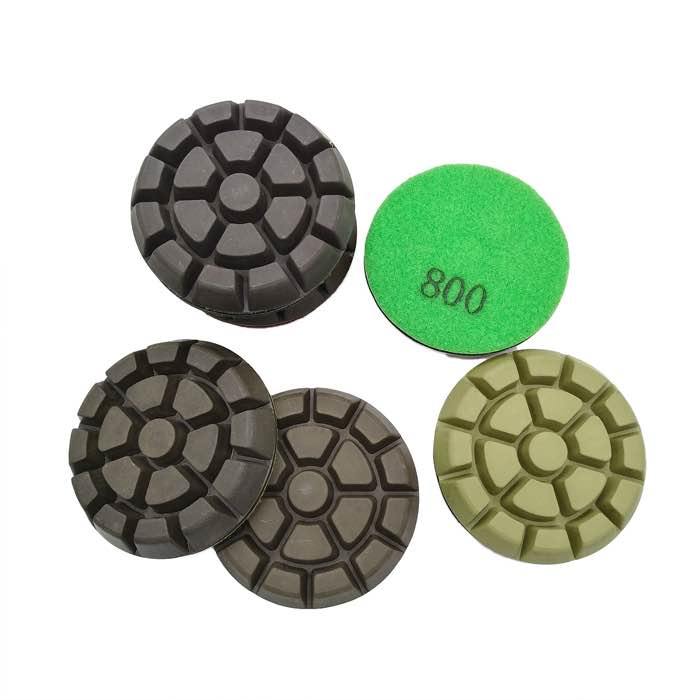
- Backing plates and pads — 3'' or 5'' metal bond, transitional and resin sets.
- Vacuum / dust shroud — concrete dust is hazardous; capture it at the source.
- Densifier and sealer — for durability and the final look.
The DIY Sequence
- Repair first — fill cracks and chips with concrete patch.
- Grind 50–100# metal bond — remove sealer, stains and laitance.
- Refine 100–200# — smooth the texture.
- Apply densifier — let dry per instructions.
- Resin polish 400 → 800 → 1500# — stop at 800# for satin, 1500#+ for gloss.
- Seal — a penetrating sealer or polish guard protects the finish.
Metal bond discs and 3'' resin pads are the core DIY kit.
Realistic Expectations
- A grinder-based DIY job reaches satin to semi-gloss reliably.
- Planetary grinders are needed for uniform mirror gloss on large areas.
- Time: a double garage (40 m²) takes 1–2 weekends including curing.
Frequently Asked Questions
Q: Can I polish a garage floor with a rental floor machine?
Yes — many rental yards have 110V single-disc machines that accept diamond tooling. Bring your own pads for control.
Q: Do I need to seal a polished garage floor?
Sealing is strongly recommended — it resists oil, tire marks and makes cleaning much easier.
Q: How glossy can a DIY garage floor get?
With a good grinder and complete sequence, semi-gloss is realistic. For mirror gloss, hire a pro with a planetary grinder.
Conclusion
A glossy garage floor is achievable DIY with the right grinder, pad sequence and dust control. Repair, grind, densify, polish and seal — and manage expectations on gloss level. JOY TECH's 3'' pad kits are sized for homeowner machines.