Average response time: under 24 hours
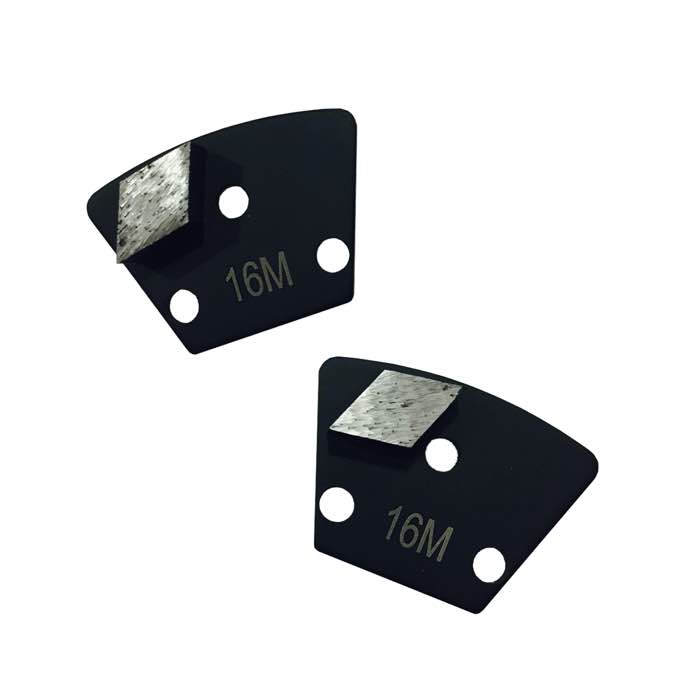
Quick Answer: Polish around columns with a hand grinder fitted with the same grit tooling as the floor machine, working the perimeter in small overlapping arcs, then blend the edge zone with the open floor using a transition pad before the final polish. Matching the grit at every step is what hides the seam.
Columns and pillars create a narrow band the floor machine cannot reach, so the edge zone must be treated as part of the sequence, not an afterthought. Before the main grinding starts, map the perimeter that needs hand work and decide which tooling fits the gap. A 6-segment cup wheel clears tight corners and glued material, while flat diamond discs on a hand grinder follow the same grit progression as the floor.
Run the perimeter at the same grit as the floor machine at each stage: coarse metal bond first, then medium, then resin pads. If the machine has already passed a grit, the edge zone needs that grit next so the scratch patterns match. Work the hand grinder in overlapping arcs around the column, keeping the pad flat and avoiding a visible ring where the disc edge digs in. On very tight spots, use smaller hand pads or a triangle sander.
After the perimeter reaches the same grit as the floor, run the machine slightly over the hand-worked zone with a transition pad to feather the two areas together. Cross the boundary in both directions. round-segment grinding disc so no single line shows. A resin polishing pad set finishes the blend, and a final burnishing pad evens the gloss across the whole surface.
Apply densifier to the perimeter at the same time as the floor so the chemical cures evenly, then do the final resin and burnishing passes everywhere. Check the column edges under raking light; any dull or scratched band means that zone missed a grit step. If the floor is to be stained or dyed, treat the edge zone with the same product and timing or the color will differ around the columns.
Not cleanly, because the head cannot reach the base. Use a hand grinder for the first 30 to 50 cm around the column, then blend with the machine's edge zone work.
The exact grit the floor machine is using at that stage. Skipping grits on the perimeter is the main cause of visible rings and dull bands around columns.
Treat the column perimeter as part of the grit sequence, work it with a hand grinder at matching grits, and blend the edge zone with the open floor before the final polish. Even grit, even densifier, and an overlap pass hide the seam completely.
Written and reviewed by JOY TECH — an SGS & BV audited, CE/RoHS certified diamond tools manufacturer founded in 2004, exporting to 50+ countries.
Our factory and QMS are audited by SGS and Bureau Veritas. Products meet CE/RoHS requirements and every piece is 100% inspected before packing.
Verified Certificates
