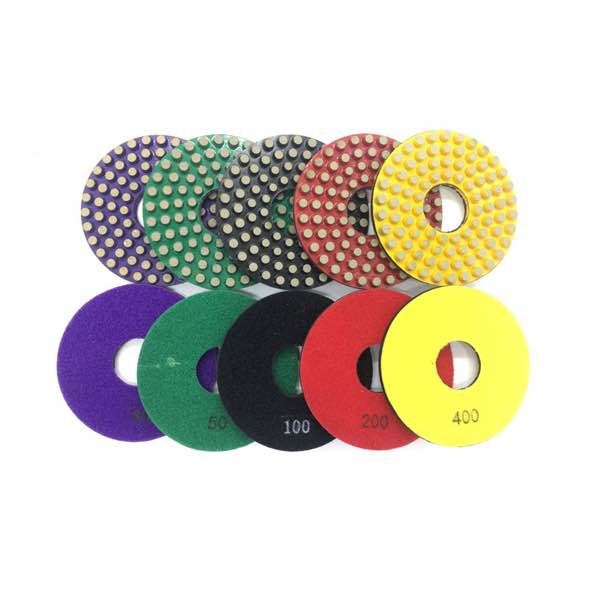
Yes, a high-speed floor burnisher (1500-3000 RPM) can dramatically increase the gloss of an already polished concrete floor, but it cannot do the grinding or the low-grit work. The burnisher is the final finishing tool: once the floor has been ground flat, densified and polished through resin pads to at least 800-1500 grit, running a burnisher with the correct pad compresses and heats the surface to lift it to a satin, gloss or mirror shine. A low-speed buffer alone cannot create polished concrete from scratch.
A floor burnisher spins a large pad at high RPM, generating friction heat that gently melts and burnishes the dense, cured top layer of concrete. This compresses microscopic texture and increases reflectivity. It is the difference between a floor that looks "polished" at 800 grit and one that looks wet and deep at 3000 grit. The tool does not cut away material; it refines and compresses an already smooth substrate.
Pad choice drives the result. Soft, high-fiber pads (often natural fiber or diamond-impregnated burnishing pads) generate heat and gloss without scratching. Black or aggressive pads are for scrubbing, not for final shine. For a real diamond-assisted finish, diamond burnishing pads with resin pucks give a far more durable gloss than plain fiber pads. We recommend Burnishing Pads for Concrete Floor Polishing for routine gloss maintenance, and Burnishing Pads with Resin Pucks for the final high-gloss pass on new installs.
| Pad type | Use | Result |
|---|---|---|
| Black scrub pad | Cleaning only | No gloss, removes dirt |
| Natural fiber pad | Routine burnish | Satin to low gloss |
| Diamond burnishing pad | Final gloss pass | High / mirror gloss |
| Wool pad | Buffing, light refresh | Soft sheen lift |
Start with a clean, dry floor. Set the burnisher to the recommended RPM and use steady, overlapping passes, letting the pad heat the surface rather than forcing it down. Do not dwell in one spot - overheating can leave dark marks. Lightly misting a burnish spray or water can help on very dry floors, but too much liquid kills the friction heat you need. On large floors, burnish in parallel lanes and feather the edges.
For facilities, the burnisher becomes the maintenance tool: a weekly or monthly pass restores the shine that traffic dulls. Brand-new floors, however, must first go through full grinding, densification and resin polishing - the burnisher only finishes what those steps built. Skipping the resin grit sequence and trying to "burnish raw concrete" wastes pads and produces uneven results.
A burnisher is not a rescue tool for an unfinished floor. Walk the floor first: if it already reflects reasonably at 800-1500 grit, burnishing will elevate it to a glossy sheen. If it looks flat and dull because trowel marks remain, the burnisher will simply compress those marks in and make them harder to remove later. Time spent confirming the substrate is correct before the burnish pays off.
Also consider the machine itself. A low-weight 20-inch buffer will move slowly and leave streaks on large floors; a proper high-speed burnisher with sufficient down-pressure generates the friction heat needed. Pad choice matters just as much - a worn, hardened pad will not build heat, so replace burnishing pads regularly. On large open floors, burnish in consistent lanes and overlap by about a third to avoid visible lane lines under fluorescent lighting.
For facilities, schedule burnishing at night or on weekends so traffic does not walk on a just-burnished floor. Sweep first, because burnishing over grit scratches the very finish you are trying to lift. Keep spare pads on hand so a worn pad does not cut a maintenance visit short. Done regularly, burnishing is inexpensive and keeps the floor looking new for years.
A: High-speed burnishers commonly run 1500-2500 RPM. Match the machine speed to the pad manufacturer's guidance.
A: A low-speed buffer (175 RPM) can work with diamond resin pads for small areas, but it will not produce the heat that creates a true high gloss.
Heavy-traffic retail may need weekly burnishing; light offices can go monthly. Burnish more as the shine dulls.
The burnisher is the gloss amplifier, not the foundation. Build the floor properly with grinding, densifier and resin pads, then finish and maintain with the right burnishing pad. The takeaway is that a burnisher amplifies an already good floor but cannot rescue a bad one. Build the substrate correctly first, choose the right burnishing pad, and the gloss lift is dramatic and repeatable. Treat it as the final step, not a magic fix. Contact JOY TECH for a quote on diamond burnishing pads and resin pucks for your high-speed machine.
