Average response time: under 24 hours
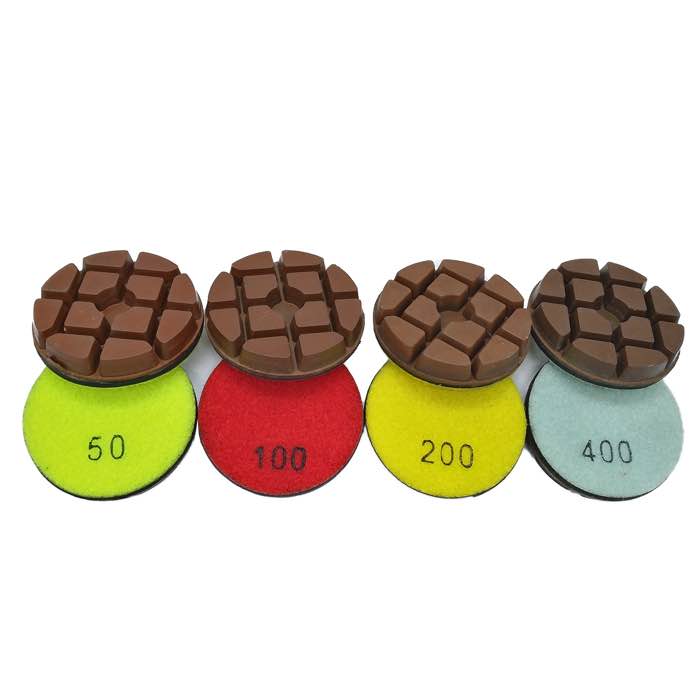
Polishing exposed aggregate is not the same as polishing a sealed concrete slab. The aggregate must first be flattened with metal-bond diamond grinding (30–60 grit), then bridged with a copper-bond hybrid pad (100–300 grit), and only then finished with resin pads at 500–3000 grit. Skipping the transitional step is the main reason aggregate pops out and the floor never glosses evenly.
Exposed aggregate mixes have large stone chips sitting just under the paste surface. Those chips are harder (quartz, granite, river rock) than the surrounding cement matrix, so a normal resin pad loads on the soft paste and leaves the high stones untouched. The result is a dull, textured floor with loose aggregate. You need a sequence that grinds the stones down to the same plane as the paste, then refines the scratches left by that grinding.
Polished exposed aggregate is porous between the stones. Two coats of penetrating sealer (acrylic or lithium silicate) are recommended, followed by a dry buff. Re-burnish once or twice a year; do not wet-mop with alkaline cleaners, which dull the gloss over time.
A: Yes, but strip the sealer first. Resin pads glaze instantly on cured sealer.
A: A 2-person crew on a 5-head grinder typically takes 3–5 working days from 30 grit to final burnish.
A: Small repair patches, yes. A whole floor will show swirl marks and uneven gloss. Use a planetary grinder.
A: Knock out loose stones before starting, fill the voids with epoxy mortar, and let them cure 48 hours. Grinding over a pop-out opens a bigger hole.
Exposed aggregate polishing rewards patience: flatten the stones at metal grit, bridge with hybrid pads, and only then let resin do the gloss. If you need a full pad set sized to your aggregate hardness, contact JOY TECH — we supply contractors with matched metal, hybrid, and resin sequences.
Written and reviewed by JOY TECH — an SGS & BV audited, CE/RoHS certified diamond tools manufacturer founded in 2004, exporting to 50+ countries.
Our factory and QMS are audited by SGS and Bureau Veritas. Products meet CE/RoHS requirements and every piece is 100% inspected before packing.
Verified Certificates
