Average response time: under 24 hours
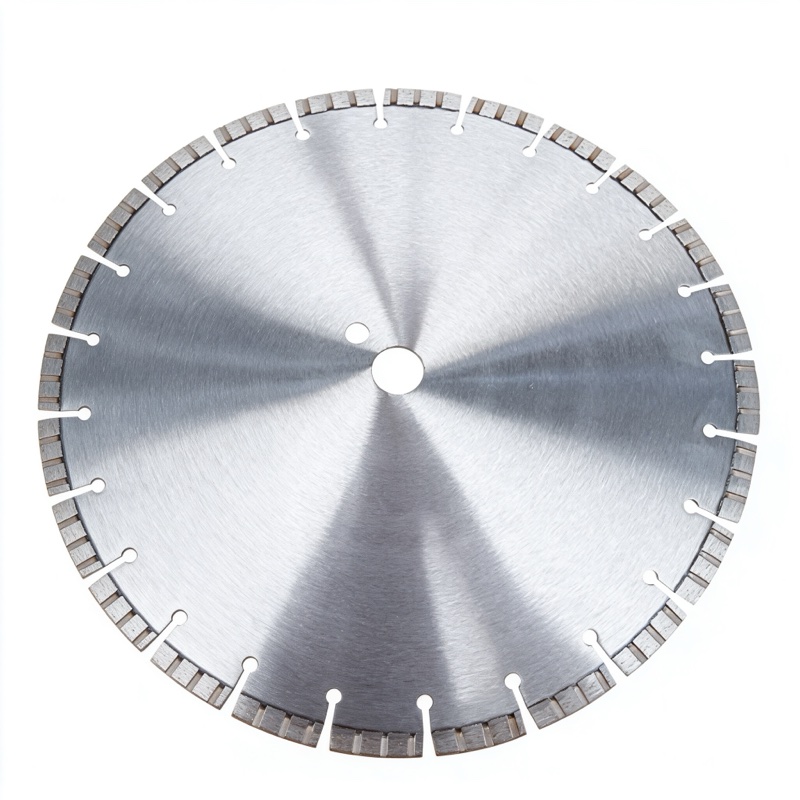
A diamond blade label tells you the size that fits your saw, the speed it is safe to run at, and the material it was designed for. Read the diameter, arbor size and maximum RPM first; then check the wet or dry symbol and the material marking so you pair the blade with the right job.
| Label marking | What it means | Why it matters |
|---|---|---|
| 350 mm / 14" | Blade diameter | Must match the saw's blade guard and cutting depth requirements. |
| 25.4 mm / 1" | Arbor (bore) size | The hole that fits the spindle — wrong arbor means vibration or a loose fit. |
| Max RPM 6,600 | Maximum safe speed | Never exceed it; surface speed determines cut quality and safety. |
| Segment height | How much diamond remains before the blade is worn out | Tells you when to replace and lets you compare value between brands. |
| Wet / Dry | Whether the blade needs water cooling | Running a wet-only blade dry overheats segments and can cause failure. |
Most labels show a small water-drop symbol (wet only) or a fan symbol (dry capable), plus a material pictogram. A concrete and masonry blade typically carries a different segment design than a tile or marble blade: hard, brittle materials need a soft bond and narrow segments, while abrasive concrete needs a hard bond. If a label lists several materials, the blade is a general-purpose compromise — fine for mixed jobs, but a dedicated blade will cut faster and last longer on a single material.
Colors are not a universal standard, but many manufacturers use them as shorthand: green or blue segments often indicate a general-purpose concrete blade, red or brown may signal a softer bond for stone, and laser-welded cores are frequently marked with a welded symbol or a distinct core finish. Always treat color as a hint and confirm the actual specification from the datasheet or the supplier.
Check the arbor and diameter against your saw's spindle and guard before buying. Then compare the blade's maximum RPM with your saw's operating speed — at full throttle the blade should stay well under its limit. Finally match the material marking to the job: cutting reinforced concrete, rebar-heavy slabs, tile, granite or asphalt each favors a different segment formula. When in doubt, ask the supplier for the bond recommendation instead of guessing.
The label cannot show steel grade, diamond grit concentration, segment bond hardness or weld quality — and those hidden factors decide how long the blade actually lasts. A premium blade is often made from 1.4034 spring steel with laser-welded segments; cheaper blades may use thinner steel and sintered segments. For critical jobs, request the technical datasheet and compare real performance data, not just the printed numbers.
It is the highest speed at which the blade is tested to run safely. A smaller blade can spin faster, so always check the RPM limit against your saw's speed — running a blade above its rating risks segment loss and injury.
Yes — water cooling is fine for dry-capable blades and extends their life. The opposite is not true: a wet-only blade should never be run dry.
Not automatically, but very cheap blades usually skimp on steel and diamond concentration. Compare segment height, steel core quality and the manufacturer's test data rather than price alone.
When the segments are worn down close to the steel core (typically around 2 mm of segment height left), when cutting slows noticeably, or when the blade starts vibrating. Replace before segments crack or shed.
Reading a blade label correctly takes thirty seconds and prevents most misapplication problems: wrong size, wrong speed, or wrong material match. If the markings are unclear, ask the manufacturer for the full spec sheet. You can compare factory-direct specifications on our diamond saw blades and diamond core drill bits pages, where diameter, arbor and RPM data are listed openly.
Написано и проверено JOY TECH — производителем алмазного инструмента, прошедшим аудит SGS и BV, сертифицированным CE/RoHS, основанным в 2004 году и экспортирующим в более чем 50 стран.
Наша фабрика и СМК проходят аудит SGS и Bureau Veritas. Продукция соответствует CE/RoHS, каждая единица проверяется на 100 % перед упаковкой.
Проверенные сертификаты
