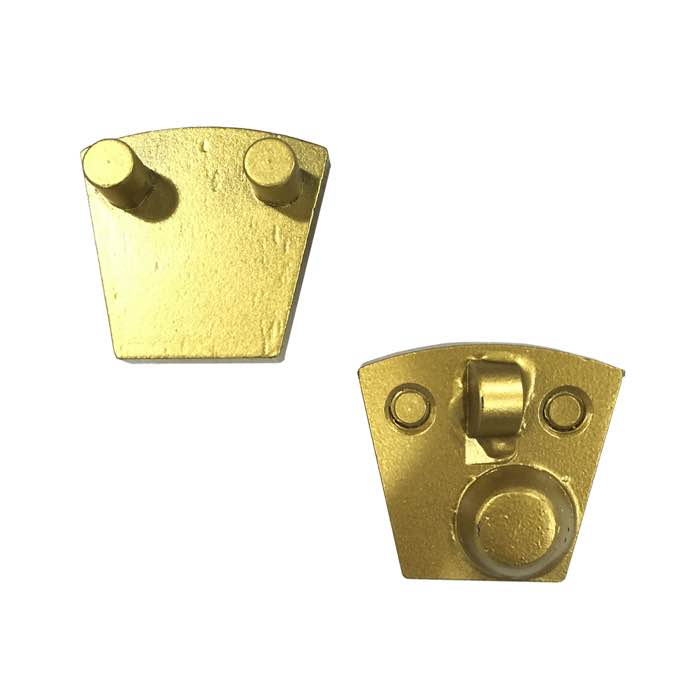
The best tool for stripping road tar, bitumen, and heavy black mastic from a concrete floor is a PCD (polycrystalline diamond) scraping tool—typically a half-moon or 1/4-circle PCD block mounted on a trapezoid or puck holder. PCD cuts through soft, gummy bitumen at room temperature, whereas regular metal diamond loads up, glazes, and smears the tar around. Use a single or double PCD segment at moderate pressure, in overlapping passes, and follow with a 30/40 metal bond pass to clean the residue. On very thick bituminous build-up, score the surface first with a scarifier to let the PCD bite. Tools like WerkMaster PCD Coating Removal Tool (JOY-WM-PCD1R1) and WerkMaster PCD Epoxy Removal Tool (JOY-WM-PCD1S1) are purpose-built for this work.
Bitumen, tar, and asphalt-based mastic are thermoplastic: they soften with heat and gum up normal diamond bonds. A regular metal bond shoe will:
PCD, with its sharp synthetic diamond flake, fractures and shears the soft film on contact instead of melting through it.
| Step | Tool | Notes |
|---|---|---|
| 1. Test thickness | Scraper knife | Under 2 mm = PCD direct; thicker = score first |
| 2. Strip bulk | PCD half-moon block | Light pressure, overlapping passes |
| 3. Clean residue | 30/40 metal bond shoe | Remove tar film and flatten patches |
| 4. Prepare for coating | 60/80 metal bond | Open the slab for new product |
A PCD coating-removal block comes in 1/2, 1/4, or star shapes. Half-moon PCD is aggressive and fast on thick tar; quarter-circle PCD is gentler and leaves a cleaner base on thinner films. For floors that mix bitumen with old epoxy glue, WerkMaster PCD Epoxy Removal Tool (JOY-WM-PCD1S1) handles the adhesive residue that follows the tar.
Even with PCD, friction heat softens bitumen and can make it smear. Run the machine at a steady pace, avoid dwelling in one spot, and use a vacuum to pull away hot chips. If the tar starts to string or windrow, slow down and let the tool cool for a minute. Some contractors mist the floor lightly, though this creates slurry and is optional.
Stripped bitumen chips are not ordinary construction dust. Bag them while hot and let them cool away from the crew, because they can hold residual solvents. Ventilate enclosed spaces with fans and open doors; heated bitumen fumes are unpleasant and can trigger headaches. Do not use gas-powered heaters in a closed garage during stripping—combustion fumes plus bitumen vapors are a real hazard. If the old coating contains coal-tar epoxy (common on parking decks), check local rules: some jurisdictions classify it as hazardous and require licensed disposal.
If the tar has been painted over or layered with old epoxy, expect to swap PCD shapes mid-job: half-moon for the soft bitumen, then a flatter PCD for the brittle epoxy shell underneath. Do not force one tool through both materials; switching takes two minutes and saves a dulled block.
A: For small areas yes, but it is slow and drives tar deeper into pores. A PCD grinder is far faster and leaves a cleaner slab.
A: PCD can scuff soft concrete. Keep pressure light and follow with a 30/40 metal bond pass to blend the surface.
A: Above 5 mm, score or mill the bulk first. PCD then strips the remaining film without bogging down.
A: Heated bitumen releases fumes. Ventilate the area, wear a respirator, and use a dust extractor. Avoid open flames—bitumen is combustible.
Strip road tar and bitumen with PCD tooling, not conventional diamond: the sharp PCD flake shears the gummy coating instead of loading up. Keep passes light, follow with a 30/40 metal bond cleanup, and ventilate the work area because heated bitumen produces fumes.
