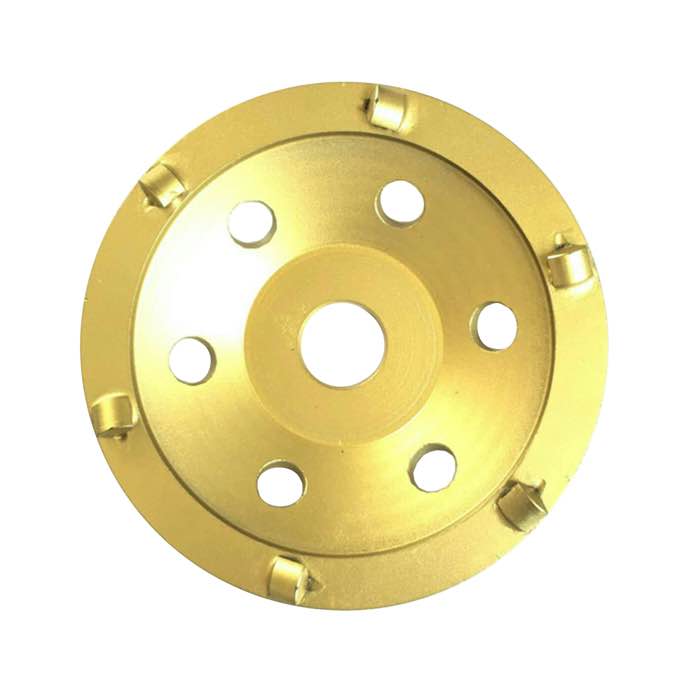
Use PCD (polycrystalline diamond) tooling on a floor grinder to shear epoxy, urethane, acrylic and most coatings off concrete — it is the fastest and most economical method. Then switch to diamond grinding segments to clean up the residual glue and prepare the surface. Chemical strippers and scarifiers work, but for most jobs a grinder with the right PCD tool is quicker, cleaner and leaves a better substrate for the new coating.
| Coating | Typical Thickness | Best Removal Tool |
|---|---|---|
| Epoxy (thin film) | 0.1–0.5 mm | PCD tooling |
| Epoxy mortar / self-leveling | 2–10 mm | PCD tooling + diamond segments |
| Urethane / polyaspartic | 0.2–0.8 mm | PCD tooling |
| Acrylic sealer | 0.05–0.3 mm | PCD tooling or diamond grinding |
| Paint / mastic / glue | 0.1–3 mm | PCD tooling first, then diamond |
Diamond grinding segments are designed to grind concrete, not scrape coatings. When you use them on epoxy they load up, glaze and stall production. PCD tooling has industrial diamond tips arranged to shear the coating off the surface with a scraping action. It removes coatings quickly and leaves the concrete mostly intact, ready for the next step.
PCD tools come in different shapes for different machines. For example, our WerkMaster PCD tooling for coating removing and WerkMaster PCD tooling for epoxy floor removing fit WerkMaster planetary grinders, and we offer PCD heads for most common machine brands — HTC, Husqvarna, Lavina, EDCO and more.
After the bulk coating is gone, a thin film of glue or residual epoxy usually remains in the pores of the concrete. Switch to diamond grinding segments — start with a coarse grit (30/40 or 50/60 metal bond) to remove the residue and expose clean concrete. This step is what gives you a proper profile for the new coating. Our double S segment grinding disc is a good coarse start, followed by a finer disc as you smooth the surface.
A: Technically yes, but it is slow and glazes the tools quickly. PCD tooling shears the coating off much faster. Use diamond segments for the finishing pass after the bulk epoxy is removed.
A: Dry with a dust shroud and HEPA vacuum is the most common setup. Wet keeps tools cooler and suppresses dust but creates slurry that must be contained. Follow the machine and tool manufacturer's recommendation.
A:On a planetary floor grinder, PCD tooling typically removes thin-film epoxy at 30–60 m²/hour depending on coating thickness and machine power. That is several times faster than diamond segments alone.
A: Start with coarse metal bond, about 30/40 or 50/60 grit, to remove glue residue. Then move through 80/100 metal and into resin bonds (120–400) if you are polishing rather than re-coating.
A: Yes. PCD plates must match your machine's drive system. Tell your supplier your grinder make and model (HTC, Husqvarna, Lavina, EDCO, WerkMaster, etc.) and they will supply the correct plate.
Removing epoxy and coatings from concrete is a two-step job: PCD tooling to shear the coating, then diamond segments to finish the surface. Match the tool to the coating, run the machine at the right speed, and finish with a proper grind so the new floor lasts. JOY TECH supplies PCD tooling and diamond grinding segments for all major machine brands — double zigzag grinding discs and PCD heads alike. Contact us with your grinder model and coating type for a recommendation.
