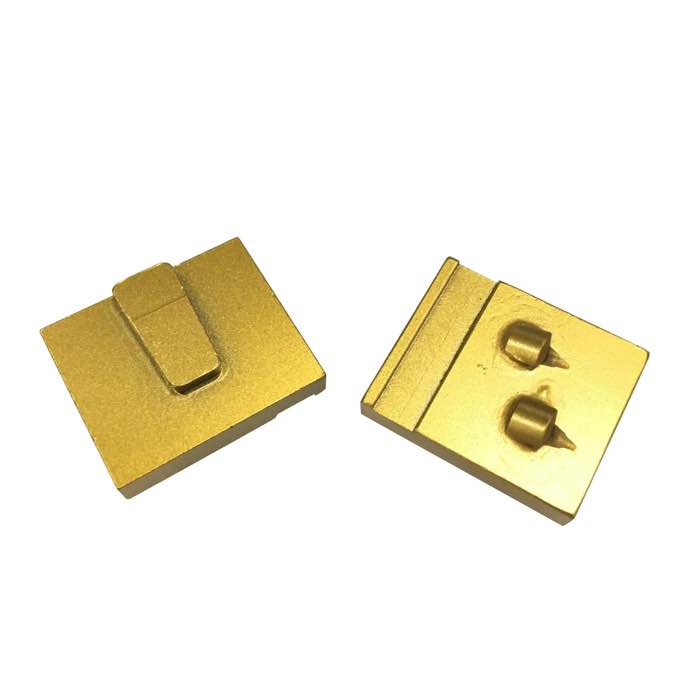
After pulling up old tile, the thinset, mastic and grout bed remaining on the concrete must be removed before new flooring. Use PCD diamond tools on a floor grinder to shave off adhesive and thinset in passes, then a 30/46 metal-bond disc to clean the slab. Scrapers work for loose chunks but cannot take off a bonded thinset bed without gouging the concrete.
| Step | Tool | Goal |
|---|---|---|
| 1 | PCD chip / half-moon tooling | Shave thinset and mastic off in sheets |
| 2 | PCD + small diamond segment | Clean residual film |
| 3 | Metal bond 30/46 | Open concrete, remove smear |
| 4 | Metal bond 80 | Profile for new adhesive |
On a Husqvarna Redi-Lock plate, the Piranha PCD coating-removal tool is built for this exact job. For angle-grinder edges, a 6-PCD cup wheel cleans wall lines.
A walk-behind scraper removes loose adhesive but leaves a thin bonded film and low spots. New flooring installed over this film fails because the adhesive does not bond to the old glue. Grinding leaves a profiled, clean slab that new thinset or epoxy grips.
Black cutback mastics in old buildings may contain asbestos. Do not dry-grind — wet grind or encapsulate, and have the material tested. Use HEPA extraction regardless.
Buildings before roughly 1980 may have asbestos-containing cutback mastic. Do not dry-grind. Send a sample to a lab first. If it is positive, wet grind or encapsulate, and dispose of waste as asbestos-controlled. When in doubt, treat it as suspect.
New adhesive needs a CSP 2-3 profile — a light concrete roughness, not a polished floor. Stop grinding at 80-120 grit. Floating LVT needs a flat, clean, sound slab; epoxy needs the same open profile. Too smooth and the adhesive will not bite; too rough and it telegraphs through.
After grinding, wipe the floor with a white rag. Little residue means clean. Black smear means old mastic remains. Vacuum again, then install within 24 hours before dust resettles. Any debris under new flooring causes hollow spots.
Very thick mortar beds may need a scarifier (flail cutter) first, then a fine grind. PCD handles glue and thin thinset; scarifiers handle thick, hard beds. Ask the rental yard which tool matches your job before starting.
Run a dollar bill or feel the surface — it should feel like fine sandpaper, not glass. The CSP 2-3 profile is ideal for most adhesives. Too smooth and new flooring delaminates; too rough and it telegraphs.
Once the slab is clean, install the new flooring within 24 hours. Dust resettles and moisture changes. If delay is unavoidable, cover the floor with clean poly sheeting.
Run a hand over the dry floor. Any sticky or glossy patch is residual mastic. Grind it spot by spot. A clean subfloor should feel uniformly rough, never smooth or tacky.
Subfloor prep is its own trade. Clear the room, rent the grinder and PCD tooling, and plan for a full day. You cannot rush coating removal. After grinding, let the room air out and vacuum twice before the flooring crew arrives. Surprise glue patches are the biggest delay.
Walk-behind machines miss corners. Use a hand scraper for loose glue, then a small PCD cup on an angle grinder. Do not skip corners — new flooring over old glue curls up within months.
A clean subfloor is the foundation of every good flooring install. Rushing this step saves a day now and causes a failure in a year. Take the time to PCD-strip, metal-clean, and inspect.
A: Just enough to expose clean sound concrete — typically 0.3-1 mm. Do not dig into the slab.
A: Eventually, but it loads up slowly. PCD strips adhesive far faster and saves discs.
A: It should show uniform concrete color with no glossy film. Wipe with a white rag — little black residue means clean.
A: Yes. Floating LVT needs a flat, clean slab; epoxy needs a CSP 2-3 profile.
Old tile jobs end with a subfloor prep day. PCD strips, metal cleans — that is the fast, clean route. Contact JOY TECH for PCD tooling and metal discs matched to your plate system.
