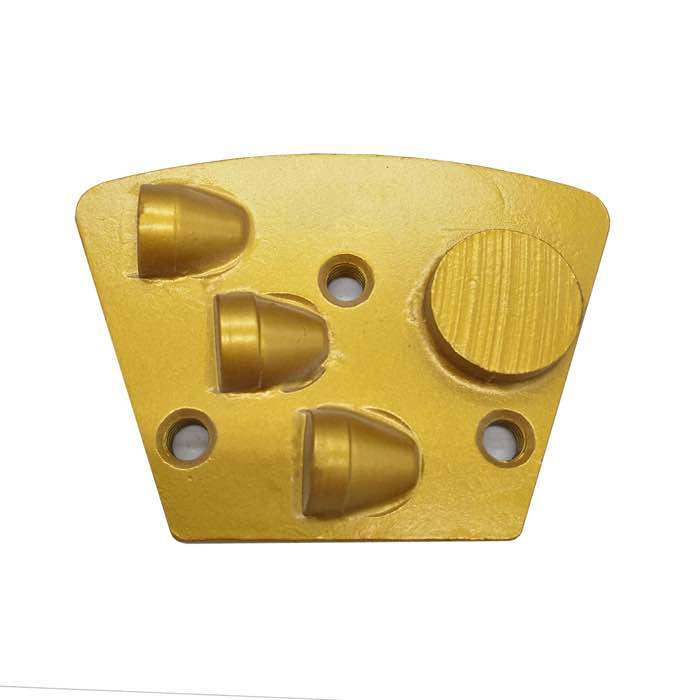
Yes, diamond grinding strips old paint from concrete without the drum scarifying that gouges the slab. The correct tool depends on paint thickness and type: for thick oil-based enamels or industrial coatings, start with a PCD shoe; for thin latex paint and sealer, a 30/40 or 60/80 metal-bond diamond shoe removes the film in one or two passes. Run the grinder dry with a HEPA vacuum, overlap passes by a third, and finish with a 120/150 pass to even the scratch. Plan on 50-100 m2 per hour on a 480 mm planetary machine, and always wear a respirator because old paint may contain lead.
If the building predates 1978, old alkyd enamel may contain lead. Use an EPA-certified lead test kit before grinding. If lead is present, you need Class HEPA negative-air containment and certified disposal; ordinary dry grinding is not allowed.
| Paint Type | Recommended Tool | Notes |
|---|---|---|
| Thick epoxy enamel, 0.5 mm+ | PCD shoe | Shears film; follow with metal bond |
| Latex wall paint spilled on slab | 30/40 metal bond | Removes in one pass |
| Acrylic sealer / cure | 60/80 metal bond | Light cut; avoid overgrinding |
| Urethane / polyaspartic | Double-row PCD | Softens with heat; take shallow passes |
The WerkMaster PCD Tooling for Epoxy Floor Removing (JOY-WM-PCD1S1) and WerkMaster PCD Tooling for Coating Removing (JOY-WM-PCD1R1) are purpose-built for this kind of coating work, while trapezoid PCD blades like the Double Zigzag Segment Diamond Trapezoid Grinding Disc (JOY-TP-ZG2) style fit smaller single-disc machines.
A drum scarifier uses flails that chip the surface randomly, leaving a rough, gouged profile that is hard to coat. A diamond grinder cuts a uniform scratch pattern, removes paint cleanly, and leaves the slab flat enough for new epoxy or stain. The tradeoff is slower speed: scarifiers cover more square meters but destroy the surface.
A: Yes, but control dust carefully because basements are enclosed. Use a HEPA extractor and plastic containment.
A: The floor will show a uniform grey concrete color with no glossy or colored patches. Run a white cloth over a small area; no pigment should transfer.
A: If the existing paint is fully bonded and you are recoating, a light 60/80 profile is enough. Strip only where the film is flaking or delaminating.
A: Chemical strippers work but require neutralization, water cleanup, and 2-3 days of drying before recoating. Grinding is faster and cleaner for large floors.
Paint chips and dust from old industrial floors may contain lead, chromium, or other heavy metals. Bag all vacuum contents in heavy-duty poly bags labeled as hazardous if lead is detected, and dispose of them at a licensed facility. On commercial jobs, notify the general contractor before grinding so dust containment and negative air pressure can be coordinated. For residential garages, plastic sheeting and a HEPA shop vac are usually enough, but avoid grinding near HVAC returns or open doorways that let dust spread into living areas.
For paint removal on a tight budget, rent a single-disc grinder rather than a planetary. Single-disc machines are cheaper to rent and strip paint just as well, although they leave a swirl pattern that requires one extra blending pass.
If the floor will be stained or dyed after paint removal, run one extra 120-grit pass. The stain absorbs unevenly on coarse scratch patterns, and the extra pass is cheap insurance against blotchy color.
Diamond grinding is the cleanest way to remove old paint from concrete: PCD for thick films, metal-bond for thin, always followed by a finer pass. Check for lead first, contain the dust, and you will finish with a flat, profile-ready slab.
