Average response time: under 24 hours
Quick Answer: Remove thin set with a floor grinder or angle grinder fitted with a double-row cup wheel or PCD tooling, working at a slight angle with steady passes until the adhesive is down to clean paste. Finish with a metal bond pass to expose the pores, then vacuum before coating or polishing.
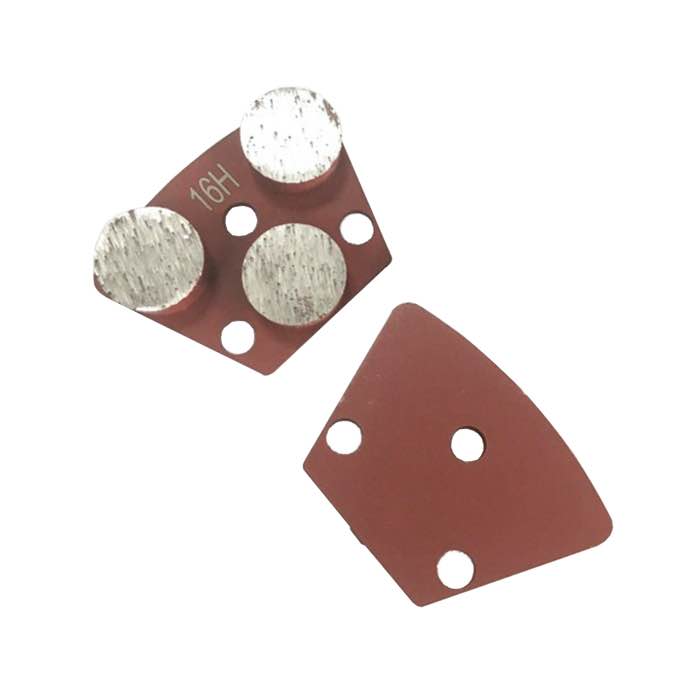
Thin set is hard, abrasive mortar, so tool choice decides speed. A walk-behind grinder with metal bond tooling clears large floors fastest; an angle grinder with a 125 mm or 180 mm cup wheel handles patches, edges, and small rooms. For stubborn tile adhesive, a PCD cup wheel strips the material aggressively, while a standard double-row cup wheel cleans up the residue. PCD tooling on trapezoid or segment plates is the go-to for full rooms with heavy glue lines.
Tilt the machine slightly onto the leading edge so the segments bite, keep a consistent pace, and work in overlapping passes. Do not dwell in one spot or you will gouge the slab. Move at an angle to the tile lines so the disc does not follow the adhesive ridges, and check your progress with a scraper. Stop when the surface is bare paste, not when it is perfectly smooth; the next grit step handles the finish.
After the thin set is gone, switch to a medium metal bond and run two or three passes to flatten the floor and open the concrete pores so coatings bond. Vacuum all dust, and wash the floor if the adhesive left oils or residue. On large jobs, a fast-change tooling set lets you swap from PCD removal to metal bond grinding without stopping to change plates.
Thin set dust is heavy and silica-laden, so hook the grinder to a HEPA vacuum or use wet grinding where the floor allows. Wear a respirator, glasses, and gloves, and keep the working area clear. Grind at a speed that does not glaze the segments, and let the tool cool if the disc loads with melted adhesive residue.
Yes, a bush hammer roller chews through thick adhesive and plaster quickly, but it leaves a rough profile that needs metal bond passes to flatten before coating.
A double-row cup wheel on an angle grinder handles a small bathroom or hallway; for larger floors, switch to floor-machine tooling or plan to replace the wheel when segments wear below about 2 mm.
Strip thin set with PCD or cup wheel tooling, follow with metal bond passes to open the pores, and control the dust with HEPA vacuuming. The result is a clean, flat, coating-ready slab with the least effort and the longest tool life.
Written and reviewed by JOY TECH — an SGS & BV audited, CE/RoHS certified diamond tools manufacturer founded in 2004, exporting to 50+ countries.
Our factory and QMS are audited by SGS and Bureau Veritas. Products meet CE/RoHS requirements and every piece is 100% inspected before packing.
Verified Certificates
