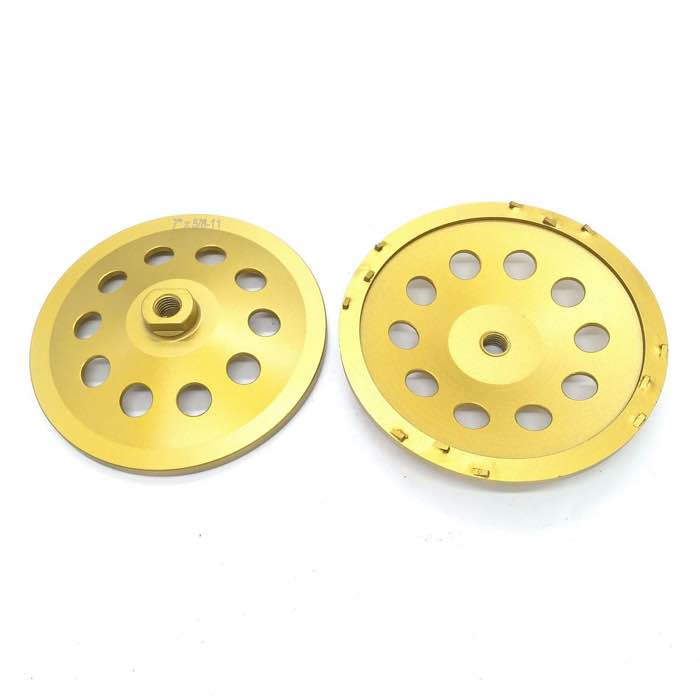
The right tool for removing thin set mortar after tile without gouging the slab is a PCD (polycrystalline diamond) scraper block or a coarse 6/12-grit metal bond grinding shoe run with light, overlapping passes. PCD chips through the brittle thinset layer quickly, while a shallow grind depth of 0.2–0.5 mm keeps you from digging into the concrete below. Avoid aggressive 16/18-grit stock-removal shoes at full pressure, because they will gouge the slab once the thin set breaks through. Finish the transition with 30/40-grit metal bond shoes to flatten the patches. Tools like WerkMaster PCD Coating Removal Tool (JOY-WM-PCD1R1) and Diamond Trapezoid Grinding Disc (JOY-TP-R3) cover both steps without scarring the floor.
Thinset is a cementitious mortar bed left after tile removal. It is hard but brittle, and it bonds tightly to the slab. The challenge is two-sided:
| Step | Tool | Goal |
|---|---|---|
| 1. Break the layer | PCD scraper block (half-moon or star) | Chip through thinset, keep depth shallow |
| 2. Flatten patches | 30/40 metal bond shoe | Level residual mortar ridges |
| 3. Blend transitions | 60/80 or 120 metal bond | Smooth grind lines before coating |
PCD fragments shear brittle coatings on contact rather than grinding through them. A PCD coating-removal block strips thinset, tile adhesive, and mastic in one pass without the heat buildup of metal diamond. On thinset that is tightly bonded, use the PCD at a shallow cutting depth and let the tool do the work—do not lean on the machine.
For slabs where thinset is mixed with old adhesive, WerkMaster PCD Epoxy Removal Tool (JOY-WM-PCD1S1) is tuned for epoxy and adhesive film and leaves a cleaner base than a coarse diamond shoe.
The biggest mistake is starting with a 16/18-grit stock-removal shoe. It rips through thinset and grooves the concrete below. The second mistake is using dull PCD—once the cutting edge is rounded, it pushes mortar around instead of chipping it. Replace PCD tips when the flat wear surface covers more than half the segment.
Grinding is perfect for thin thinset films, but not every tile bed is thin. If the old job used a thick mortar bed (over 10 mm) or the slab has been tiled twice, a floor scarifier with flails will remove the bulk faster and with less gouging risk than a planetary grinder. Use the grinder afterward to blend scarifier marks. On slab edges and under cabinets, a handheld angle grinder with a PCD cup wheel cleans spots the walk-behind cannot reach. Always knock out exposed tile clips and nail heads first—hitting steel with PCD chips the tips and is dangerous.
A: Yes, with PCD shoes. A single-disc or planetary grinder fitted with PCD blocks strips thinset efficiently; use a handheld scarifier only for tight corners.
A: PCD can leave light scuff marks on soft concrete if run at full pressure. Keep passes shallow and follow with a 30/40 metal bond pass to blend the surface.
A: Under 5 mm, PCD grinding works. Above that, especially with mortar beds, a floor scarifier or shot blaster is faster and less likely to gouge.
A: Yes. Connect an industrial HEPA dust extractor. Dry thinset dust is fine silica and must be controlled on site.
To strip thinset without gouging, start with a shallow PCD pass to break the brittle layer, then blend with 30/40-grit metal bond shoes. Keep pressure light, watch for the raw-concrete color change, and never use an aggressive stock-removal diamond on a layer only millimeters thick.
