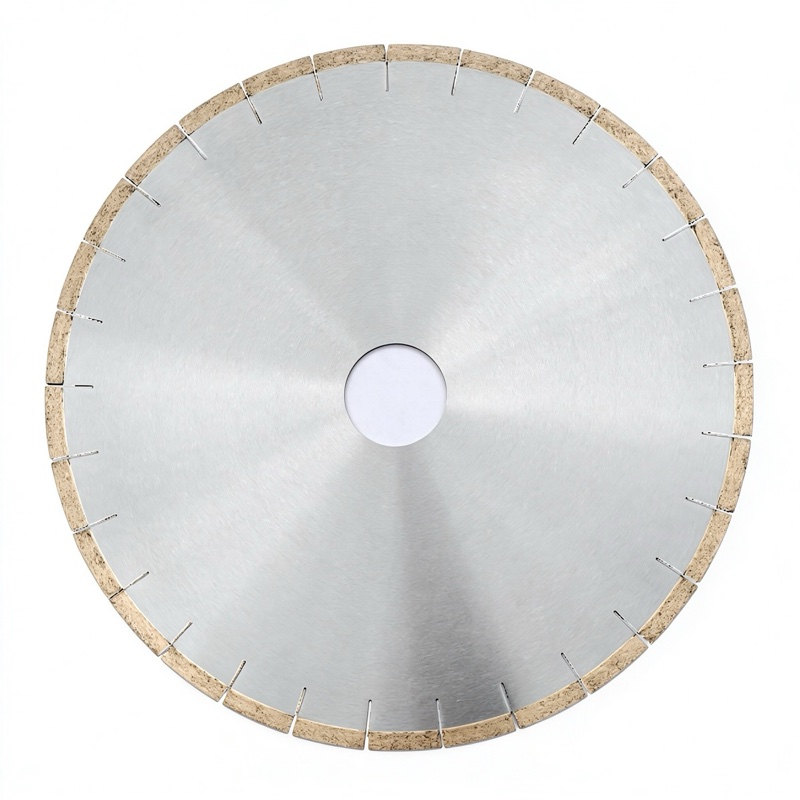
Store diamond saw blades vertically on edge on a rack, not flat stacked, in a dry room with 40–60% humidity, away from concrete floors and leaking pipes. Coat the steel core with a light oil if you live in a humid climate. Keep segments separated so they do not knock against each other. Stored this way, blades last years without rust or warping.
Our diamond saw blades ship in individual cardboard sleeves — keep them on for storage. For ('core drill bits',) stand them upright with the segment end up, capped, so water does not collect in the barrel.
Light surface rust on the core wipes off with a wire brush and oil. If rust has reached the segment weld or the core is pitted, retire the blade — the weld may fail in use. Do not try to run a rusted blade; it is not worth a segment ejection.
Good storage starts on the job, not back at the shop. Lay a blade flat on a clean board when not in use; do not let it rest on gravel or concrete. Never stand a blade against a wall at an angle — it can fall and bend. When carrying multiple blades, use a blade bag or cardboard dividers so segments do not knock. After a wet cut, wipe the blade dry before putting it in the truck; leftover slurry attracts moisture overnight. At the end of a long day, a quick wipe with an oily rag protects the arbor hole, which is the first spot to rust. Small habits extend a blade's storage life from years to decades.
If you shut down for a month over winter, treat the tool kit before locking the door. Wipe every blade with an oily rag. Stand them on edge in a dry room, not on the concrete floor. Coat core bit barrels with light oil and leave them upright. Stack grinding pucks flat in their trays. Unplug the floor grinder and cover it. When spring returns, inspect one blade before use — if any spot rust has formed, remove it with oil and a rag. A weekend of preparation prevents a spring of bent, rusted tools.
A: Short term yes. Long term, truck beds go through huge temperature and humidity swings. Bring them inside at night.
A: Indefinitely if dry and vertical. Steel does not age; the welds and diamonds remain good for years.
A: Small blades under 230 mm for a few weeks, yes. Larger blades must go vertical or they warp.
A: Yes. Leaving a tensioned blade on the saw in a damp shop accelerates rust at the arbor.
A diamond blade is a precision tool, not a spare part. Treat it like a knife: dry, upright, separated, and oiled. Stored well, your stock will outlast the truck. Contact JOY TECH for blades and bits packaged and ready for rack storage.
