Average response time: under 24 hours
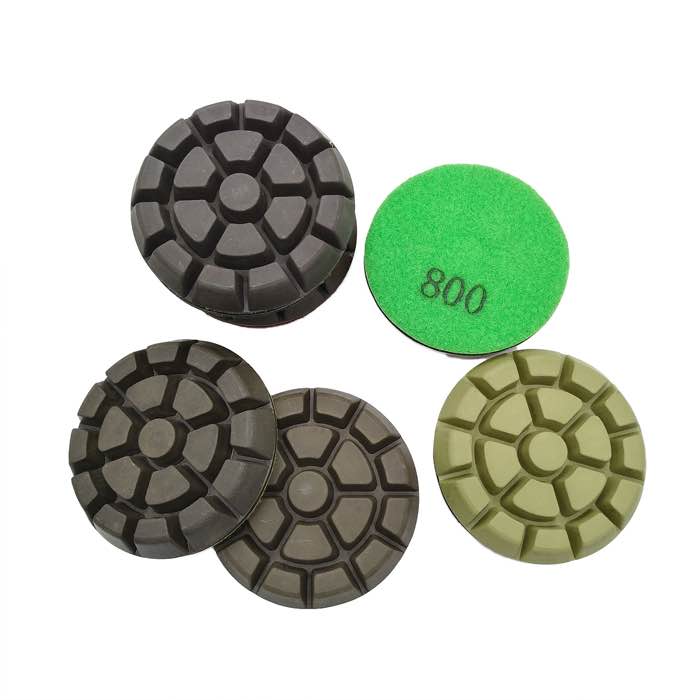
Store diamond tools dry, in their original packaging, off the concrete floor, between 10-30 °C, below 60% relative humidity, and never stacked with the segment or diamond layer touching another tool. Blades hang on a peg rack or lie flat on a shelf — never lean them at 45° for months, which bends the core. Core bits cap the threads and keep the matrix out of standing water. Steel-body grinding plates get a light oil wipe and a bag. Resin polishing pads go into a sealed tub away from UV and heat, because resin degrades in 12-18 months regardless of use. Done right, storage alone can add 20-40% to the usable life of every SKU in your van. Done wrong — a blade leaning in a wet van, a steel cup wheel rusted to a shelf, a bag of pads left on a truck dashboard — you are throwing 15-30% of your tool budget away every year.
| Enemy | What it damages | Symptom you see |
|---|---|---|
| High humidity / standing water | Steel cores, steel shanks, grinding plates | Rust, frozen threads, pitted matrix |
| Heat (>35 °C) | Resin bond, resin polishing pads, plastic adapters | Pad softening, dishing, bond over-softening |
| UV / sunlight | Resin pads, rubber hubs, plastic guards | Brittleness, cracking, color fade |
| Impact (stacking) | Diamond segments, brazed joints, thin rims | Chipped segments, cracked core, delamination |
| Corrosive dust (epoxy, concrete fines) | Threads, mounting flanges, arbor holes | Frozen arbor, cannot remove blade |
| Freeze-thaw (unheated van in winter) | Wet tools, brazed joints | Micro-cracks, segment loss |
A van in direct summer sun hits 60-70 °C on the dashboard — that is a 6-month pad-life loss in a week. A winter van in a damp yard freezes and thaws, rusting every steel body inside. For the blade-specific rules, see storing diamond blades; for plates, see storing grinding plates.
A 350 mm laser-welded blade is a thin steel disc with hard segments on the rim. Store it:
Wet core bits run water through the barrel. At the end of the day:
Steel-body tools — trapezoid plates, cup wheels, PCD tools — rust faster than blades because the steel is thicker and the pockets trap slurry. After use:
Resin pads are the most storage-sensitive tool in your truck. The bond resin oxidizes and hardens over 12-18 months, regardless of use. Keep them:
See our range of resin floor polishing pads — they ship in sealed tubs for this reason.
For a contractor's work van, the rules are simple: a slotted wooden blade rack behind the driver's seat, a shelf bin unit for grinding plates, a sealed ammo box for resin pads, and a plastic tray for wet bits to drain. For a reseller warehouse: keep tools in their cartons on pallets off the floor (concrete floors sweat), control temperature in summer with a fan, and never store diamond tools near batteries, solvents, or fertilizer — the fumes rust steel faster than rain. Label every shelf with the SKU so the next person does not dig through a pile.
A: Steel-body tools (blades, core bits, grinding plates) stored dry and rust-free are effectively indefinite — 10+ years, because the diamond and metal matrix do not age. Resin polishing pads and resin-bond stones degrade in 12-18 months. Plastic adapters and rubber hubs harden in 3-5 years. This is why resin pads are the one category you should not over-stock.
A: No. Wet bits drain water into the bin, which rusts the blades in the same bin. Keep wet tools on a dedicated draining tray until dry, then cap and move to the dry shelf.
A: Light surface rust on the steel core is cosmetic and wears off in the first cut. Pitted rust on the arbor hole or cracks in the core means scrap. If the rust has creeped into the brazed joint between segment and core, discard — the segment can fly off under RPM.
A: Both, but the cleaning happens the day of the job — slurry left on a steel body overnight starts rust. A 60-second wire-brush-and-oil at the end of the day is worth more than a 10-minute clean before the next job.
Storage is the cheapest life-extension investment you will ever make: racks, bins, oil rags, and sealed tubs cost under USD 500 and pay back in avoided blade and pad replacement. The goal is that a tool pulled off the shelf in March cuts exactly the way it did on the day it arrived. Shop our full diamond tool range and ask us for the shelf-by-shelf storage plan that matches your SKU mix.
Written and reviewed by JOY TECH — an SGS & BV audited, CE/RoHS certified diamond tools manufacturer founded in 2004, exporting to 50+ countries.
Our factory and QMS are audited by SGS and Bureau Veritas. Products meet CE/RoHS requirements and every piece is 100% inspected before packing.
Verified Certificates
