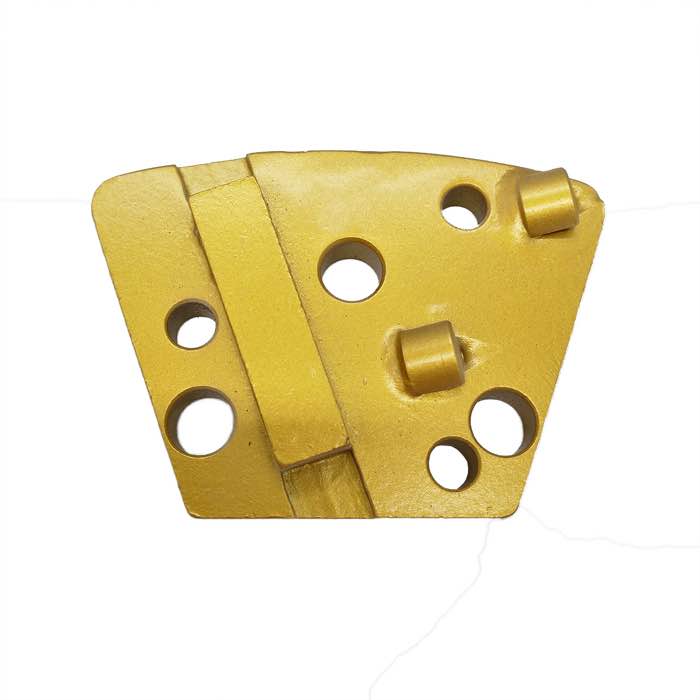
Replace a grinding plate when the diamond segments drop below ~2mm of usable height, cutting speed falls noticeably despite clean segments, or the plate starts vibrating. A grinding shoe/plate loses efficiency long before it stops cutting — the first sign is slower stock removal and a smoother, "burnished" feel on the concrete. Stop and measure segment height with a ruler or caliper; if it’s under 2mm (metal-bond) or the PCD teeth are visibly worn to the matrix, the plate is done. Grinding with worn plates wastes time, heats the floor, and produces an inconsistent profile.
| Sign | Likely Cause | Action |
|---|---|---|
| Slow stock removal, rough feel | Diamonds dull / bond worn | Dress once; if unchanged, replace |
| Machine vibrates | Worn segments uneven, plate bent | Inspect; replace plate |
| Coating not cutting (PCD) | PCD teeth worn to matrix | Replace with fresh PCD plate |
| Floor burnished, not ground | Bond touching concrete | Replace immediately |
| Hot segments / smoking | No cutting edge left, friction | Stop, replace, check RPM |
Sometimes a plate looks dead but is just glazed: the bond has smoothed over the diamonds. Dress it by grinding an abrasive block, soft concrete, or sandstone for 30–60 seconds to expose fresh diamond. If cutting speed returns, keep using it. If not, the diamonds are consumed — replace the plate, such as a fresh Double PCD Trapezoid Disc or a new metal-bond segment set.
A: A metal-bond trapezoid plate typically grinds 300–800m² depending on concrete hardness, grit, and pressure. Coarser grit and softer floors wear faster. PCD plates last longer on coating removal but lose teeth faster on hard concrete.
A: No. A worn coarse plate cuts like a fine plate but with poor consistency and risk of burning the surface. Buy the right grit for the step; don’t try to repurpose worn tooling.
A: You burn time and money: the plate burnishes instead of cuts, heats the floor (which can burn the surface of soft concrete), wears the machine, and leaves an inconsistent CSP profile that fails adhesion tests for coatings.
A> Match bond hardness to the concrete (soft bond for hard concrete, hard bond for soft/abrasive), use moderate pressure, keep the machine flat, and dress segments before they glaze completely. Proper wet use extends metal-bond life 30–50%.
A> No. Uneven wear means the plate ran tilted or the machine head is out of level. Replace the plate and check the grinder’s head alignment before grinding again.
Know your plate’s life: measure segment height, watch for glazing and vibration, dress before concluding, and replace at the 2mm mark. Fresh, matched tooling is the cheapest part of a good grinding job — it saves hours and delivers the CSP profile your coating or polish needs. JOY TECH supplies metal-bond trapezoid discs and PCD plates with consistent quality for every stage.
