Average response time: under 24 hours
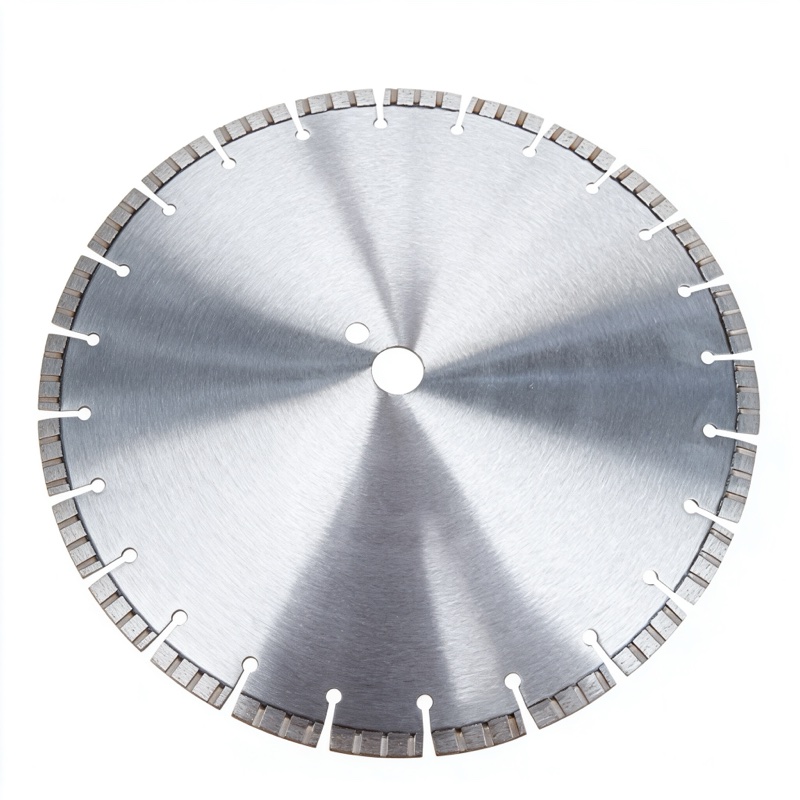
Laser-welded diamond blades use a laser to fuse segments to the steel core, creating a bond stronger than the segment itself — allowing safe dry cutting without segment separation. Silver-brazed blades use silver solder to attach segments, which is more economical but sensitive to high heat and must be used wet. For concrete, asphalt, and reinforced concrete, choose laser-welded; for wet-only stone and tile cutting, silver-brazed offers better value.
| Feature | Laser-Welded | Silver-Brazed |
|---|---|---|
| Attachment Method | Laser beam fusion welding | Silver solder brazing |
| Wet/Dry Use | Both wet and dry | Wet only (heat-sensitive) |
| Safety | Highest — segments won't separate when overheated | Lower — risk of segment loss if overheated |
| Ideal Materials | Concrete, reinforced concrete, asphalt | Granite, marble, tile, stone |
| Cost | Higher | Lower |
| Heat Resistance | Very high | Low (braze melts ~700°C) |
| Segment Retention | Weld stronger than segment | Depends on braze quality and temperature |
| Typical Diameters | 300mm-1600mm (floor/wall saws) | 105mm-400mm (hand saws, tile saws) |
Laser welding uses a focused high-energy laser beam to melt the segment base and the steel core simultaneously, creating a deep penetration weld that fuses the two materials at the molecular level. The resulting weld is actually stronger than the diamond segment itself — meaning the segment will break before the weld fails. This makes laser-welded blades safe for dry cutting, where temperatures can exceed 700°C, because even under extreme heat the segment remains securely attached. This is why OSHA and most construction safety standards require laser-welded blades for dry concrete cutting.
Silver brazing uses a silver-alloy solder with a melting point around 600-700°C to bond the segment to the steel core. The process is simpler and less expensive than laser welding, but the braze joint is heat-sensitive. If a silver-brazed blade is used dry, the friction heat can melt the braze, causing segments to fly off — a serious safety hazard. When used wet with adequate water cooling, silver-brazed blades perform excellently and offer significant cost savings for stone and tile fabrication.
Choose laser-welded blades for: concrete and reinforced concrete cutting, asphalt road cutting, wall sawing, floor sawing, any dry cutting application, and jobs where safety is paramount. Choose silver-brazed blades for: granite and marble slab cutting, tile and porcelain cutting, wet bridge saw operations, and cost-sensitive stone fabrication. Never use silver-brazed blades dry — the risk of segment separation is real and dangerous.
The choice between laser-welded and silver-brazed blades comes down to safety requirements and cutting conditions. Laser-welded blades are the industry standard for construction and concrete work because they can be used safely in both wet and dry conditions. Silver-brazed blades remain the economical choice for wet stone and tile cutting. JOY TECH manufactures both types with application-specific bond formulas — tell us your material and cutting conditions, and we'll recommend the right blade.
Written and reviewed by JOY TECH - an SGS & BV audited, CE/RoHS certified diamond tools manufacturer founded in 2004, exporting to 50+ countries.
Our factory and quality management system are audited by SGS and Bureau Veritas. Products meet CE/RoHS requirements and every piece is 100% inspected before packing.
Verified Certificates
