Average response time: under 24 hours
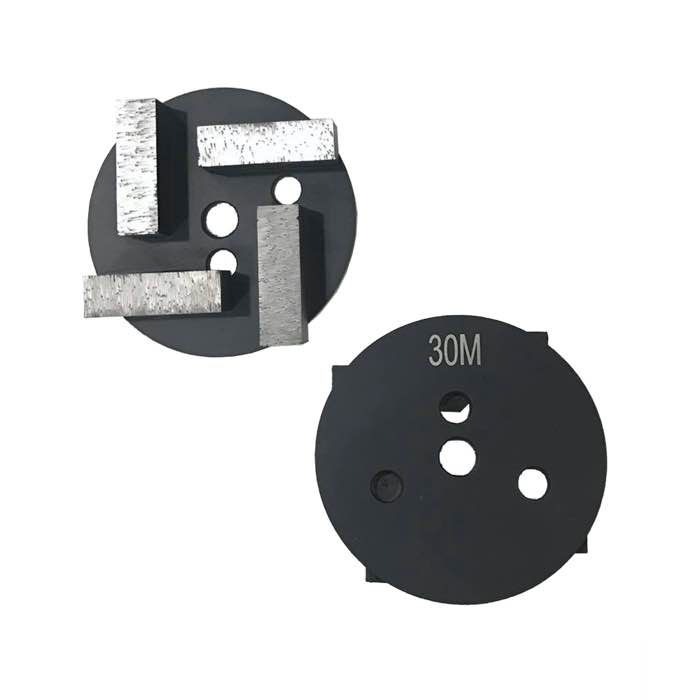
Metal-bonded diamond tools use a sintered metal matrix (copper, iron, cobalt alloys) to hold diamond particles, offering extreme durability and aggressive cutting for grinding, cutting, and drilling. Resin-bonded tools use a softer phenolic or epoxy matrix, producing a finer finish and used primarily for polishing. Metal bonds last 5-10x longer but cannot achieve high gloss; resin bonds deliver superior finish but wear faster.
| Feature | Metal Bond | Resin Bond |
|---|---|---|
| Matrix Material | Sintered metal powder (Cu, Fe, Co, Ni) | Phenolic or epoxy resin |
| Primary Use | Grinding, cutting, drilling, coating removal | Polishing, fine finishing, honing |
| Durability | Very high (5-10x longer) | Moderate |
| Cutting Speed | Aggressive, fast material removal | Moderate, refining action |
| Surface Finish | Rough to medium (16#-120#) | Smooth to high gloss (200#-3000#) |
| Typical Lifespan | 300-1000 m² per segment | 200-500 m² per pad |
| Cost per m² | Lower (longer life) | Higher (faster wear) |
| Flexibility | Rigid | Flexible, conforms to uneven surfaces |
Metal-bonded diamond tools are manufactured through a high-temperature, high-pressure sintering process. Industrial diamond particles are mixed with metal powders and compressed at 700-900°C under tons of pressure, fusing the metal into a solid segment with diamonds locked throughout. As the tool grinds, the metal matrix wears at a controlled rate, continuously exposing fresh diamond crystals. This self-sharpening mechanism is why metal-bonded tools maintain consistent cutting performance until the entire segment is consumed.
Resin-bonded tools use a thermosetting polymer matrix that holds diamond particles. The resin is softer and more flexible than metal, allowing the diamonds to refine surface scratches rather than aggressively remove material. Resin bonds are typically used in the later stages of polishing sequences (200# through 3000#) to progressively build gloss and clarity. The flexibility of resin also helps conform to slightly uneven floors, producing a more uniform finish.
Choose metal-bonded tools when you need to remove material quickly — concrete floor grinding, epoxy coating removal, stone cutting, core drilling, and rough surface preparation. Choose resin-bonded tools when you need to refine and polish — concrete polishing, marble restoration, terrazzo finishing, and countertop polishing. In a typical polished concrete project, you use metal-bond segments for 50#-120# grit steps, then transition to resin pads for 200#-3000# finishing.
Metal and resin bonds serve complementary roles in diamond tool systems. Metal bonds are the workhorses for material removal, while resin bonds deliver the finish. Understanding when to use each — and transitioning correctly between grit steps — is the key to efficient, high-quality concrete and stone processing. JOY TECH manufactures both metal-bonded and resin-bonded diamond tools with custom bond formulas matched to your specific material and application.
Written and reviewed by JOY TECH - an SGS & BV audited, CE/RoHS certified diamond tools manufacturer founded in 2004, exporting to 50+ countries.
Our factory and quality management system are audited by SGS and Bureau Veritas. Products meet CE/RoHS requirements and every piece is 100% inspected before packing.
Verified Certificates
