Typical MOQ from a Chinese diamond tool factory is 100–500 pieces per SKU for saw blades and core bits, 50–100 boxes for resin polishing pads, and 20–50 pieces for custom grinding discs. Factories will usually accept a mixed carton across related SKUs and offer a smaller trial order (20–50 pieces) for new buyers, often at a 5–10% price premium. Private-label OEM usually doubles the MOQ.
Diamond tool production has fixed setup costs per SKU: welding jigs, sintering molds, laser marking, and packaging. A factory that runs 20 blades of one size loses money on setup. The MOQ reflects the smallest batch that covers those fixed costs and leaves a margin.
| Product | Standard MOQ | Trial order possible? |
|---|---|---|
| Standard diamond saw blades (stock sizes) | 50–100 pcs | Yes, 20–50 pcs |
| Custom OEM branded blades | 300–500 pcs | Rarely below 200 |
| Diamond core drill bits | 20–50 pcs per diameter | Yes, 10 pcs mixed |
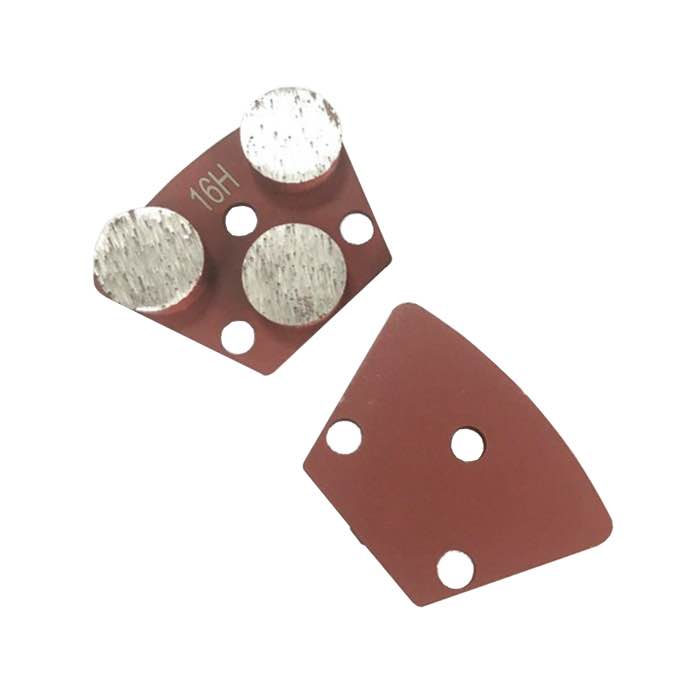
| Trapezoid grinding discs | 20–50 pcs per bond | Yes, sample boxes |
| Resin polishing pads | 50–100 pcs per grit | Grit sample kits available |
| Bush hammer rollers | 10–30 pcs | Yes |
MOQ is about production, not packaging. Custom printed boxes, color sleeves, and barcodes often have their own MOQ (500–1000 boxes). For the first order, use neutral white boxes and switch to branded packaging once you know which SKUs sell.
A realistic starter order is USD 5,000–10,000: 20–30 SKUs, 10–30 pcs each, in neutral packaging. This is enough to stock a showroom and test demand without tying up a container. Factories that demand USD 50,000 for a first order are either inflexible or protecting traders.
A new distributor's biggest mistake is ordering fifty SKUs at five pieces each. That creates a warehouse mess and no volume. Instead, pick three hero SKUs that cover 80% of local jobs: a 350 mm general concrete blade, a 1-1/4 inch wet core bit, and a set of 30/60/120 grinding discs. Buy 30 to 50 pieces of each. Once those turn over, add the next three SKUs. This approach keeps inventory lean, lets you test demand without a warehouse full of dead stock, and gives the factory enough volume per SKU to quote seriously. Most distributors double their SKU count within a year as they learn what sells in their region.
A mixed carton — say, ten 110 mm bits, ten 132 mm bits, and ten 152 mm bits — lets you test three SKUs without paying three separate MOQs. Most factories accept mixed cartons at a small premium, typically 5%. For a new distributor, this is the most efficient way to stock a service van. Start with the diameters plumbers and electricians actually ask for: 32, 51, 76, and 110 mm. Once you see which ones turn, reorder those in bulk. Avoid the temptation to stock every diameter from 20 to 300 mm; slow movers tie up cash and collect dust on the shelf.
Once you have three SKUs turning, review sales every quarter. Drop any SKU that has not moved in 90 days; its shelf space is better used by a new trial product. Good distributors treat their catalog as a living list, not a one-time purchase.
A: Yes. Most factories will ship 1–2 samples at retail-plus cost. This is separate from the MOQ and is how you should start.
A: Yes. Laser marking and custom boxes usually push MOQ to 300–500 pcs per SKU.
A: For time-sensitive testing, yes. Air freight on 20 small blades costs USD 80–150 and arrives in five days.
A: Good factories reserve stock for regular buyers. Ask about this before placing the first order.
MOQ is negotiable once you understand the setup logic. Start small with mixed cartons and trial pricing, prove the product sells, then scale to container quantities. Contact JOY TECH for our current MOQ list and trial-order terms.
