Average response time: under 24 hours
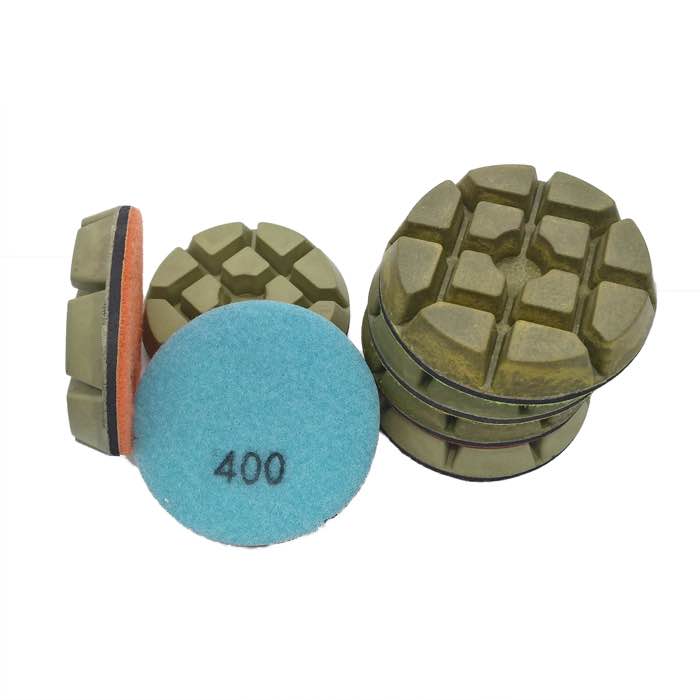
Never polish over an unrepaired crack or cold joint. Grind the slab dry first to expose all defects, then fill static hairline cracks with a low-viscosity epoxy, route and caulk moving or structural cracks, and tie cold joints back together with epoxy injection before running the fine polishing passes. Polishing locks the repair material into the floor; if you skip the repair, every defect becomes a visible, dust-catching line.
Start with a 30-grit metal-bond dry grind across the entire area. This opens pores and makes cracks, cold joints, and trowel lines visible as dark, wet-looking streaks. Walk the floor under raking light at a low angle and mark every defect with a marker. Cracks less than 0.3 mm may be acceptable as natural character; anything wider should be discussed with the owner before polishing proceeds.
These are fine, stable cracks, often from early shrinkage. They do not move when probed and are not leaking. They can be filled with a clear or color-matched low-viscosity epoxy and then polished flat. Most cosmetic cracks fall in this category.
If a crack opens and closes as you step on either side, or carries a wet or rust-stained trail, it is moving. Active cracks must be routed to a V or diamond shape, filled with a flexible polyurethane caulk, and often overbridged with a crack isolation membrane. Polishing a moving crack will tear the repair out within months.
A cold joint is a visible seam where two concrete pours did not bond, often from a delayed truck or a lift placed after the first pour set. Cold joints may be structurally sound but leave a straight line through the floor. They are ground flat, then epoxy-injected along the seam to prevent water and dust intrusion.
The correct order is critical. Repair after the coarse grind (30-60 grit) but before fine resin polishing. Steps:
Clear epoxy in a light-colored slab will show as a dark line once polished, because epoxy absorbs light differently than cement. Use a cementitious repair mortar tinted to the slab, or a colored epoxy paste designed for polished concrete. Test the color on a sacrificial patch, grind it, and compare under the site lighting before committing. Under LED lighting, color shifts more than under warm incandescent.
Some cracks are structural, not cosmetic. Stop polishing and refer back to the specifier if you see:
These are slab or subgrade problems, not polishing problems, and polishing over them will not fix them.
Apply densifier after repairs are ground flush, not before. Epoxy does not absorb densifier, so densifier applied before repair leaves an uneven chemical barrier. After repair and flush grind, densifier can be applied across the whole floor normally.
Polish the whole floor as one continuous slab once repairs are flush. The repair areas will usually polish to a slightly different sheen because epoxy and cement densify differently. A final 800-1500 grit pass across the whole floor evens the reflectivity. If the repair still shows, accept it as a natural feature or revisit the color-matched mortar.
Epoxy repairs need a dry slab and temperatures above 10 °C to cure properly. If the floor is below 10 °C or the slab carries moisture, the repair will not bond and will chip out during final polishing. Run a dehumidifier or heat the space if needed. Do not apply densifier over uncured epoxy; chemical incompatibility causes haze.
Take before and after photos of every repaired crack, mark the location on a floor plan, and note the repair material used. This protects you if a crack opens later or a facility manager asks why a particular line was filled. For commercial projects, the owner should sign off on the repair plan before grinding begins; once polished, a repaired crack is permanent and difficult to reverse.
Use resin polishing pads from 200 grit upward over repaired areas to blend lines.
Written and reviewed by JOY TECH — an SGS & BV audited, CE/RoHS certified diamond tools manufacturer founded in 2004, exporting to 50+ countries.
Our factory and QMS are audited by SGS and Bureau Veritas. Products meet CE/RoHS requirements and every piece is 100% inspected before packing.
Verified Certificates
