Average response time: under 24 hours
On polished concrete, use a penetrating sealer for industrial, garage, and high-traffic floors where you want protection without changing the look; use a film-forming sealer only when you want a wet, glossy, sacrificial coat that you are willing to strip and reapply every few years. Penetrating sealer soaks in and never peels; film-forming sealer sits on top and will peel if the concrete moves or if you scrub it hard. Most polished concrete floors are densified with lithium silicate, which acts as a penetrating sealer, so you often do not need a second product at all.
A penetrating sealer is a liquid silicate, siliconate, or nano-silica that reacts with the free lime in concrete. It travels a few millimetres into the pores, hardens the surface, and blocks liquids from entering. There is no film, so the floor keeps its natural look, its coefficient of friction, and its slip rating. A film-forming sealer, usually acrylic, urethane, or epoxy, sits on the concrete as a continuous coat, like paint on a wall. It builds gloss and hides scratches, but it is a layer, and layers can chip, yellow, and peel.
Lithium or sodium silicate reacts with calcium hydroxide in the concrete to form calcium silicate hydrate, which fills the pores. This reaction continues for weeks after application, which is why the floor gets harder and more stain-resistant over time. Siliconate and nano-silica versions work more on the surface and give a slightly better water-beading effect. None of these products change the visual look of the floor; they harden it from the inside.
Acrylics are water-based, thin, and easy to re-coat; they give a wet look but wear fast in high traffic. Urethanes are solvent-based, tougher, and more resistant to chemicals, but they yellow over years. Epoxies build a thick film, but they are not a good match for polished concrete because they hide the mechanical shine and peel if the slab moves. A film sealer is a sacrificial layer; you plan to strip and redo it.
Pick the sealer that matches the job:
After the sealer cures, bring back the gloss with a burnishing pad on the dry floor; burnishing works on both sealer families and is the standard maintenance step for polished concrete.
A penetrating sealer lasts the life of the floor. You refresh it by burnishing and by re-honing the wear paths; you never strip it. A film-forming sealer fades, scuffs, and yellows on a 1-5 year cycle depending on traffic. Re-coat requires cleaning, light scuffing, and a new coat. If you let a film sealer peel, the edges look worse than no sealer at all, and stripping the old film is a grinding job.
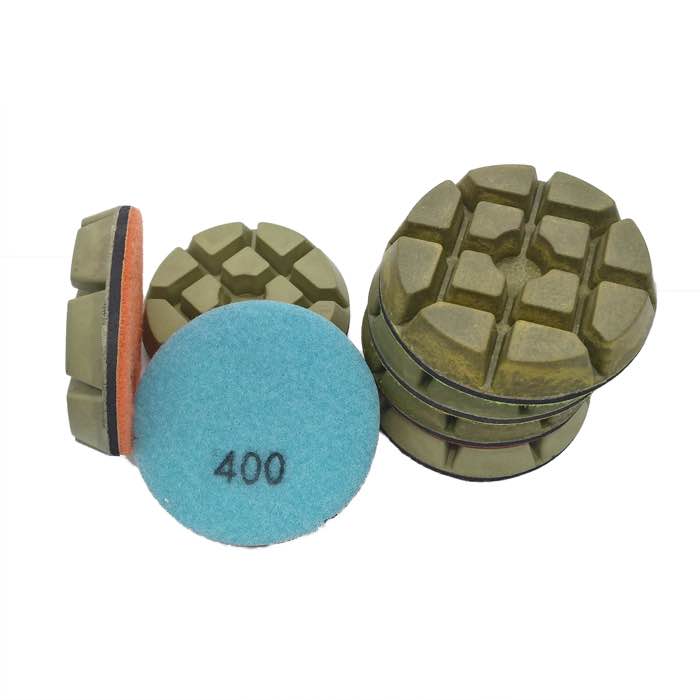
For a residential floor, that means choosing a penetrating system up front and never looking back. Do not put a film sealer over an un-densified polished floor; the concrete will outgas and the film will bubble. When you do need to refresh the hone, the diamond resin polishing pads restore the scratch pattern under the sealer without cutting through the film, so a scuffed showroom floor can be refinished rather than stripped. Re-coat the film sealer on a dry weekend, not between lunch and dinner service.
A film sealer looks cheap on day one, but the strip and re-coat cycle adds up over ten years. A penetrating system costs more at installation but never comes back. For a retail floor that wants a high-gloss look, the film is the right call because you are paying for appearance. For an industrial floor, the penetrating system is the cheaper choice over the life of the slab.
Before adding any product, put a few drops of water on the floor. If it beads, a film sealer is present. If it soaks in but the floor still looks hard, a densifier is in place. If it soaks in and the floor looks dusty, neither is on the floor. This three-second test tells you which product you are working with and prevents the classic mistake of putting an acrylic over a densifier and wondering why it will not stick.
People often call a densifier a sealer. It is technically both: lithium silicate hardens the concrete and blocks liquids, which is why many polished floors ship with no separate sealer at all. Ask the installer what is on the floor before adding a product. If a dense polished floor already has a densifier, an extra penetrating sealer does nothing and an acrylic film will not stick properly. The resin pad system is the maintenance layer that works with either choice, not a replacement for the sealer.
Penetrating for protection and low maintenance, film-forming for looks and budget. Match the sealer to traffic, slip needs, and how often you want to re-coat. On most polished concrete, the right answer is the densifier already in the floor, plus burnishing and occasional resin pads instead of another product on top.
Written and reviewed by JOY TECH — an SGS & BV audited, CE/RoHS certified diamond tools manufacturer founded in 2004, exporting to 50+ countries.
Our factory and QMS are audited by SGS and Bureau Veritas. Products meet CE/RoHS requirements and every piece is 100% inspected before packing.
Verified Certificates
