Average response time: under 24 hours
Choose polished concrete for long-term durability, low maintenance, and a natural stone look in warehouses, retail floors, and showrooms; choose epoxy resin flooring for chemical resistance, bright broadcast colors, and seamless coverage in garages, food plants, and high-spill areas. Polished concrete costs more upfront in grinding but lasts decades with only occasional maintenance; epoxy costs less per square meter but needs recoat cycles every 5-10 years depending on traffic.
Polished concrete is the existing slab mechanically ground with diamond-bond abrasive discs from coarse 30-grit metal-bond through to fine 1500-3000-grit resin-bond pads, usually in 6-10 passes. A lithium or sodium densifier is applied mid-process to harden the surface, and an optional penetrating sealer or burnish guard adds stain resistance. The floor reflects light but is still concrete; nothing is added on top, so the finish cannot peel or delaminate.
Epoxy flooring is a two-part resin and hardener coating troweled or squeegeed over a properly prepared slab, typically 2-3 mm thick for residential garages and 5-9 mm for industrial grades. Color flakes, quartz broadcast, or metallic pigments can be rolled in while the coating is wet. A clear topcoat seals the system. Epoxy builds a film, so it can delaminate if moisture, contamination, or improper surface prep is present.
Polished concrete has no coating to wear through. The densified surface itself is the finish, so tire marks and scuffs buff out with a clean pad. It handles pallet jacks, forklifts, and rolling loads indefinitely, provided the slab itself is sound. Wear is measured in decades, not years.
Epoxy's lifespan depends on film thickness and traffic. A 2 mm residential garage coating may last 5-8 years; a 6-9 mm industrial broadcast system can last 10-15 years before topcoat refresh. UV exposure yellows epoxy over time unless an aliphatic polyurethane topcoat is added. Hot tire pickup from freshly driven cars can soften garage epoxy in the first year.
Epoxy is the clear winner for chemical resistance. It bonds to oil, fuel, grease, mild acids, and alkalis, which is why it dominates food plants, battery rooms, and mechanical shops. Polished concrete with a penetrating sealer resists water-based stains well but will absorb oil and solvents if not promptly wiped; periodic reapplication of a guard helps.
Both can be made slip-resistant, but by default polished concrete is smooth and becomes slippery when wet or when polishing cream builds up. An aggregate exposure finish (grinding to expose sand or pea gravel) improves traction in wet areas. Epoxy broadcast with quartz or flake creates a textured surface that meets wet-area slip ratings more easily. For barefoot areas or kitchens, grit-added epoxy or an anti-slip additive is common.
Polished concrete takes 3-7 days for a typical warehouse floor, depending on slab condition and grit steps, but the area can be walked on the same day. Epoxy takes 3-5 days including prep, primer, coat, broadcast, and cure; the floor cannot take traffic until full cure, often 5-7 days for heavy service. New concrete must cure 28 days before either finish.
Polished concrete typically costs more per square meter at install because of diamond tooling, multi-pass grinding, and densifier. It is the lower-cost choice over a 15-20 year horizon because recoating is rarely needed. Epoxy is cheaper upfront but the recurring recoat and occasional delamination repair add up. Color flakes or metallic epoxy push the price well above basic polished concrete.
Polished concrete needs daily dust mopping, occasional wet mopping with neutral pH cleaner, and a yearly burnish or guard reapplication. Epoxy needs sweeping and mopping, with the topcoat recoated every 3-5 years in heavy industrial areas. Neither is zero-maintenance, but polished concrete's routine is simpler and cheaper over time.
Epoxy is sensitive to slab moisture. If the concrete slab emits more than 75% relative humidity (tested with in-situ probes), epoxy will blister and delaminate within months. Polished concrete with a densifier tolerates higher vapor emission because there is no film to trap moisture underneath. This makes polished concrete the safer choice for on-grade slabs in wet climates, basements, and warehouses without a vapor barrier.
Polished concrete reflects 20-40% of light depending on grit level, which reduces lighting costs in warehouses and open offices. Epoxy can be colored, flaked, or metallic but does not naturally reflect light; it looks darker and more uniform. For showrooms and retail, polished concrete reads as high-end industrial; epoxy reads as utilitarian garage unless upgraded with broadcast effects.
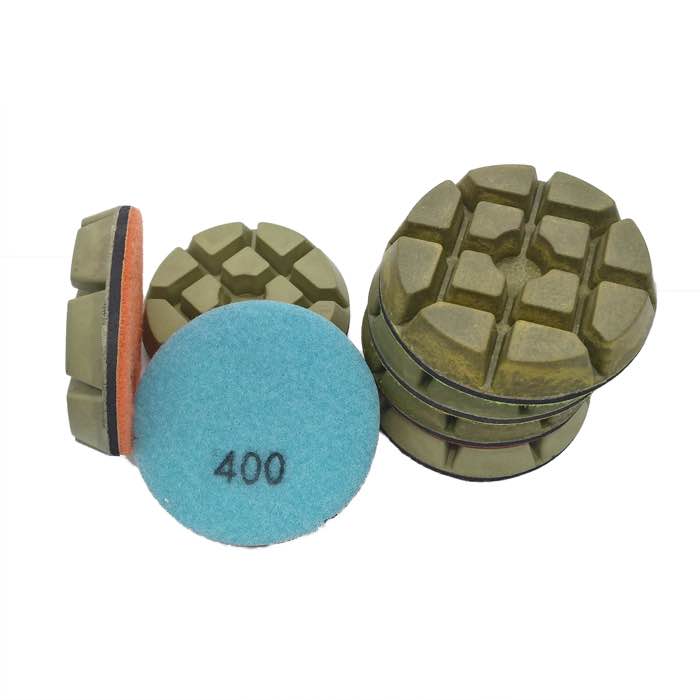
For diamond tooling on polishing projects, work through resin polishing pads in the correct grit sequence.
Written and reviewed by JOY TECH — an SGS & BV audited, CE/RoHS certified diamond tools manufacturer founded in 2004, exporting to 50+ countries.
Our factory and QMS are audited by SGS and Bureau Veritas. Products meet CE/RoHS requirements and every piece is 100% inspected before packing.
Verified Certificates
