Average response time: under 24 hours
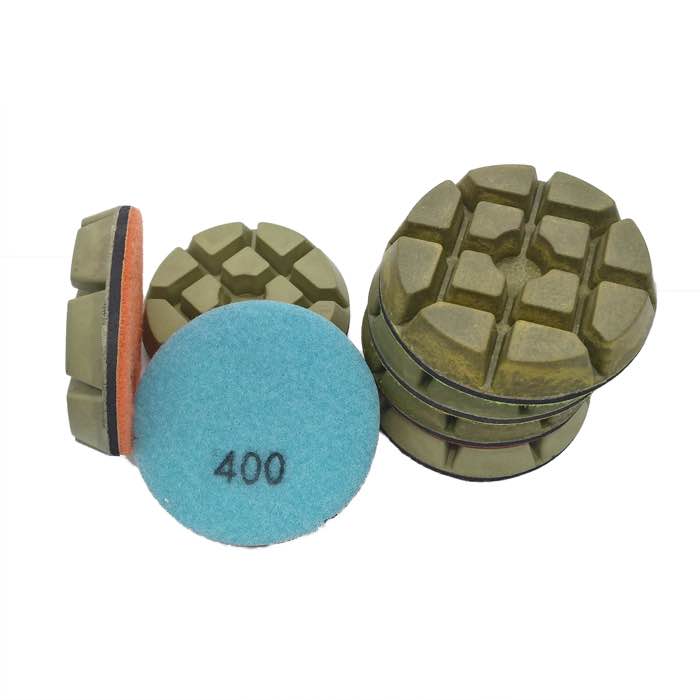
Do not polish concrete when relative humidity sits above 80 percent, and never start grinding until the slab is at least 7 days old per 25 mm of thickness, with 28 days as the safe default for a 150 mm slab. High humidity slows cement curing, traps water under resin pads, and leaves dull patches that look fine on day one but cloud over in two weeks. Test the slab with a plastic sheeting test or a concrete moisture meter; polish only when surface moisture reads below 75 percent internal RH.
Concrete cures by hydration, and hydration needs temperature more than it needs dryness. In a humid climate the slab cannot lose water fast, which sounds good, but the top paste cures slower than the body of the slab. Grinding too early opens a soft surface that later dusts and never takes a dense polish. A 150 mm slab poured at 25 degrees Celsius cures to about 70 percent of its 28-day strength in seven days, but in 15 degree weather that seven-day mark stretches to fourteen. Humidity above 80 percent extends that curve further.
Resin bond pads cut cleanly only when the heat generated at the pad-concrete interface wears the diamond out at the same rate the new diamonds are exposed. On a wet slab the interface stays cool, the resin does not wear, and the pad glazes over. That glazed pad then polishes the surface with a layer of smeared cement paste, producing a temporary shine that washes off on first cleaning. The floor looks done on delivery day and dulls within a month.
The conservative rule is one day of wet curing per 25 mm of slab thickness, plus at least 7 days before any mechanical grinding. For a typical 125 mm warehouse slab that means 7 days of mist curing or wet burlap, then another 3 to 7 days of drying before the first metal-grind pass. On residential slabs of 100 mm, a 7-day cure plus a 3-day drydown is usually enough; on 200 mm industrial slabs, budget 14 to 21 days.
Before grinding, do a quick plastic sheet test: tape a 600 mm square of clear polyethylene to the slab for 16 hours. If condensation forms under the film or the concrete under it looks darker than the surrounding slab, the floor is still too wet. For a commercial sign-off, use a pinless moisture meter or an anhydrous calcium chloride test. Stop work if moisture vapor emission is above 5 lb per 1000 square feet per 24 hours or internal RH reads above 75 percent.
Adjust your process rather than fighting the weather. First, densify earlier: spray the lithium silicate densifier at the 200 grit step rather than the 400 step, so it has more time to react while the slab is still slightly damp. Second, run resin pads dry, never wet, in humid air. The dry-friction heat helps the resin wear evenly and the dust can be collected by vacuum. Third, extend pad life by one extra pass rather than forcing a glazed pad. A JOY RFP-01 resin pad set is designed to cut damp slabs without glazing, which is the main failure mode in humid climates.
If the project calendar will not wait, switch to a copper-bond or hybrid transitional pad between metal and resin steps. The harder bond cuts the damp paste without smearing it, and a JOY RFP-05 hybrid resin pad placed at the 400 grit step will carry a humid-climate slab through to a readable gloss.
Slabs on grade dry from the top down but wet up from below after rain. A floor that read 70 percent RH on Tuesday can read 90 percent on Friday after a 24-hour downpour. Re-test before every grind session, not just at mobilization. If the site is covered only by a roof without walls, schedule polishing after a 48-hour dry window.
Applying an acrylic or polyurethane guard onto a damp slab traps water under the film. Within weeks the film whitens, the floor streaks, and the contractor gets called back. The fix is to wait until the moisture test passes, then apply guard in two thin coats rather than one thick coat.
Deliver the floor with a moisture reading on the sign-off sheet, not just a gloss reading. In humid climates, owners should know the floor reached internal RH below 75 percent before sealer. Set a maintenance schedule: dust-mop twice a week, scrub with a neutral cleaner once a month, and burnish once per quarter. If you are sizing the pad set for a multi-story project where floor drying conditions vary from floor to floor, ask our technical team for the pad progression that matches your measured RH and slab strength.
Written and reviewed by JOY TECH — an SGS & BV audited, CE/RoHS certified diamond tools manufacturer founded in 2004, exporting to 50+ countries.
Our factory and QMS are audited by SGS and Bureau Veritas. Products meet CE/RoHS requirements and every piece is 100% inspected before packing.
Verified Certificates
