Average response time: under 24 hours
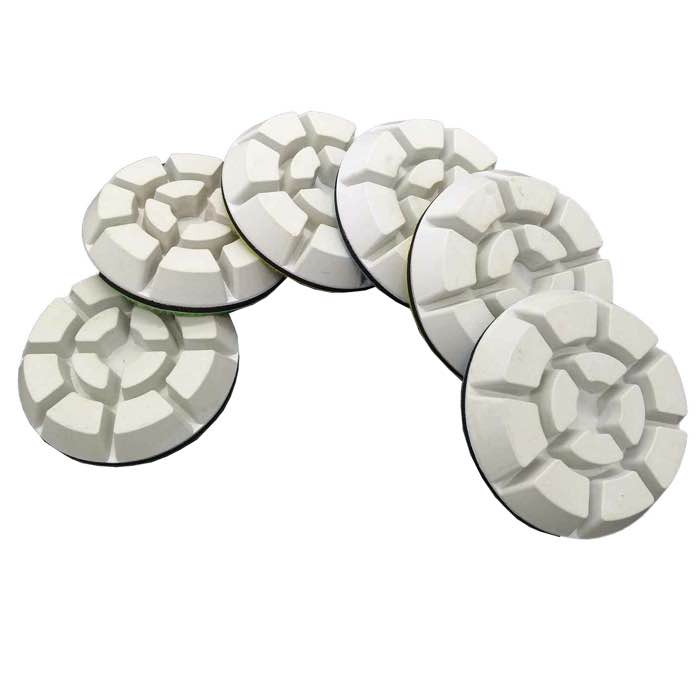
Use soft resin-bonded diamond pads, run wet, starting at 400–800 grit and finishing at 3000 to polish onyx. Onyx is soft (Mohs 3–4), translucent, and prone to chipping, so never start with coarse metal-bond pads — they cut too aggressively and can eat through the surface. Keep the grinder speed low (1000–2000 rpm), the pad flat, and work in light passes with plenty of water.
| Stage | Grit | Notes |
|---|---|---|
| Fix scratches (only if needed) | 200–400 | Light, wet, brief passes |
| Refine | 800 | Remove 400 scratches |
| Polish | 1500 | Build the sheen |
| High gloss | 3000 | Mirror finish on translucent stone |
Use diamond white resin floor polishing pads or standard diamond resin polishing pads on a soft backing pad. Keep water flowing and check progress frequently.
A: Not recommended. Onyx overheats and burns quickly when polished dry; wet polishing protects the surface and gives a clearer gloss.
A: 1000–2000 rpm on a variable-speed grinder. Higher speeds generate heat that softens and damages onyx.
A: It can. Fill cracks with a color-matched epoxy before polishing, and use only soft resin pads with light pressure.
Onyx and delicate stones polish safely with soft resin pads run wet at low speed, starting at 400–800 grit and finishing at 3000. Go gently, keep it flat and wet, and onyx will reveal a beautiful translucent gloss without damage.
