Average response time: under 24 hours
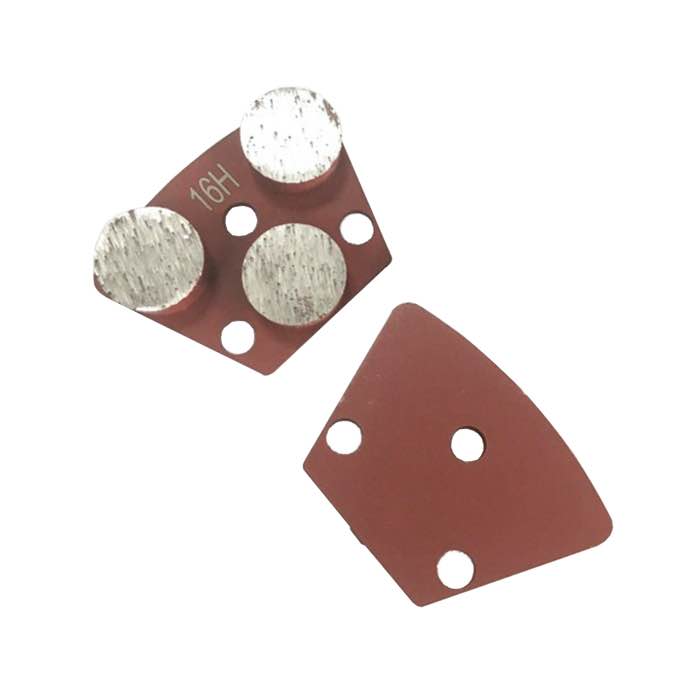
Remove paint and coatings from concrete by starting with PCD scrapers for thick or gummy film, then following up with 30/40 or 60/80 metal-bond diamond segments to plane the residue. Run light, overlapping passes with the HEPA extractor connected, and stop when the slab shows uniform sand with no glistening or tacky film. Thin latex grinds off quickly, thick epoxy needs PCD plus diamonds, and elastomeric rubber coatings load tooling fast and often pay back a switch to chemical stripper. Always test for asbestos in pre-1980 buildings before dry grinding.
Coatings fall into a few families, and the right tooling depends on which you are cutting. Thin latex or acrylic paint is brittle and grinds away as fine dust. Thick epoxy or polyurethane is hard and glassy, and chips off in flakes under PCD. Elastomeric or rubberized waterproof coatings stretch instead of chip, so they wrap around tooling and load segments within minutes. Misreading the family is the most expensive mistake on a recoat job.
Scrape a small test patch with a putty knife. If the coating curls and snaps, it is brittle and ready for PCD. If it stretches like rubber and peels in a continuous sheet, it is elastomeric. If it feels hard and glassy and leaves only dust when scratched, it is a thermoset film such as epoxy. Match your first pass to that read.
Thin paint usually needs no PCD at all. A 30/40 metal-bond diamond grit on a standard plate removes it in one or two light passes. Do not start with coarse 16/20 tooling, because you will unnecessarily open the concrete profile and create scratch that later coating steps must fill. If the paint is only a hazy stain, even 60/80 diamonds will take it down.
Hard floor coatings over 10 mil thick come off best with a PCD tool that has four or six blades. Run the PCD on a medium-bond plate with light pressure, because heavy pressure smears epoxy across the slab and loads the blades with glassy chips. After the PCD lifts the bulk film, follow with 30/40 then 60/80 metal-bond diamonds to plane the residue. On very thick self-leveling epoxy overlays, expect two PCD passes before diamonds make sense.
Stretchable waterproof coatings are the hardest to grind off. PCD blades peel them in strips but the rubber curls back onto the segments, and diamonds gum shut within minutes. The practical move is to limit grinding to small edge bands and patches where coating fails, and use a heat gun plus scraper or chemical stripper for the open floor. If you must grind elastomer, keep passes under one meter and lift the plate often.
| Coating type | First tool | Finish tool | Typical rate |
|---|---|---|---|
| Latex / acrylic paint | 30/40 diamond | 60/80 diamond | 40-60 m²/h |
| Thick epoxy / PU | PCD 4-6 blade | 30/40 then 60/80 | 15-25 m²/h |
| Elastomeric / rubber | PCD, light passes | 60/80 diamond | 5-10 m²/h |
Across every coating type, take shallow bites and let the tooling do the work. A grinder that is forced down digs in, builds heat, and smears soft coating across the floor. The weight of the machine is usually enough pressure; the operator only steers. Overlap each strip by about 30 percent so you do not leave unground lanes. Move at a steady walking pace, roughly one meter per second, and avoid stopping in place because a parked plate burns a circular mark into the coating and the concrete underneath.
When switching from PCD to diamonds, vacuum the slab completely first. Loosened coating chips are abrasive and will scratch the fresh diamond finish if left on the floor. A second sweep after the first diamond pass catches grit loosened by the changeover and keeps the finish consistent across the bay.
Coatings melt before they grind. Epoxy softens around 80 to 120 degrees Celsius, latex softens even lower, and once a film melts it sticks to segments like hot tar. The fix is procedural: keep passes short, lift the plate frequently, and run the extractor at full CFM to pull heat and dust away. If a segment loads up, stop and scrape it clean rather than forcing through a loaded cut. Never spray water on a hot coating pass, because the steam carries binder fumes into the air.
Watch the color of the dust. Clean concrete dust is light gray. Dark, sticky, or shiny dust means the coating is melting, not grinding, and you need to back off pressure or let the tooling cool. On a hot summer slab, grind early or late, because midday surface heat pushes soft coatings over the melting threshold.
Old coatings are the reason to plan safety before you start. Pre-1980 floor paint and mastic may contain asbestos, and dry grinding turns that into airborne fibers that require a licensed abatement contractor. Lead-based paint pre-1978 is the same story: use a HEPA-shrouded grinder and wet methods, and contain waste as regulated lead dust. Modern coatings release VOCs as they grind, so ventilate enclosed spaces and wear a respirator with organic-vapor cartridges.
Grinding wins on brittle, hard, thin coatings and on small patches. Chemical stripper wins on thick elastomer, on glue-down tile mastic, and on any floor where the coating is over 20 mil thick. If the grinder spends more than an hour on a 20 m² patch and segments load every few minutes, stop and switch to a methylene-chloride-free stripper, dwell per the label, then pressure wash and let the slab dry 48 hours before grinding the residual profile.
Can I grind paint off a garage floor with a rented grinder? Yes for thin latex or acrylic on a small garage. Rent a walk-behind grinder with a HEPA shroud and 30/40 diamond segments, expect a day for a two-car bay, and test for lead first if the garage predates 1978.
How do I know when the coating is fully removed? Run a clean white rag over the dry slab. If the rag comes up dark, sticky, or glistening, another pass is needed. The target is uniform exposed sand, dry to the touch, with no sheen from residual film under bright raking light.
Written and reviewed by JOY TECH — an SGS & BV audited, CE/RoHS certified diamond tools manufacturer founded in 2004, exporting to 50+ countries.
Our factory and QMS are audited by SGS and Bureau Veritas. Products meet CE/RoHS requirements and every piece is 100% inspected before packing.
Verified Certificates
