Average response time: under 24 hours
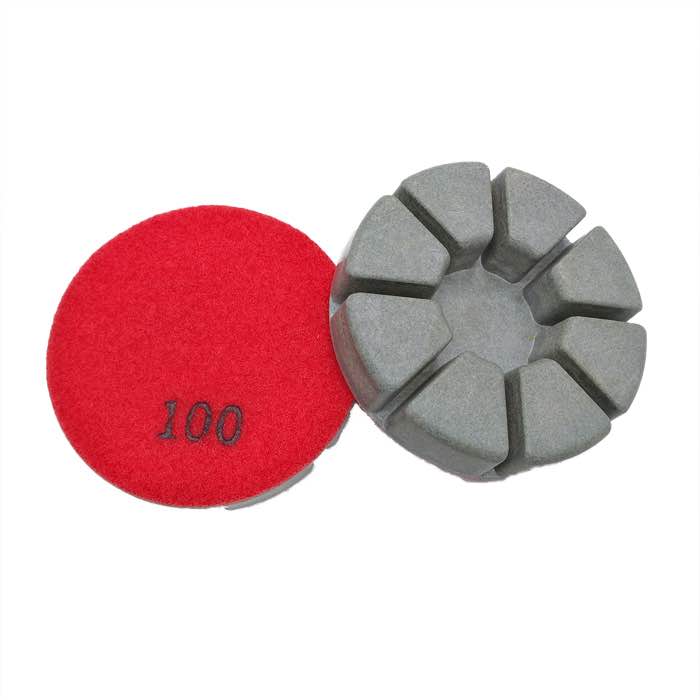
For dry polishing concrete, use 3-inch or 4-inch velcro-backed resin pads, 50 to 3000 grit, on a floor grinder or angle grinder with vacuum dust extraction. Dry pads with a 15 mm resin layer and reinforced backing give the best shine without water, because they resist heat and hold their grit longer on hard concrete.
| Concrete condition | Start grit | Pad type |
|---|---|---|
| Rough, power-troweled, 2-3 mm | 50-100 | Coarse resin |
| Smooth, hand-troweled | 200-400 | Medium resin |
| Already honed | 800 | Fine resin |
| Final gloss | 1500-3000 | Polish resin |
Match the start grit to the surface, not to habit: starting too coarse wastes pads and time.
Use a velcro backer pad matched to your machine so pads sit flat and last longer.
| Factor | Dry | Wet |
|---|---|---|
| Dust | Needs vacuum | Slurry to manage |
| Speed | Faster setup | Slower, messy |
| Pad heat | Higher — use dry-rated pads | Cooler |
| Best for | Large floors, retrofits | Stones, edges, sensitive jobs |
A: Typically one pass per grit step plus a final burnish — 5 to 7 passes total for a full gloss.
A: Some hybrid pads can, but dry-rated resin pads last much longer and give a better shine without water.
A: 800 looks professional; 1500-3000 gives a glassy gloss. For warehouses, 800-1500 is the practical sweet spot.
A: Yes — with a driver plate and resin pads at low speed, or dedicated burnishing pads for the final pass.
Dry polishing is the fastest, cleanest way to shine concrete when you pick the right resin pads and manage dust. Start at the correct grit, step through 50-3000, and finish with a burnish. Browse our diamond resin polishing pads and dry polishing pads to build the full grit range.
