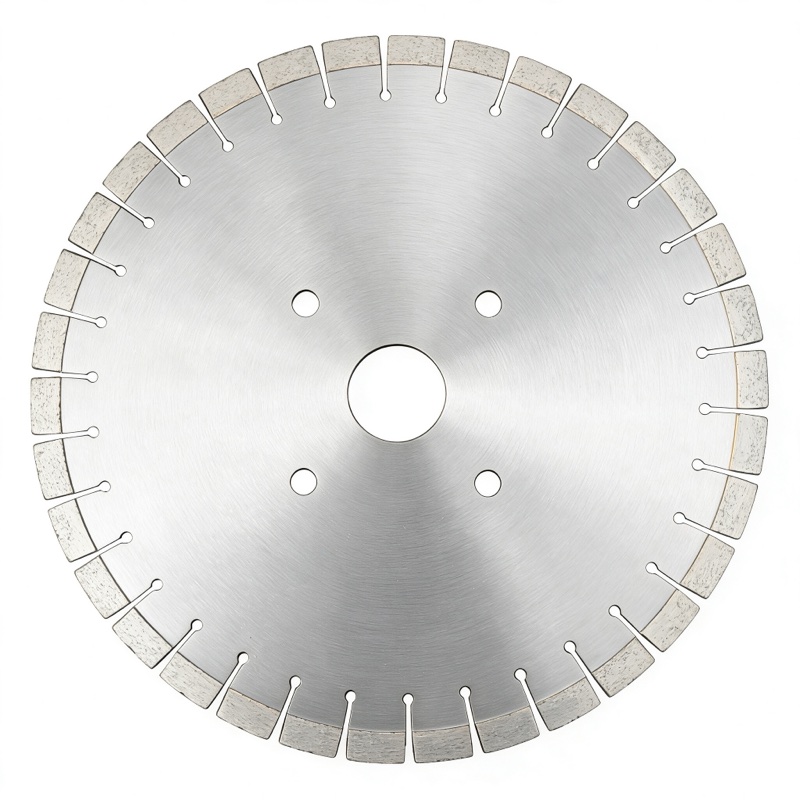
For a general contractor who needs one all-around blade, keep a turbo blade (fast, smooth, works wet or dry on masonry, tile, brick and light concrete). Keep a segmented blade as the second blade for fast, aggressive cuts in thick concrete, asphalt and cured slabs where edge finish does not matter.
| Feature | Segmented Blade | Turbo Blade |
|---|---|---|
| Rim design | Gullet segments with slots | Continuous rim with serrated edge |
| Cutting speed | Fast, aggressive | Moderate to fast |
| Edge quality | Rougher, some chipping | Smooth, clean edges |
| Materials | Concrete, asphalt, stone, rebar | Tile, masonry, brick, thin concrete |
| Wet/dry | Dry capable (laser welded) | Both, cooler running |
| Best for | Demolition, scoring, thick cuts | Finish cuts, general jobsite work |
The General Purpose Turbo Dry Blade is a solid daily carrier for masonry and tile; the Concrete and Asphalt Saw Blade (Laser Welded) covers the heavy cuts.
Yes, for thin concrete and block work. For deep, reinforced or cured concrete, a segmented laser-welded blade is faster and safer.
Both can run dry if they are laser-welded and you cut in short passes with cooling intervals. A turbo blade runs cooler because the continuous rim spreads heat.
Not necessarily — a good turbo blade handles both. But for porcelain or polished tile, a dedicated continuous rim blade gives cleaner edges.
Carry one turbo blade for finish work and one segmented blade for heavy cutting. That covers 90% of a general contractor's jobsite cutting without a trailer full of blades. JOY TECH offers both styles in OEM-friendly sizes.
