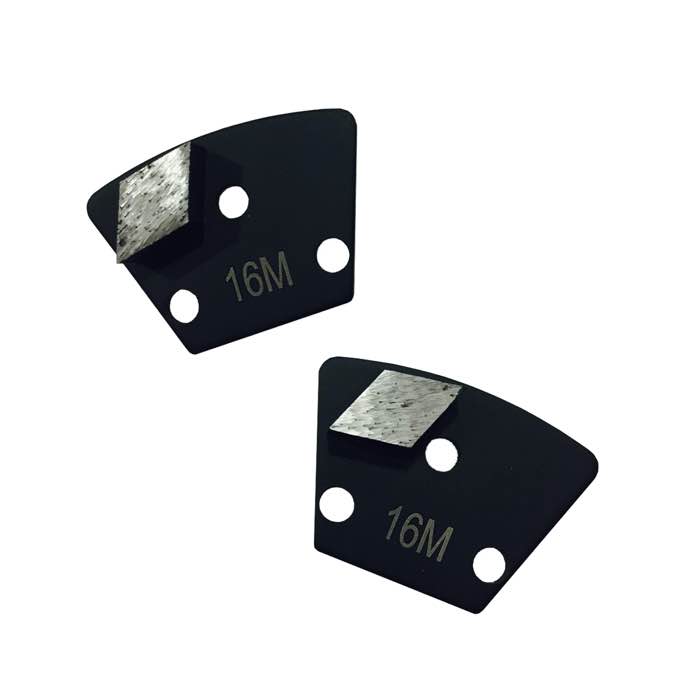
Hard concrete needs a soft bond and soft concrete needs a hard bond. Diamond tools self-sharpen when the metal bond wears away to expose fresh diamond. Hard, dense concrete blunts the diamonds quickly, so a soft bond keeps wearing back to reveal new crystals. Soft, abrasive concrete erodes the bond too fast, so a hard bond slows that wear and protects the diamonds. Matching bond to concrete hardness is the single biggest factor in grinding cost and speed.
Concrete hardness is usually measured in PSI (pounds per square inch) or by compressive strength. It depends on cement content, water-cement ratio, aggregate type and curing age. A floor that tested at 6000 PSI behaves completely differently from a 3000 PSI slab — and if you use the wrong diamond bond, you will either burn through segments in hours or watch them glaze over and stop cutting.
Bond hardness refers to the strength of the metal matrix that holds the diamond crystals in a grinding segment. It is a balance:
| Concrete | PSI Range | Characteristics | Recommended Bond |
|---|---|---|---|
| Hard / dense | 5000+ | Polished aggregate, low wear on tools, dulls diamonds fast | Soft bond |
| Medium | 4000-5000 | Typical commercial slabs | Medium bond |
| Soft / porous | Under 4000 | High cement paste, abrasive, wears bond fast | Hard bond |
If you don't have a PSI test report, use these practical signs:
Using the wrong bond is expensive. With a bond that is too hard on hard concrete, the diamonds glaze — the tool polishes instead of cutting, generating heat and stopping progress. With a bond that is too soft on soft concrete, segments wear out in a fraction of the expected time, driving up cost per square meter. In both cases, the fix is the same: switch to the bond matched to your floor.
A: Generally 5000 PSI and above is considered hard for diamond tool selection. 4000-5000 PSI is medium, and below 4000 PSI is soft.
A: Glazing means the diamonds are being polished instead of cutting, which usually means the bond is too hard for your concrete. Switch to a softer bond so fresh diamonds are exposed continuously.
A: A medium bond is a safe compromise for mixed conditions, but matching bond to each floor's hardness gives better speed, finish and cost per square meter.
A: Water cooling changes wear characteristics slightly. Wet grinding runs cooler and can let you use a slightly harder bond; always tell your supplier whether you grind wet or dry.
Matching your diamond bond to concrete hardness is the most important decision in concrete floor grinding. Test your floor, start with a medium bond, and adjust toward soft for hard concrete or hard for soft concrete. With the right trapezoid grinding discs and bond selection, you will cut faster, spend less on tools and finish on schedule.
