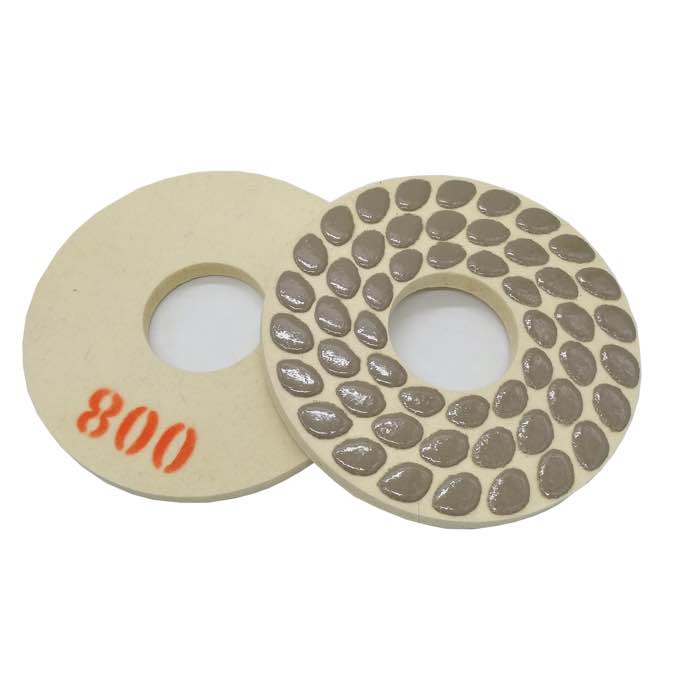
Neither method is universally better. Wet polishing uses water to lubricate the pads, suppress silica dust and produce exceptional clarity on dense stone-like concrete, but it creates slurry mess and slows production. Dry polishing uses a dust extraction vacuum, is faster, cleaner to mobilize, and is the standard on most commercial floors, but it can leave a slight haze if the wrong pads or speeds are used. Modern high-gloss jobs often combine the two: open and densify dry, then refine dry with diamond resin pads and finish with a dry burnish.
Wet polishing floods the head with water so resin pads cut at lower friction and run cooler. The water carries away swarf and keeps the bond from loading, which is why wet work shines so clearly on hard aggregate. Dry polishing relies on vacuum extraction to pull dust away immediately; the friction heats the resin bond and opens the diamonds gradually. Because no water dilutes it, the densifier reacts more predictably on a dry floor.
| Factor | Wet Polishing | Dry Polishing |
|---|---|---|
| Dust control | Excellent (water binds dust) | Depends on HEPA vacuum |
| Finish clarity | Very high, deep gloss | High, with proper pads |
| Production speed | Slower (slurry cleanup) | Faster, no drying time |
| Slurry mess | Yes, must be collected | None |
| Densifier reaction | Diluted if over-wet | Strong, predictable |
| Best for | Stone, terrazzo, thin pads | Most commercial concrete |
Choose wet polishing when you are working on dense stone, terrazzo, or countertops and sinks where a mirror-like clarity matters, or when dust extraction is impractical. Wet work pairs well with flexible resin pads used by hand or on small-angle polishers. Keep water flow minimal - just enough to cool and rinse - because flooding washes away the densifier and delays the job. On floors such as our 125mm Diamond Resin Polishing Pads, wet use produces a very flat, scratch-free surface on terrazzo and marble.
Choose dry polishing for most warehouse, retail and garage floors where speed, dust containment and no slurry disposal win. You need a HEPA-rated vacuum matched to the grinder and good dry resin pads that release heat cleanly. Our Dry Polishing Pads for Concrete Floor are built for dry operation with vacuum extraction, cutting through the grit sequence without loading up.
Beyond finish quality, method choice is driven by regulation. Wet cutting and polishing produce slurry that cannot be hosed into drains - it must be collected, settled and disposed of as construction waste. Dry polishing, by contrast, requires a HEPA-filtered vacuum rated for silica, and the vacuum must be matched to the grinder airflow or dust escapes and loads the pads. On interior jobs in occupied buildings, dry polishing with extraction is usually cleaner to manage; on exterior or open fabrication areas, wet work gives the best stone clarity.
One hybrid approach many contractors use is dry grinding and densification, then a single wet final pass only where maximum clarity is needed. This keeps dust under control for most of the job while reserving water for the finish that benefits from it. Whichever you choose, never switch wet and dry pads back and forth on the same head without cleaning them - dried slurry on a dry pad scratches the floor.
If you already own a HEPA vacuum and dry resin pads, dry polishing covers most commercial floors. If you specialize in stone, terrazzo or thin countertops, invest in a wet setup. Many shops own both and choose per job rather than committing to one method. Match the method to the material, the site conditions and the finish the client expects.
A: Yes, but always dry the slab fully before applying densifier or polishing dry. Wet residue causes white haze under dry pads.
Water cools pads and can extend life on hard concrete, but pads designed for dry use may glaze if forced wet.
Both can be safe: wet binds dust, dry needs a proper HEPA vacuum. Never dry grind concrete without extraction.
Match the method to the job: dry for fast, dust-controlled commercial floors; wet for stone clarity and water-friendly settings. Whichever route you choose, the pad bond must suit the method and the concrete. The takeaway is that there is no universally better method, only the right method for the material and site. Dry work wins on speed and dust control for most floors; wet work wins on clarity for stone. Match your choice to the job and your tooling to the method, and the finish will follow. Contact JOY TECH for a quote on dry and wet diamond resin polishing pads for your grinder and material.
