Average response time: under 24 hours
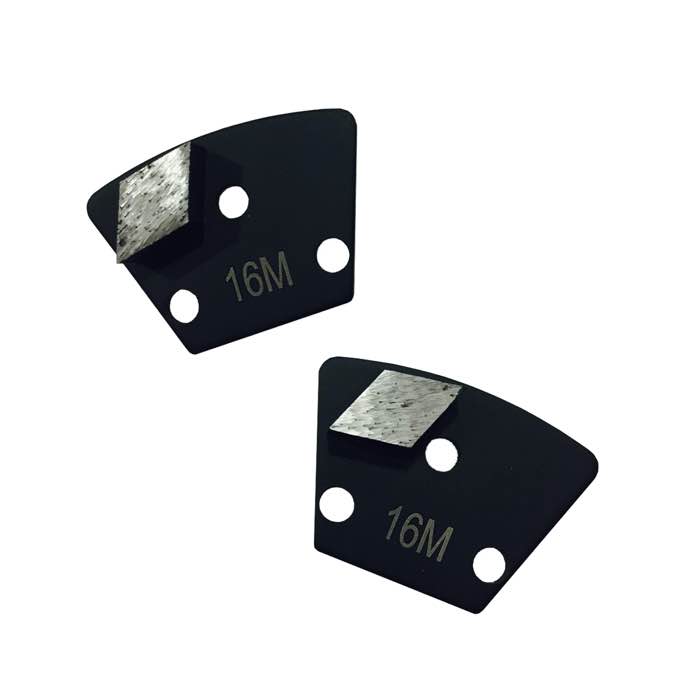
Wet grinding uses water to cool diamond segments, reduce dust, and extend tool life by 30-50%, producing a smoother finish — but requires water management and is slower to set up. Dry grinding is faster and more convenient for small areas, but generates hazardous silica dust requiring HEPA extraction and wears segments faster. For large polished concrete projects, wet grinding is preferred for metal-bond steps; dry grinding is common for small repairs, edge work, and jobs without water access.
| Factor | Wet Grinding | Dry Grinding |
|---|---|---|
| Dust Control | Excellent — water suppresses dust | Requires HEPA vacuum system |
| Tool Life | 30-50% longer segment life | Shorter (heat accelerates wear) |
| Surface Finish | Smoother, more uniform | Slightly rougher, more scratch-prone |
| Setup Time | Longer (water supply, slurry management) | Fast — just attach HEPA vacuum |
| Best For | Large floors, polished concrete, metal-bond grinding | Small areas, edges, repairs, coating removal |
| Silica Exposure | Minimal | High without proper extraction |
| Cleanup | Slurry collection and disposal required | Dust collection only |
| Cost per m² | Lower (longer tool life) | Higher (faster tool consumption) |
Wet grinding delivers a continuous flow of water to the grinding interface. The water serves three critical functions: it cools the diamond segments (preventing overheating and bond glazing), flushes away ground material (keeping diamonds exposed and cutting freely), and suppresses crystalline silica dust (a serious health hazard). The resulting slurry must be collected and properly disposed of according to local regulations. Wet grinding is the standard method for large commercial and industrial polished concrete projects, especially during the aggressive metal-bond grinding stages (50#-120#).
Dry grinding operates without water, relying on the diamond segments to grind concrete in ambient conditions. Without water cooling, segments run hotter and wear faster. The primary concern is crystalline silica dust — concrete contains 50-80% silica, and grinding generates respirable particles that cause silicosis. OSHA requires engineering controls (HEPA dust extractors attached directly to the grinder) or respiratory protection. Dry grinding is preferred for small areas, edge grinding with hand tools, jobs where water would damage adjacent materials, and coating removal where water could reactivate adhesives.
Choose wet grinding for: large floor areas (500+ m²), polished concrete systems, metal-bond rough grinding, projects where finish quality is critical, and jobs with available water and drainage. Choose dry grinding for: small repairs and patches, edge and detail work, occupied buildings where water is impractical, thin-set and mastic removal, and jobs without water access. Always use a HEPA-rated dust extractor with dry grinding — never grind dry without dust control.
Crystalline silica dust is the biggest health risk in concrete grinding. OSHA's permissible exposure limit (PEL) is 50 μg/m³ as an 8-hour time-weighted average. Wet grinding effectively eliminates airborne silica, making it the safer method when feasible. When dry grinding is necessary, use a grinder with integrated dust shroud connected to a HEPA vacuum that captures 99.97% of particles at 0.3 microns. Additionally, wear a N95 or P100 respirator, safety glasses, and hearing protection.
Both wet and dry grinding have their place in concrete floor preparation. Wet grinding is the workhorse for large polished concrete projects, offering better tool life, finish quality, and dust control. Dry grinding provides flexibility for small jobs and detail work but demands rigorous dust management. Many professional contractors use both — wet grinding for open floor areas and dry grinding for edges, corners, and repairs. JOY TECH diamond grinding segments are formulated for optimal performance in both wet and dry conditions.
Written and reviewed by JOY TECH - an SGS & BV audited, CE/RoHS certified diamond tools manufacturer founded in 2004, exporting to 50+ countries.
Our factory and quality management system are audited by SGS and Bureau Veritas. Products meet CE/RoHS requirements and every piece is 100% inspected before packing.
Verified Certificates
