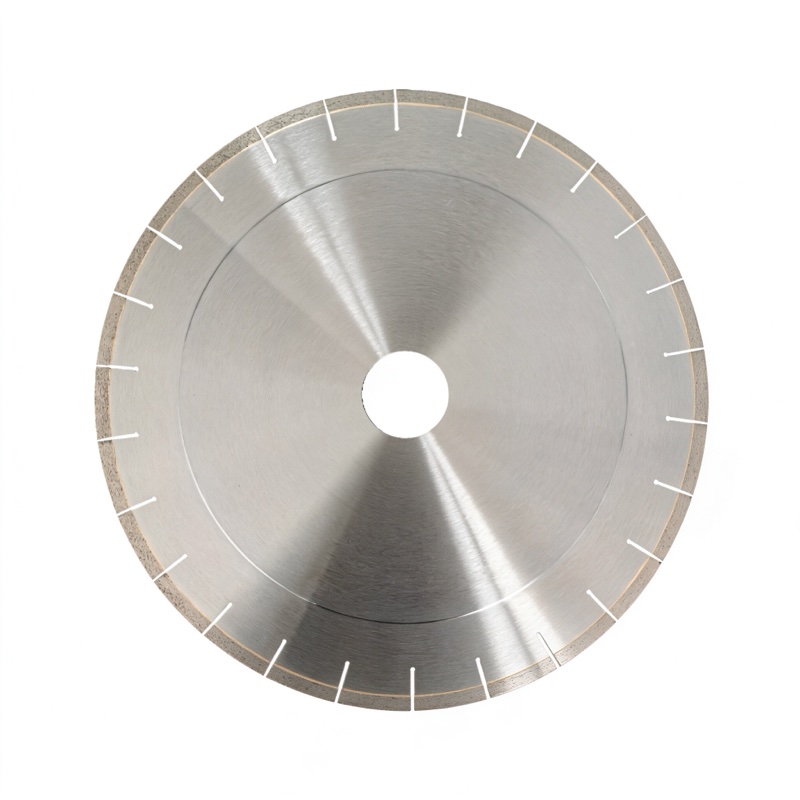
Use a continuous-rim porcelain tile blade (200–300mm) on a wet tile saw, feed it steadily, and support the tile on both sides of the cut. For extra-large 1200mm tiles, add a sacrificial support board and make one continuous pass — that gives chip-free edges on glazed porcelain.
Porcelain is denser and harder-fired than ceramic, and the glaze layer is brittle. A blade that vibrates, or a tile that is unsupported, chips the glaze along the cut line. The blade must cut the glaze first with a smooth rim, then the body, without flexing the tile.
The Turbo Mesh Porcelain Cutting Disc is built for glazed porcelain; the Dekton Saw Blade handles the toughest large-format slabs.
For trim cuts, yes, with a thin continuous-rim blade and a straightedge guide. Full tile cuts are better on a wet tile saw.
Usually from an unsupported trailing edge. Support the tile on both sides of the cut so the waste piece doesn't break off.
No — the same continuous-rim porcelain blade works. Rectified tiles just have precise edges you must not damage with a rough blade.
Large porcelain tiles cut chip-free with a continuous-rim blade, wet saw, full support and one steady pass. Upgrade your blade and support system, and even 1200mm tiles finish clean. JOY TECH's porcelain blades cover tile saws from 200mm up to large-format slabs.
