Average response time: under 24 hours
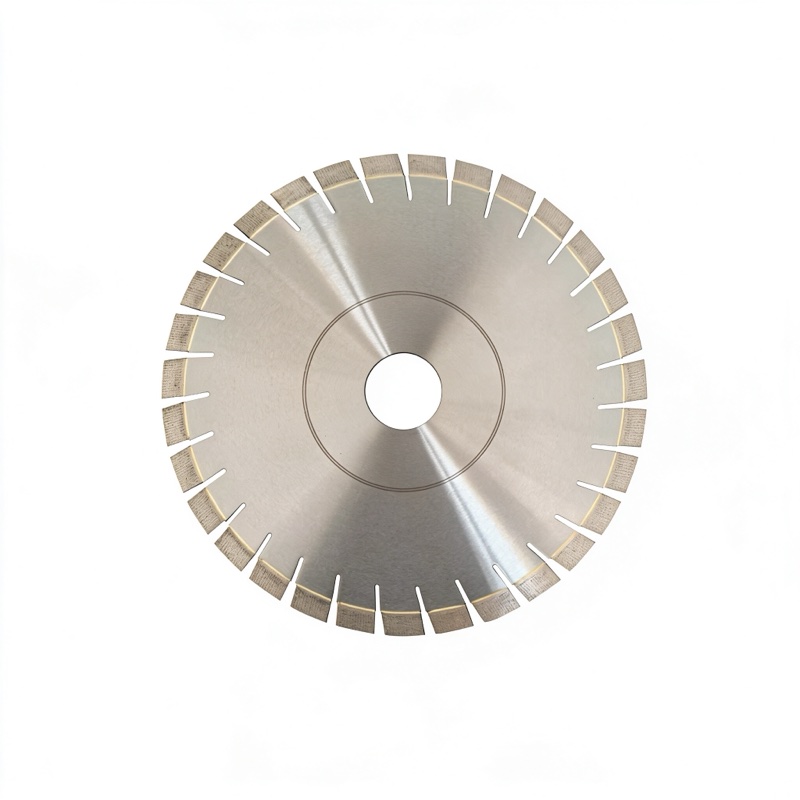
Uneven segment wear is almost never a blade defect. It is one of five things: (1) flange or arbor runout — the blade is not running true, so one side of each segment cuts more; (2) operator pressure — leaning the saw or grinder to one side, or walking the machine at an angle; (3) uneven substrate — hard aggregate pockets, rebar on one side, or a crowned slab; (4) cooling imbalance — water hitting one side of the blade only; (5) a one-off brazing defect — rare, but it shows up on day one. Fix the mount, the technique, and the cooling before blaming the manufacturer. For our existing diagnostics, see why segments wear unevenly and one-sided grinding wear.
Look at the segment after a shift. The pattern is diagnostic:
| Pattern | Likely cause |
|---|---|
| Segments tapered thinner on one side around the whole blade | Flange misalignment, arbor runout, or blade bent |
| One segment completely gone, others fine | Rebar hit, foreign object, or segment brazing defect |
| Every segment shorter on the left / right half of the blade | Operator pressure, machine tilted, or crowned floor |
| Segments polished shiny on one side, sharp on the other | Water hitting one side only; one side overheats and glazes |
| Segments worn diagonally across the height | Blade not perpendicular to cut; saw walking |
| Wear concentrated at the tooth tips, no body wear | Bond too hard for substrate — glaze risk |
| Body worn faster than diamond tips | Bond too soft for substrate; segments dropping early |
The #1 cause of one-sided segment wear is a blade that is not running true. Symptoms: the blade wobbles visibly at no-load, you can feel vibration in the handles, and the cut has a scalloped edge.
For walk-behind saws and floor grinders, one-sided wear often comes from the operator:
If the concrete is not uniform, the wear is not uniform:
A blade cutting dry or with uneven water will wear unevenly. The side that runs hotter loses bond faster and exposes more diamond; the side that runs cooler glazes. Symptom: one side of each segment is polished and shiny, the other side is sharp.
Once in a while, the segment itself is the problem. Signs of a defect:
If you see any of these, photograph the blade, the cut, and the saw setup, and send them back to the supplier. Reputable manufacturers (including ALZR) replace defect blades under warranty. But 90% of "defective blade" claims turn out to be flange, pressure, or water issues — fix those first.
A: You can lightly dress it on an abrasive block to even the rim, but if the wear is one-sided due to runout, dressing will not fix the underlying wobble. Fix the mount; otherwise the uneven wear returns in 30 minutes.
A: Mild one-sided wear is a performance issue, not a safety issue. But if a segment detaches (failed braze or rebar strike), the blade can vibrate violently and the remaining segments can fly off. Stop work immediately if you see a missing segment.
A: Replace the blade when the segment height is down to ~3 mm remaining (from 10-15 mm new). At that point the braze to the core is exposed and segment loss risk rises sharply. Do not run it to the steel core.
A: Reputable manufacturers hold segment height to ±0.3 mm and braze strength to a controlled range. No-name blades from unknown factories can vary segment height and concentration across the ring. If you have ruled out mount, technique, and water, switch to a traceable brand.
Uneven segment wear is diagnostic, not random. The wear pattern tells you whether the problem is the flange, the operator, the substrate, the water, or — rarely — the blade itself. Fix the mount and the technique first; order the right bond and a rebar-rated blade for reinforced concrete; and only then call the supplier about a defect. Browse our blade range with consistent segment height and controlled braze strength.
Written and reviewed by JOY TECH — an SGS & BV audited, CE/RoHS certified diamond tools manufacturer founded in 2004, exporting to 50+ countries.
Our factory and QMS are audited by SGS and Bureau Veritas. Products meet CE/RoHS requirements and every piece is 100% inspected before packing.
Verified Certificates
