Average response time: under 24 hours
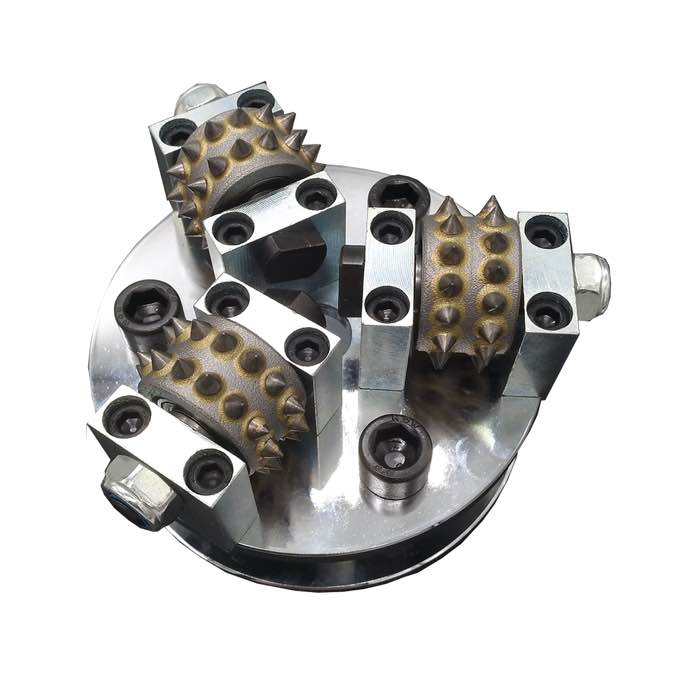
Swirl marks appear when the grinder's tooling does not sit flat on the concrete, when you jump grit sizes too fast, or when the machine dwells in one spot. The fix is to re-run the surface with the previous grit at a slow, overlapping pace, keep the machine moving, and make sure the pads or segments are evenly worn.
If one segment is taller, or one pad is more worn than its neighbors, the grinder rocks and carves arcs into the concrete. Check the plate: a grinding plate with evenly worn diamond segments sits flat; worn-out or mismatched pads should be replaced as a full set before grinding.
Jumping from 40 grit straight to 200 grit leaves the deeper scratches from the 40-grit pass untouched, and the shallower pass highlights them as swirls. Each grit step should overlap its predecessor: 40 → 80 → 120 → 200, or 30 → 60 → 120 → 220. Never skip more than one grit level when the floor will be polished.
Running the grinder too fast or letting it sit on one area overheats the concrete and digs a pattern. Move in overlapping passes, roughly 50-75% of the tool's width per pass, and keep a steady, walking pace. Let the weight of the machine do the work rather than leaning on it.
Drop back one grit size and re-grind the whole affected area with light, even pressure. If the marks are deep, go back two grits. Keep the passes overlapping and consistent, then step forward again one grit at a time. Check the floor under raking light between passes to confirm the pattern is gone before moving up.
A: Polishing pads are forgiving; the final buffing pads are not. Any scratch from a skipped grit step becomes visible once the surface is glossy. Re-grind and step through every grit.
A: Very light swirls can sometimes be lifted with a 200-grit pass and a burnishing pad, but true swirls need to be ground out with the correct grit sequence.
A: Heavier machines grind flatter. Lighter machines with uneven pressure from the operator are more likely to leave patterns, which is why steady overlapping passes matter.
Swirl marks are a process problem, not a floor problem. Keep tooling flat, never skip grits, and move in overlapping passes. Correct those three and your grinding will come out clean and ready to polish.
Written and reviewed by JOY TECH — an SGS & BV audited, CE/RoHS certified diamond tools manufacturer founded in 2004, exporting to 50+ countries.
Our factory and QMS are audited by SGS and Bureau Veritas. Products meet CE/RoHS requirements and every piece is 100% inspected before packing.
Verified Certificates
