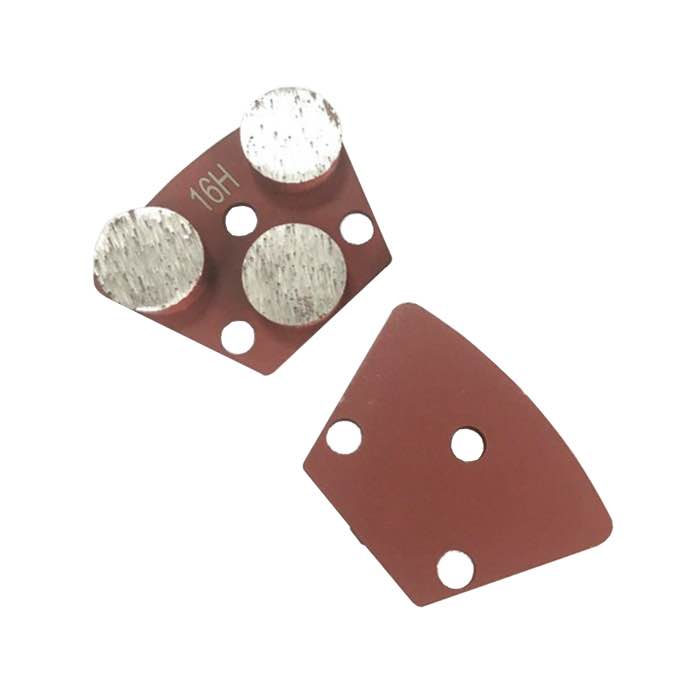
Your diamond tool glazes when the metal bond wears slower than the diamonds, so the exposed diamond crystals become smooth and polished instead of sharp. The fix is usually one of three things: dress the tool to expose fresh diamond, switch to a softer bond that wears back faster, or increase grinding pressure so the bond abrades away properly. Glazing is a bond-matching problem, not a defective tool.
Diamond grinding segments are a mix of diamond crystals held in a metal (or resin) bond. As you grind, the bond matrix wears away and fresh, sharp diamond is exposed — that is how a diamond tool self-sharpens. Glazing happens when the diamonds stop cutting but the bond keeps holding them. The crystal tips get flattened and polished until they reflect light like glass, which is where the name comes from. The tool is still full of diamonds, but none of them can bite into the concrete.
| Cause | Why It Happens | Symptom |
|---|---|---|
| Bond too hard for the floor | Hard concrete needs soft bond; hard bond on soft concrete won't wear back | Shiny segments, slow cutting, heat buildup |
| Too little pressure | Machine weight alone can't force bond wear | Tool skates, no bite |
| Wrong RPM | Too fast = friction polish; too slow = no cut | Smooth surface, glazing after minutes |
| Wet grinding with dry-bond tool | Water cools bond so it stops wearing | Glazing in wet-only setups |
| Worn diamonds | Tool past its life; crystals pulled out or flat | Glazing late in tool life |
Many operators reach for diamond grinding segments when they actually need PCD (polycrystalline diamond) tooling — for example when stripping epoxy, urethane or old coatings. PCD tools scrape coatings off with shearing action, while diamond segments are designed to grind the concrete surface itself. Using diamond segments on a coated floor causes both glazing and slow production. If you are removing coatings before grinding, switch to a PCD tool for coating removing or a PCD tool for epoxy floor removing first, then finish with diamond segments.
For most floor-prep jobs, a well-matched trapezoid grinding disc from our grinding range cuts fast and self-sharpens correctly on concrete between 2,500 and 8,000 PSI.
A: Sometimes — extra pressure forces the bond to wear and exposes fresh diamond. But if the bond is genuinely too hard for the floor, it will glaze again quickly. Dress the tool first, then decide whether you need a softer bond.
A: Run it against a dressing block or a scrap concrete block with coarse sand spread on it for 30–60 seconds at normal grinding speed. You can also use a diamond conditioning puck. You will see the surface go from shiny to slightly rough — that means fresh diamond is exposed.
A: Not quite. A dull tool has worn-out diamond that needs replacement. A glazed tool still has plenty of diamond — it just needs dressing or a bond change to expose fresh crystals.
A: Move one step softer in bond hardness. If a medium bond glazes, try a soft bond designed for hard concrete. Tell your supplier the floor PSI and whether you grind wet or dry.
A: Yes. Excessively high RPM polishes the diamond instead of cutting. Keep metal bond tools in the 800–1,500 RPM range and let the machine weight do the work.
Glazing is a sign that your diamond tool and your floor are not matched. Dress the tool for an immediate fix, then check bond hardness, pressure and RPM for the long-term solution. With the correct bond and tooling — like our single rhombus grinding disc — you will grind faster and get far more life out of every segment. Need help choosing the right bond for your floor? Contact JOY TECH with your concrete type and we will recommend the correct tool.
