Average response time: under 24 hours
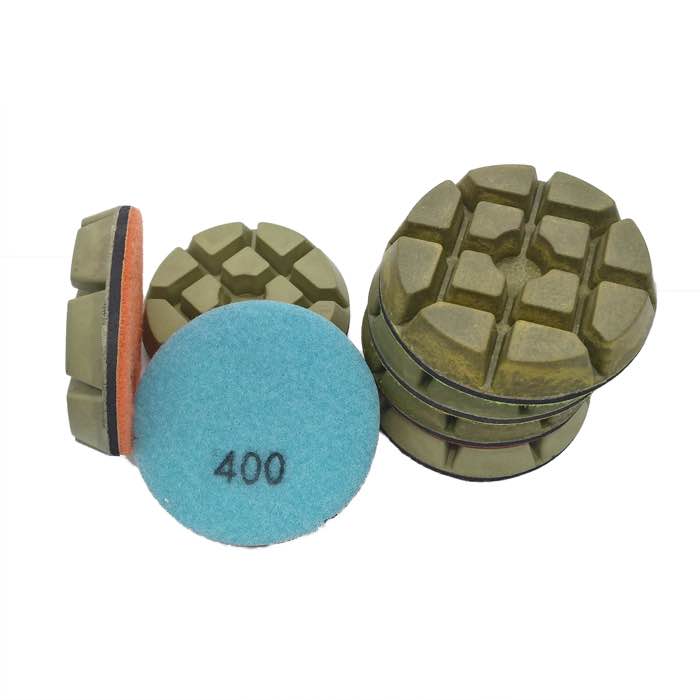
Pads turn black because they are picking up contamination: rubber tire marks, oil, adhesive residue, or asphalt tracking into the work area, plus burned resin from running a pad on a dirty or overheated floor. Blackening itself is normal pad wear, but heavy blackening means the pad is loading up and losing cutting power.
Check the floor before you blame the pad. Black marks usually come from rubber or plastic transfer (forklift tires, trailer mats), oil or grease stains, old joint filler, or cured coatings partially ground off. On interior jobs, the most common cause is a floor that was not fully cleaned after the grinding phase, so resin pads drag asphalt or tire rubber across the surface.
For light loading, brush the pad with a stiff nylon brush or run it briefly over a clean, damp scrap of concrete to knock the load loose. For stubborn buildup, soak the pad in warm water with a mild degreaser, scrub, rinse, and let it dry completely before reuse. Do not use harsh solvents on resin pads; they soften the resin matrix and shorten pad life.
Clean the floor between every grit step with a vacuum and a damp mop, especially before the resin phase. Keep forklifts and foot traffic off freshly exposed concrete, or cover the work zone. If you are polishing after grinding, that final cleanup is the single most effective step for keeping diamond resin floor polishing pads clean.
If the pad is black, hard, shiny, and no longer cuts, the resin matrix has loaded past the point of cleaning. Replace it. Running a glazed pad wastes time and polishes nothing. Keep a spare set on site and rotate pads between machines so worn ones do not drag contaminants across the floor.
A: Not dangerous, but a loaded pad can leave dark streaks that take extra passes to remove. It also cuts slower and heats up.
A: Inspect pads every 30-60 minutes of run time, or whenever you change grit. Clean or rotate as soon as you see loading.
A> Only after thorough cleaning. Contaminants trapped in the pad will transfer to the next floor and ruin the gloss pass.
A black pad is a warning, not a disaster. Clean the floor, clean the pad, and rotate tooling before loading gets severe. Your resin pads will cut longer and the final gloss will stay clean.
Written and reviewed by JOY TECH — an SGS & BV audited, CE/RoHS certified diamond tools manufacturer founded in 2004, exporting to 50+ countries.
Our factory and QMS are audited by SGS and Bureau Veritas. Products meet CE/RoHS requirements and every piece is 100% inspected before packing.
Verified Certificates
