Average response time: under 24 hours
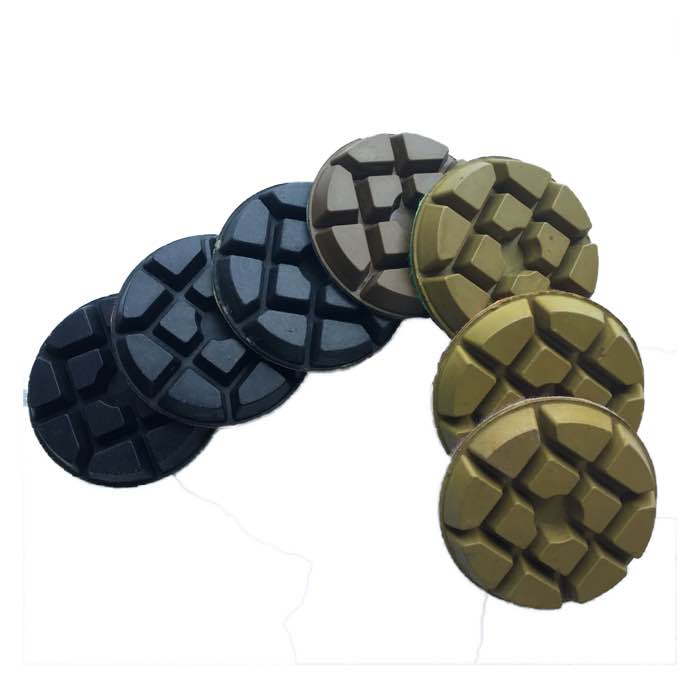
Polished concrete becomes slippery mainly when it is wet and when the finish is polished to a very high gloss. To fix it, stop at a lower gloss (like a matte or satin finish), apply a slip-resistant sealer with an aggregate additive, or burnish in a penetrating sealer that adds micro-texture. In wet or public areas, the slip resistance of the floor comes from the sealer and finish you choose, not from the polish itself. Test the floor wet before you call it done. For the right tooling on this job, see 8-triangle resin polishing pads.
Polished concrete is dense and smooth, so water sits on the surface in a thin film instead of soaking in. That film dramatically reduces friction. The higher the gloss, the smoother the surface and the lower the wet slip resistance. Unsealed floors are less slippery because they remain slightly porous, but most polished floors are sealed for stain protection, and a glossy sealer makes the wet surface even slicker. The problem is always worst in kitchens, bathrooms, entryways and outdoor areas exposed to water. Related tooling is available in our diamond resin polishing pads range.
The simplest fix is to polish to a lower gloss. A matte or satin finish stops the sequence before the final high-gloss steps, leaving a fine texture that grips underfoot. Many commercial floors specify a matte finish precisely for safety. If the client wants a glossy look, keep the gloss but treat the surface for slip resistance. You can also polish with a resin polishing pad at a lower grit to retain some micro-profile.
Do not leave a freshly polished floor unwalked until it is dry, and do not assume a glossy sealer is safe because the concrete beneath is textured. Also avoid waxing polished concrete: wax builds a smooth, slippery film. If a floor is already slippery, the fastest fix is to abrade the surface with a fine pad to open up micro-texture, then apply a slip-resistant sealer. Re-polishing to full gloss with a sealer will only make it slicker.
A: No. Dry polished concrete has reasonable slip resistance. The risk is wet floors, high-gloss finishes and glossy sealers. A matte finish or slip-resistant sealer solves most cases.
A: A matte or satin finish with a slip-resistant sealer, and anti-slip strips where people walk. Avoid high-gloss finishes in kitchens, baths and outdoor areas.
A: Yes. Clean the floor, lightly abrade it with a fine diamond pad to restore micro-texture, and apply a slip-resistant sealer. That usually fixes the wet slip problem without a full re-polish.
Polished concrete is slippery because it is smooth, especially when wet. Choose a matte finish for safety-critical areas, use a slip-resistant sealer, and always test the floor wet. With the right finish and treatment, polished concrete can be both beautiful and safe, even around water.
Written and reviewed by JOY TECH — an SGS & BV audited, CE/RoHS certified diamond tools manufacturer founded in 2004, exporting to 50+ countries.
Our factory and QMS are audited by SGS and Bureau Veritas. Products meet CE/RoHS requirements and every piece is 100% inspected before packing.
Verified Certificates
