Average response time: under 24 hours
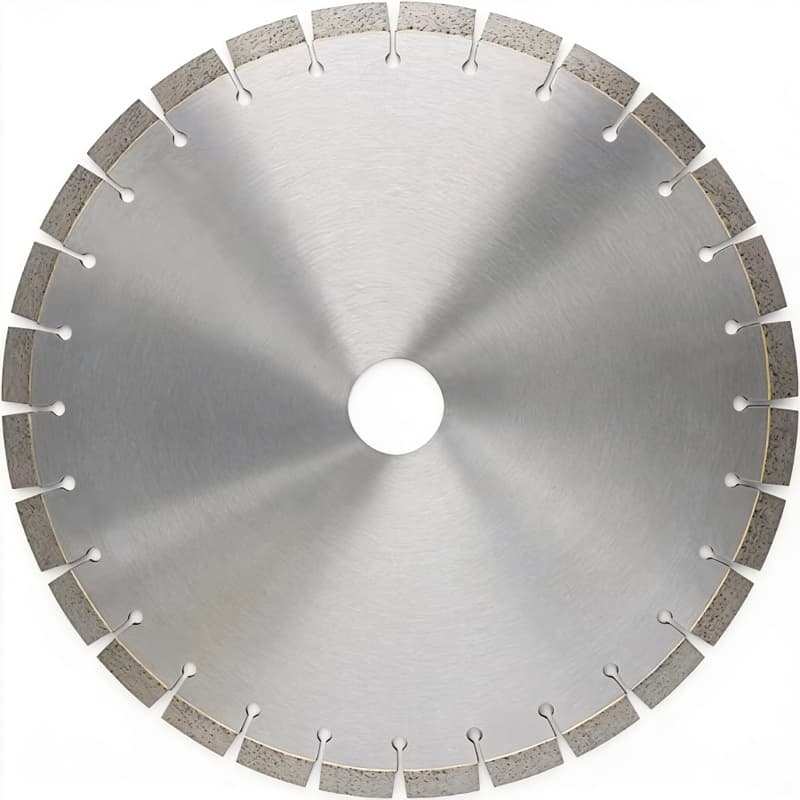
A 350mm diamond saw blade can cost USD 9 from one factory and USD 32 from another, even with identical diameter and segment count. The difference comes down to five variables: synthetic diamond grit size and concentration (up to 40% of segment cost), metal bond powder mix (cobalt vs. iron-based, up to 25%), segment height and volume (10mm vs. 15mm changes price by 30%), welding process (silver-brazed vs. laser-welded), and order volume (MOQ 50 vs. 1,000 pieces shifts unit price by 20%-35%). Certification (CE, MPA, oSa), private-label packaging, and anti-dumping duties add another 8% to 25% on top.
A diamond blade is not a commodity stamping; it is a precision tool whose segment is hot-pressed from synthetic diamond grit plus a metal powder matrix. The matrix can be bronze-based, iron-based, or cobalt-based, and each has very different market prices. Understanding the BOM lets you read a quote instead of guessing. For a deeper dive on terminology, see our diamond tool glossary.
| Cost component | Share of finished-blade price | What changes it |
|---|---|---|
| Synthetic diamond grit | 25%-40% | Grit size (30/40 vs. 50/60), concentration (25% vs. 40%), brand (Element Six vs. Chinese made) |
| Metal bond powder | 15%-25% | Cobalt content, pre-alloyed vs. mixed powder, tin/copper ratio |
| Steel core | 10%-18% | Core thickness (2.2mm vs. 2.8mm), quenching, noise slots, laser-cut vs. stamped |
| Segment volume | 5%-15% | Height (10/12/15mm), segment count, width |
| Welding & finishing | 5%-10% | Laser vs. silver braze, grinding, balancing, painting |
| QC, cert, packaging | 5%-10% | CE/MPA/oSa tests, color box vs. bulk polybag |
| Factory overhead & margin | 10%-20% | MOQ, order size, customization level |
Industrial synthetic diamond prices swing with market cycles and with grit quality. A high-quality, shaped MBD grit from a Tier-1 producer can cost 2x to 3x a generic Chinese powder of the same mesh size. Cheap blades often under-dose diamond (concentration 18-22%) and use smaller grit, which cuts fast at first but glazes or wears out in half the expected life. When a quote looks 30% below the market, assume diamond concentration is lower or grit is recycled. Ask the factory for the grit mesh (e.g., 30/40, 40/50, 50/60) and concentration percentage in writing.
Cobalt-based bonds hold diamond more tightly, run cooler, and last longer on hard stone, but cobalt is a volatile metal priced near USD 30-40/kg. Iron-based bonds are cheaper (USD 8-15/kg) and acceptable for general concrete and masonry. A granite blade that uses cobalt-rich bond will cost 25% more than a granite blade using iron-only bond, but the life difference is often 40% or more. For context on how bond choice works, read our guide on specifying bond and grit for custom tools.
Same diameter, very different tool. A 350mm blade with 10mm segments vs. 15mm segments contains 50% more segment volume and typically costs 30% more. Laser-cut silent cores (with noise slots) add 15% over a stamped core. A tuck-pointing blade with a 4.5mm-wide segment costs more than a general-purpose 3.2mm blade simply because the steel core is thinner and the segment width is custom. When comparing quotes, make sure segment height, core thickness, and segment count match exactly.
Silver-brazed segments are cheaper to produce but can detach at high RPM or overheating. Laser-welded segments penetrate the core by 1-2mm and are required for dry cutting, asphalt, and high-RPM saws. Laser welding adds USD 1.5-4 per blade depending on size. If your quote does not specify, ask. Our earlier article on silver-brazed vs. laser-welded blades covers when each is mandatory.
Unit prices drop steeply at volume breakpoints:
Custom logos, color boxes, custom bond formulas, or private-label blister packs add setup fees USD 150-800 per SKU and usually require a higher MOQ. For a comparison of how China pricing stacks up against US/EU alternatives, see China vs. USA diamond tools price, quality, and lead time.
A CE-marked blade for Europe is not the same blade sold into Southeast Asia: it has to pass EN 13236 safety tests, carry a max RPM mark, and come with a technical file. MPA and oSa certification add cost but protect you on job sites. US buyers must also factor anti-dumping duty (currently applies to certain diamond saw blades from China; check current HTS rulings) and VAT/GST on import. The landed cost, not the FOB price, is what you should compare. Our guide on why diamond blade prices vary so much goes into more depth on the retail side.
When a quote comes in, do not just compare the number. Ask for diamond grit mesh and concentration, bond type, segment height, welding process, and whether the price includes CE/packaging. A blade priced at the bottom of the range with no detail sheet is almost always a shorter-life tool; a blade priced at the top with a full spec sheet is usually a premium product. Your job as a buyer is to find the price-performance point that matches your end customer, not the cheapest unit on Alibaba.
Written and reviewed by JOY TECH — an SGS & BV audited, CE/RoHS certified diamond tools manufacturer founded in 2004, exporting to 50+ countries.
Our factory and QMS are audited by SGS and Bureau Veritas. Products meet CE/RoHS requirements and every piece is 100% inspected before packing.
Verified Certificates
