Average response time: under 24 hours
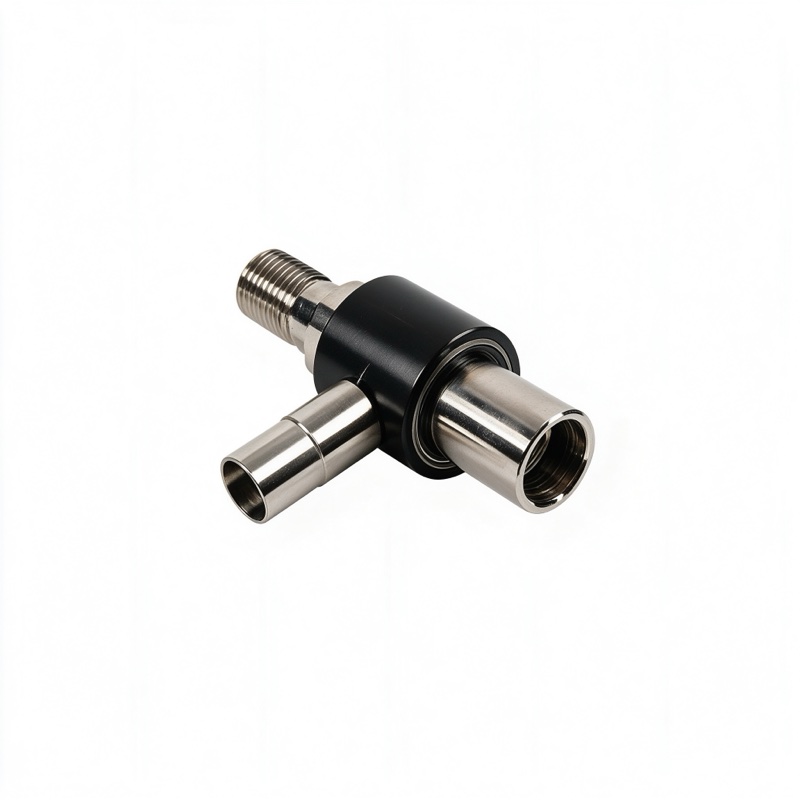
The dust collector adapter connects the drilling machine, core bit and a vacuum cleaner to collect dust during dry drilling. Both inner and outer threads are available in various sizes, with OEM customization accepted.
Key Features:
Specifications:
| Thread | Type |
|---|---|
| 1-1/4-7 | Male/Female |
| 1-1/4-3 | Male/Female |
| M22 / 1/2 / 1/2 UNF-20 | Male/Female |
| M18 / M16 / M14 / 5/8-11 | Male/Female |
Other specifications are available upon request.
Applications:
How to Choose:
Terminology:
Safety Tips:
Frequently Asked Questions:
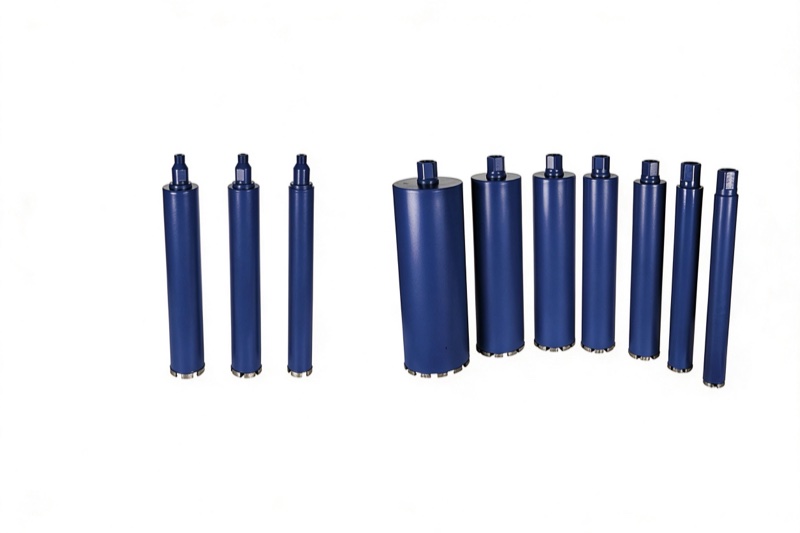
Diamond core drilling tools use a cylindrical steel barrel with diamond-impregnated segments at the cutting end to drill precise, clean holes in concrete, stone, masonry, and tile. Unlike hammer drills that fracture material, core drilling produces a smooth-walled hole with minimal vibration, making it essential for plumbing, electrical, HVAC, and structural applications where hole accuracy and surface integrity matter. Core bits range from 12mm for anchor holes to 600mm+ for large utility openings.
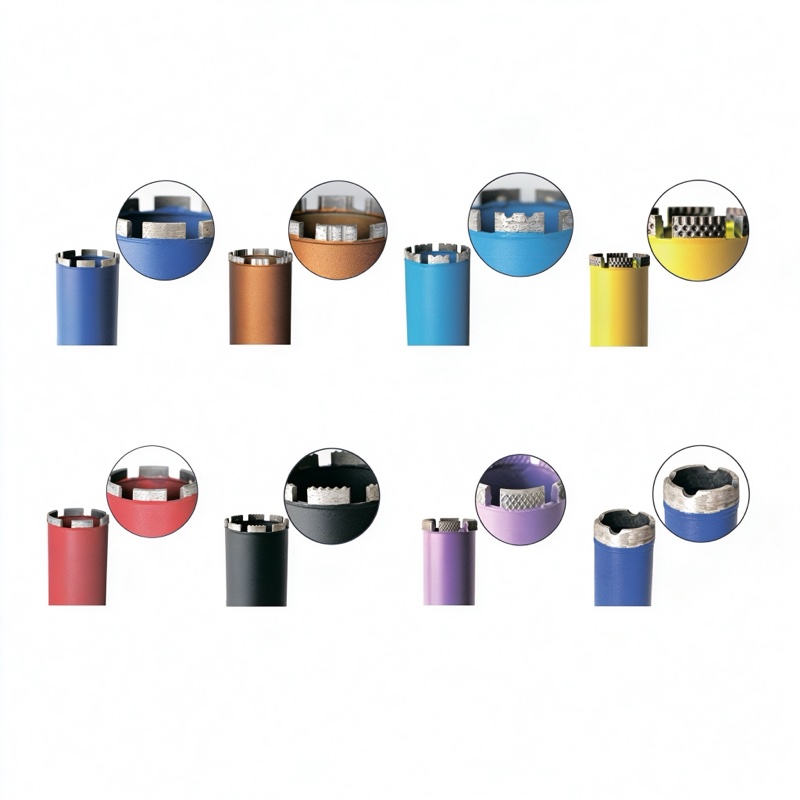
| Bond Type | Sintered diamond segments |
| Diameter | 12mm – 600mm core bits |
| Drilling Depth | Standard 400mm / 450mm (extensions available) |
| Shank Type | 1/2" BSP, 1-1/4" UNC, SDS-plus |
| Working Material | Reinforced concrete, masonry, stone, tile |
| Use Condition | Wet drilling (core drill rig recommended) |
Determine hole diameter: 12–50mm for pipes/conduits, 50–200mm for HVAC, 200–600mm for large utility openings
Match shank type to your drill rig: 1/2" BSP for handheld drills, 1-1/4" UNC for rig-mounted core drills, SDS-plus for rotary hammers
Select bond based on material: soft bond for hard concrete/stone, medium bond for reinforced concrete, hard bond for soft masonry
For holes deeper than 400mm, use extension rods — ensure the bit has a through-hole for water supply
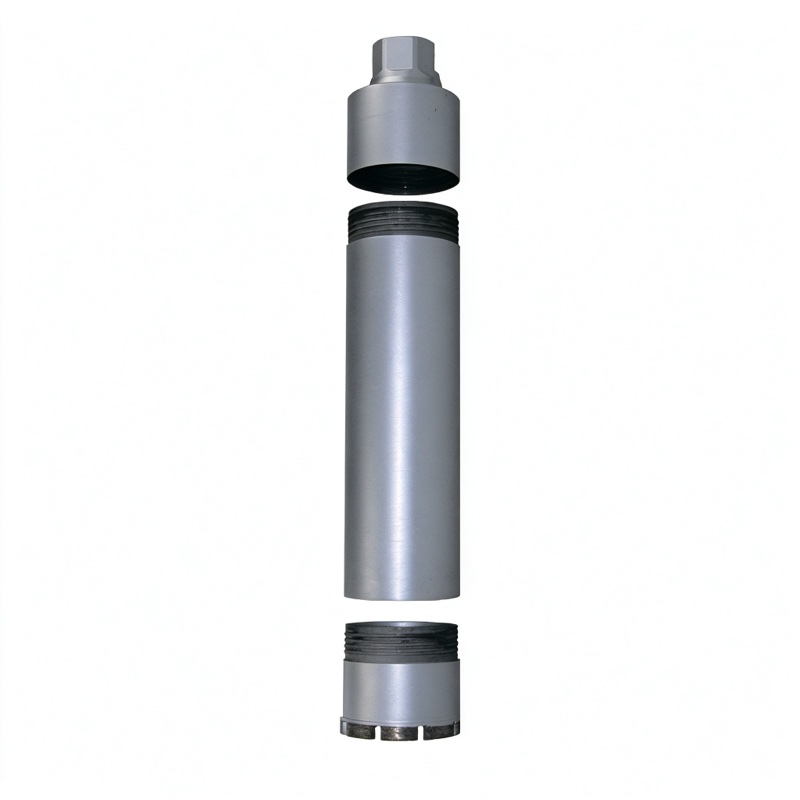
The steel tube body of a core bit, typically 400–450mm long. The diamond segments are welded to the cutting end, and the shank attaches to the opposite end.
Drilling with a continuous water supply through the bit center. Water cools the segments, flushes cuttings, and extends bit life by 3–5x compared to dry drilling.
The connection end of the core bit that attaches to the drill motor. Common types: 1/2" BSP (British Standard Pipe), 1-1/4" UNC (Unified National Coarse), and SDS-plus.
The cylindrical material plug removed during core drilling. In structural testing, core samples are analyzed to verify concrete compressive strength and aggregate composition.
Wet drilling is always preferred for diamond core bits: water cools the segments, flushes cuttings, and extends bit life by 3–5x. Dry drilling is only suitable for small-diameter bits (≤50mm) in soft masonry where water access is unavailable.
Common causes: bond too hard for the material (diamonds not exposing), insufficient water, or running too fast/slow RPM. Try a softer bond, increase water flow, and verify RPM matches the bit diameter. If glazed, dress the bit by drilling soft abrasive material.
Yes. Quality diamond core bits are designed to cut through reinforced concrete including rebar. Use moderate feed pressure and ensure adequate water cooling when encountering steel. Reduce feed rate when the bit hits rebar to prevent segment impact damage.
Standard core bits are 400–450mm long, providing a maximum drilling depth of approximately 350–400mm. For deeper holes, use extension rods available in 200mm, 400mm, and 600mm lengths. Ensure the bit has a through-hole for water when using extensions.
Jamming occurs when the core sample breaks loose and wedges inside the barrel. Prevent this by drilling at a steady feed rate, using adequate water, and periodically retracting the bit to clear the core. If jammed, reverse the drill briefly while pulling up gently — never force it.
Small bits (≤50mm) with SDS-plus shank can be used on rotary hammer drills. Larger bits require a dedicated core drill rig with sufficient torque and RPM. Using a large bit on a handheld drill risks injury and motor damage.
Every product is covered by a 12-month warranty against manufacturing defects in materials and workmanship. If a defect is confirmed, we replace the tool or refund the order — your choice.
Please inspect goods within 7 days of receipt. For any quality issue, send photos or a short video to our support team — we respond within 24 hours and settle replacements or returns promptly.
Written and reviewed by JOY TECH - an SGS & BV audited, CE/RoHS certified diamond tools manufacturer founded in 2004, exporting to 50+ countries.
Our factory and quality management system are audited by SGS and Bureau Veritas. Products meet CE/RoHS requirements and every piece is 100% inspected before packing.
Verified Certificates
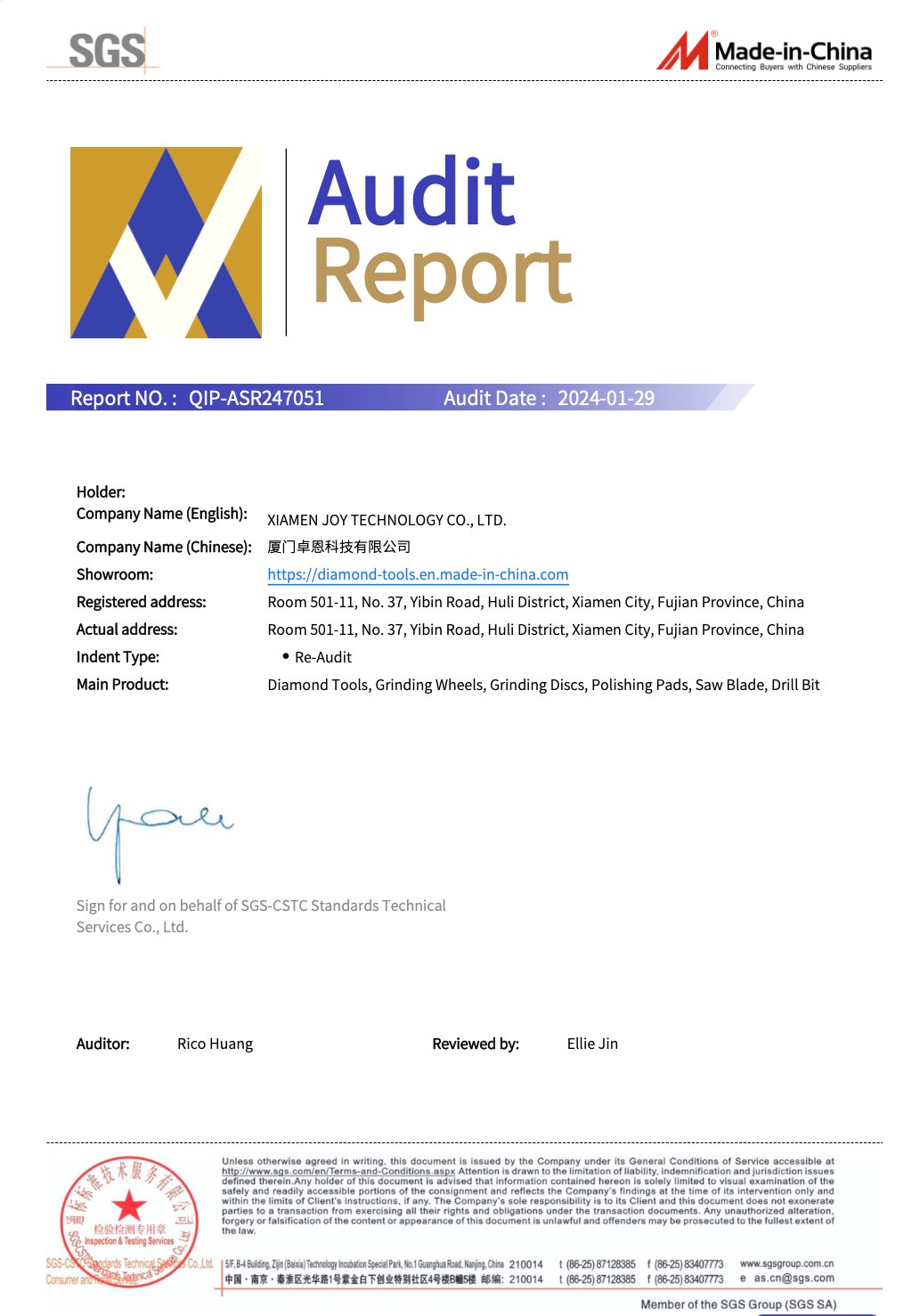
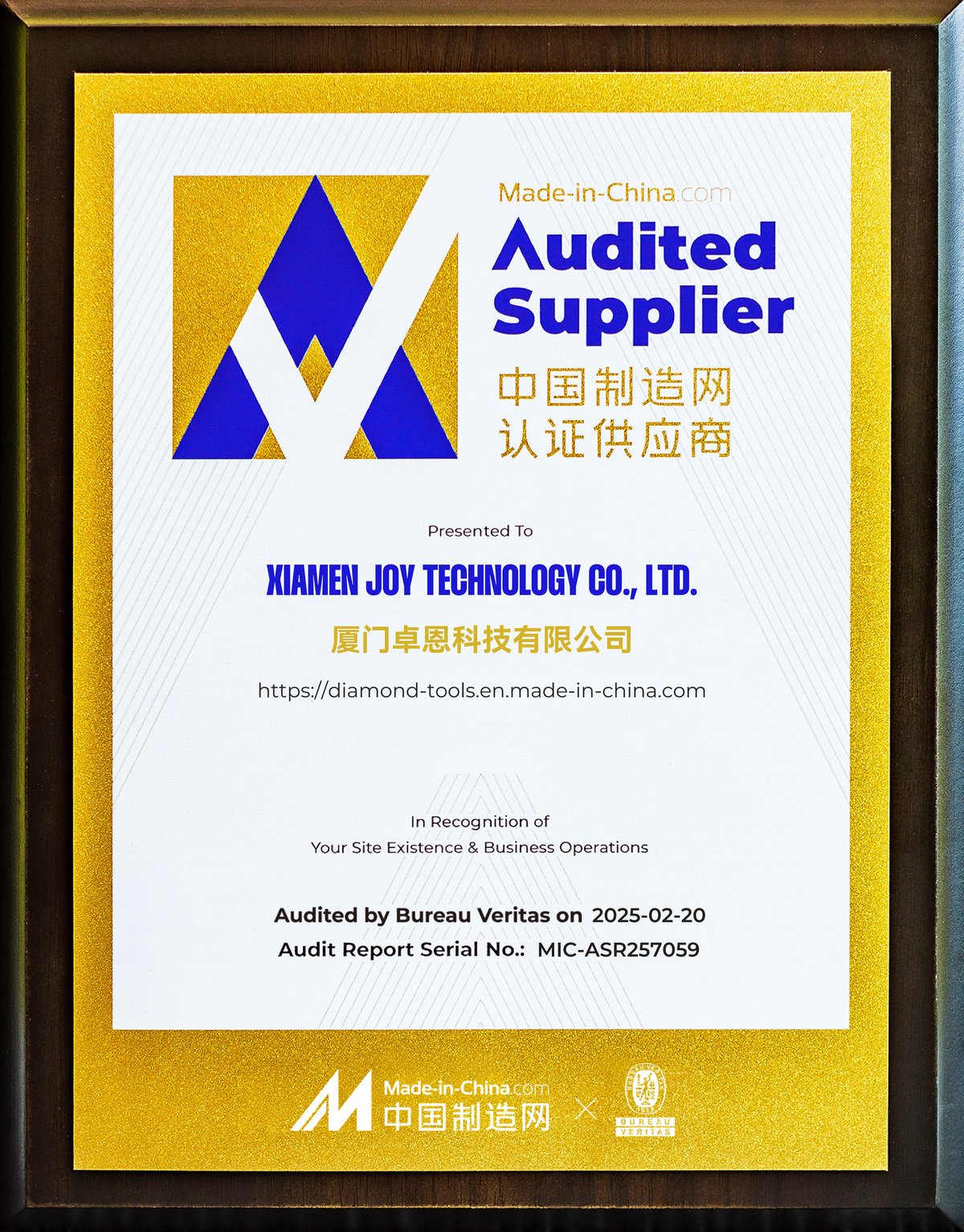
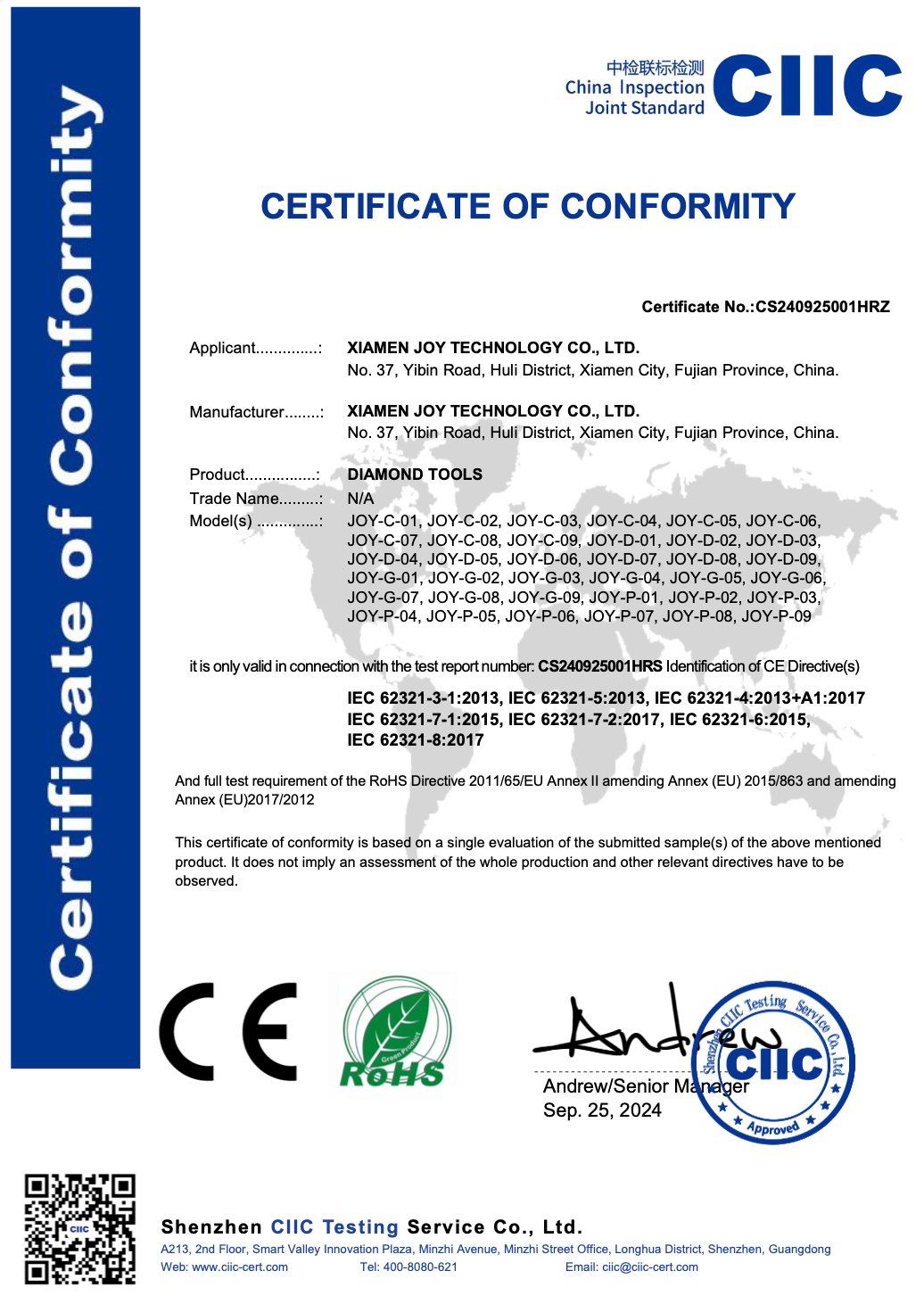
Full certificate copies available on request — request certificates.