Average response time: under 24 hours
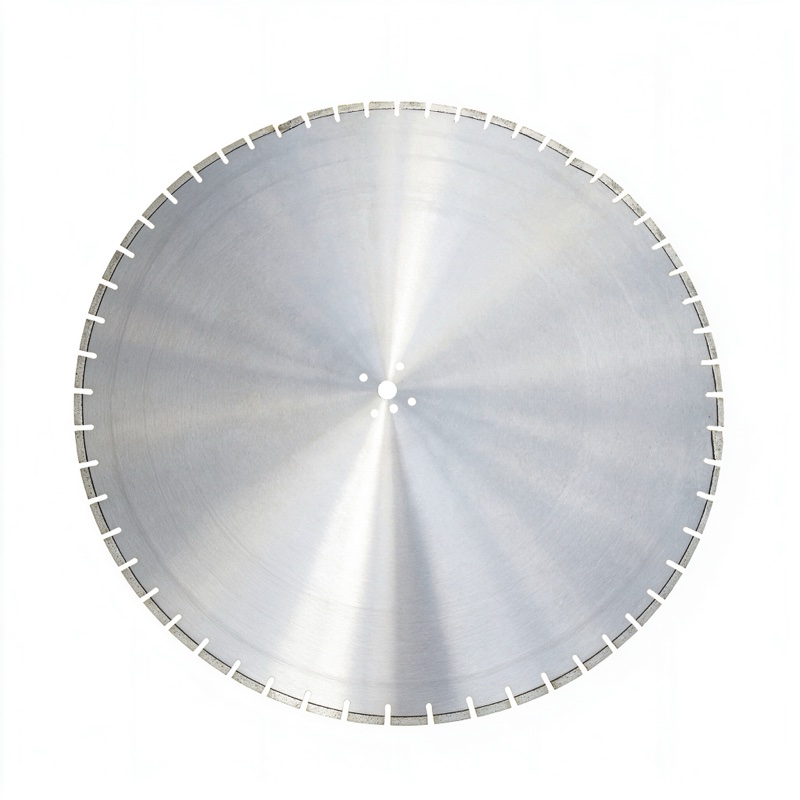
Category: CUTTING SOLUTIONS
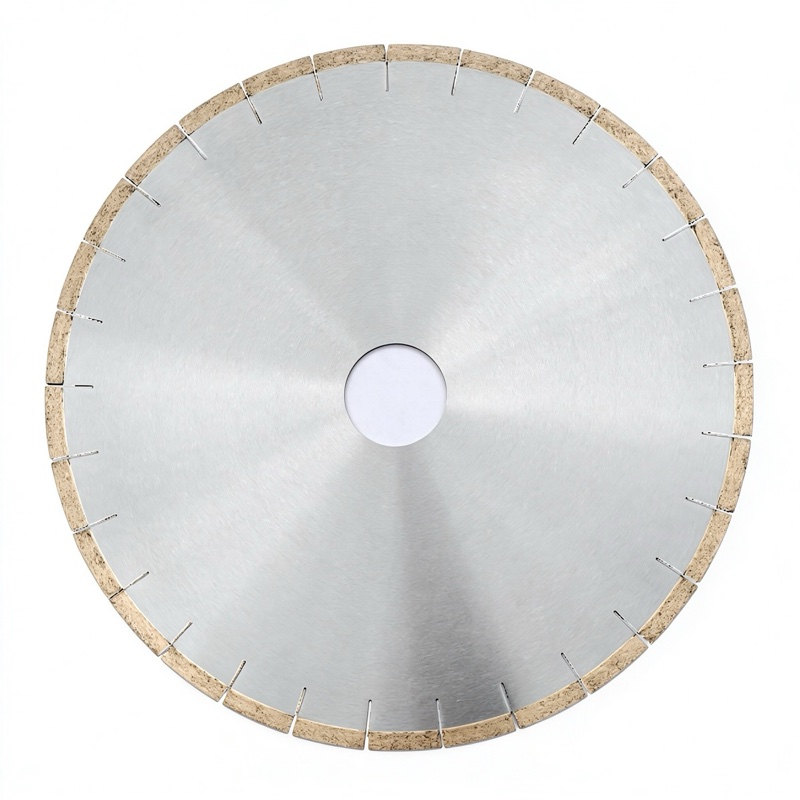
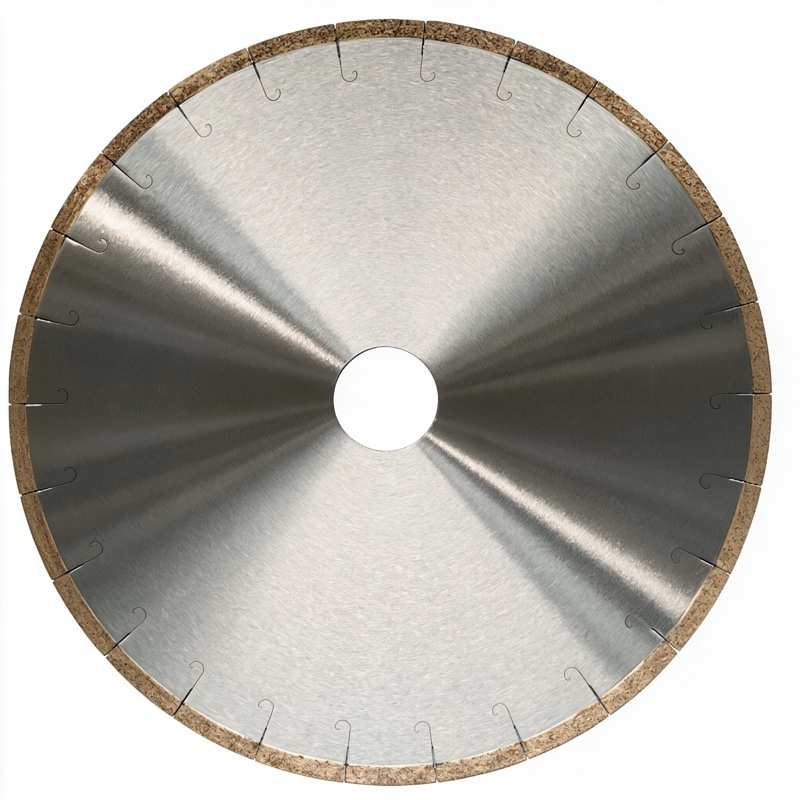
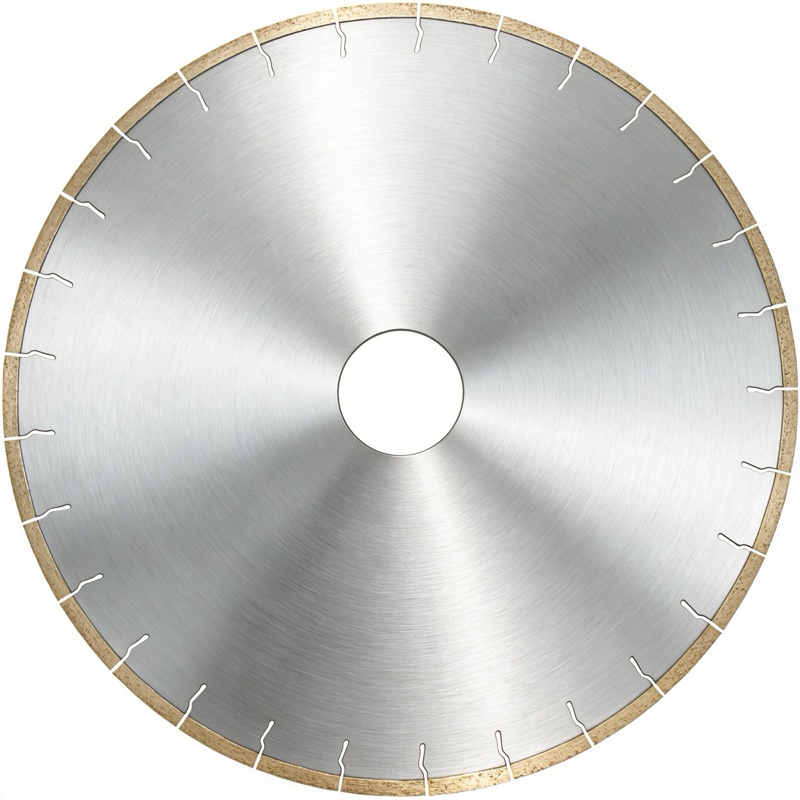
For cutting deeper reinforced concrete with high cutting efficiency. The laser-welded high horsepower blade is engineered for heavy-duty machines with high power output.
Key Features:
Specifications:
| Diameter (in/mm) | Steel Core (mm) | Segment No. | Segment Thickness (mm) | Segment Height (mm) |
|---|---|---|---|---|
| Available from 300mm to 900mm | - | - | - | - |
Other specifications are available upon request. Silent and non-silent blades are available for choice.
Applications:
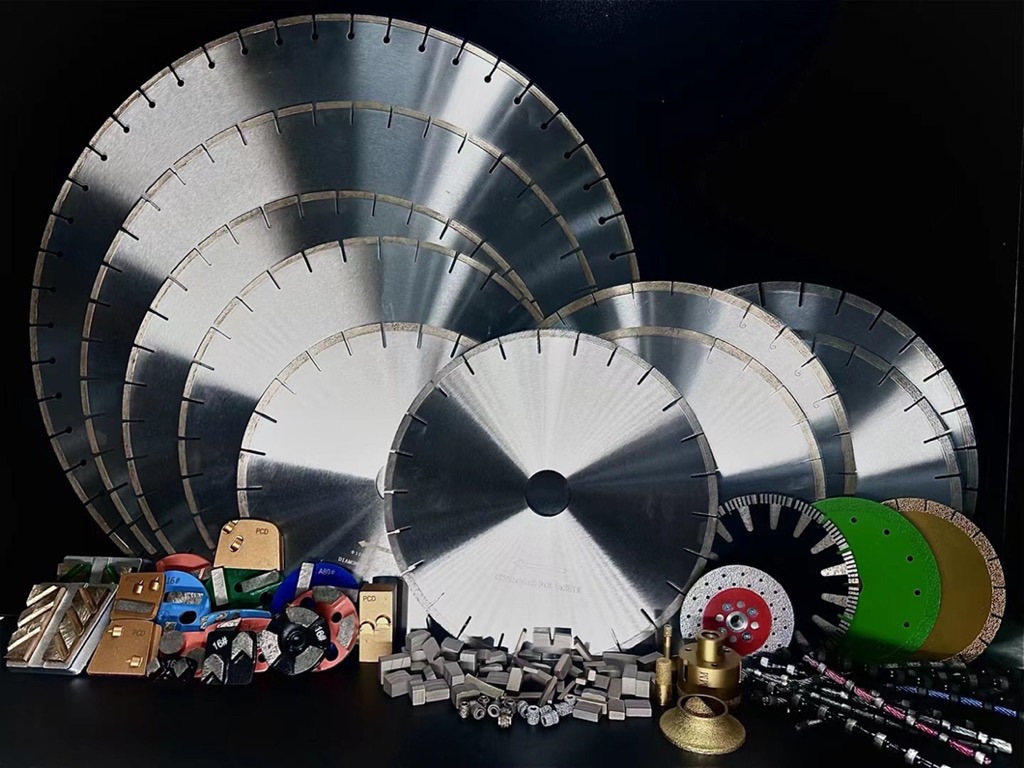
Diamond cutting tools — including saw blades, wall saw blades, and wire saws — use diamond-impregnated segments to cut through the hardest construction materials including reinforced concrete, asphalt, granite, marble, and tile. The diamond particles act as microscopic cutting teeth that grind through material while the metal bond wears at a controlled rate to expose fresh diamonds. These tools are essential in construction, demolition, stone fabrication, and road maintenance, delivering cuts that are faster, cleaner, and more precise than abrasive or carbide alternatives.
| Bond Type | Sintered / laser-welded / silver-brazed |
| Diameter | 105mm – 1600mm (custom sizes) |
| Arbor Hole | 20mm, 22.23mm, 25.4mm, 60mm |
| Segment Height | 8mm – 15mm |
| Working Material | Concrete, asphalt, granite, marble, tile |
| Wet/Dry | Both available (wet recommended for longer life) |
Identify the primary material: concrete (with or without rebar), asphalt, granite, marble, or tile — each requires a different bond formula
Match blade diameter to your saw: 105–125mm for angle grinders, 300–400mm for floor saws, 600–1600mm for wall saws
Choose laser-welded for dry cutting or reinforced concrete (safety), silver-brazed for wet-only stone cutting (economy)
Select segment type: turbo segments for fast, rough cuts; continuous rim for chip-free tile and stone cutting; segmented rim for general concrete
Segments attached to the steel core using a laser weld. Creates a bond stronger than the segment itself, allowing safe dry cutting without segment separation.
Segments attached using silver solder. Economical but sensitive to high heat — must be used wet to prevent braze melting and segment loss.
The diamond-impregnated portion of the blade. Taller segments (12–15mm) provide longer cutting life than standard 8–10mm segments.
The center hole that mounts the blade to the saw. Common sizes: 22.23mm (7/8") for angle grinders, 25.4mm (1") for small saws, 60mm for large floor/wall saws.
Laser-welded blades can be used dry without segment loss (higher safety) and are ideal for concrete and asphalt. Silver-brazed blades are more economical but must be used wet to prevent overheating and braze melting.
Use a soft-bond blade for hard materials like granite and hard concrete (to expose diamonds quickly). Use a hard-bond blade for soft, abrasive materials like asphalt and limestone (to slow segment wear). Rebar-containing concrete requires a medium bond with impact-resistant segments.
Follow the maximum RPM marked on the blade. Typical ranges: 105–230mm blades at 10,000–13,000 RPM; 300–400mm at 6,000–8,000 RPM; 500mm+ at 3,000–4,500 RPM. Running too fast causes overheating; too slow causes glazing.
The most common cause is glazing — the bond has worn unevenly and diamonds are no longer exposed. Dress the blade by cutting abrasive material (soft concrete block or sandstone) for 30–60 seconds. If the blade is hard-bond on hard material, switch to a softer bond.
A 350mm general-purpose concrete blade typically cuts 50–150 linear meters. Stone-cutting blades can last 200–500 meters on granite. Life depends on material hardness, aggregate type, wet/dry use, and operator technique.
Yes, but use a blade specifically designed for reinforced concrete with a medium bond and impact-resistant segments. Rebar causes sudden impact loads that can chip or break segments on blades designed for plain concrete.
Every product is covered by a 12-month warranty against manufacturing defects in materials and workmanship. If a defect is confirmed, we replace the tool or refund the order — your choice.
Please inspect goods within 7 days of receipt. For any quality issue, send photos or a short video to our support team — we respond within 24 hours and settle replacements or returns promptly.
Written and reviewed by JOY TECH - an SGS & BV audited, CE/RoHS certified diamond tools manufacturer founded in 2004, exporting to 50+ countries.
Our factory and quality management system are audited by SGS and Bureau Veritas. Products meet CE/RoHS requirements and every piece is 100% inspected before packing.
Verified Certificates
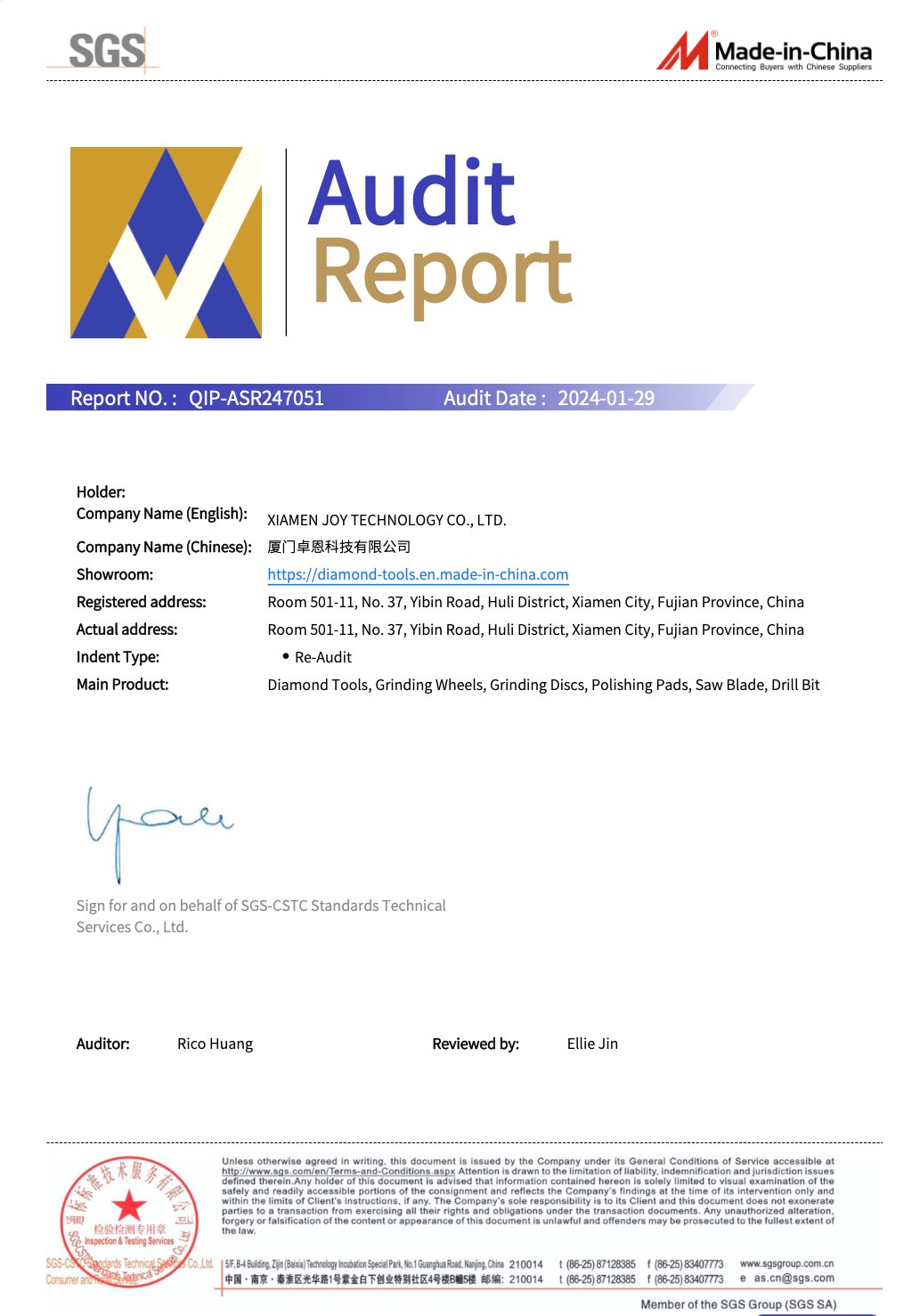

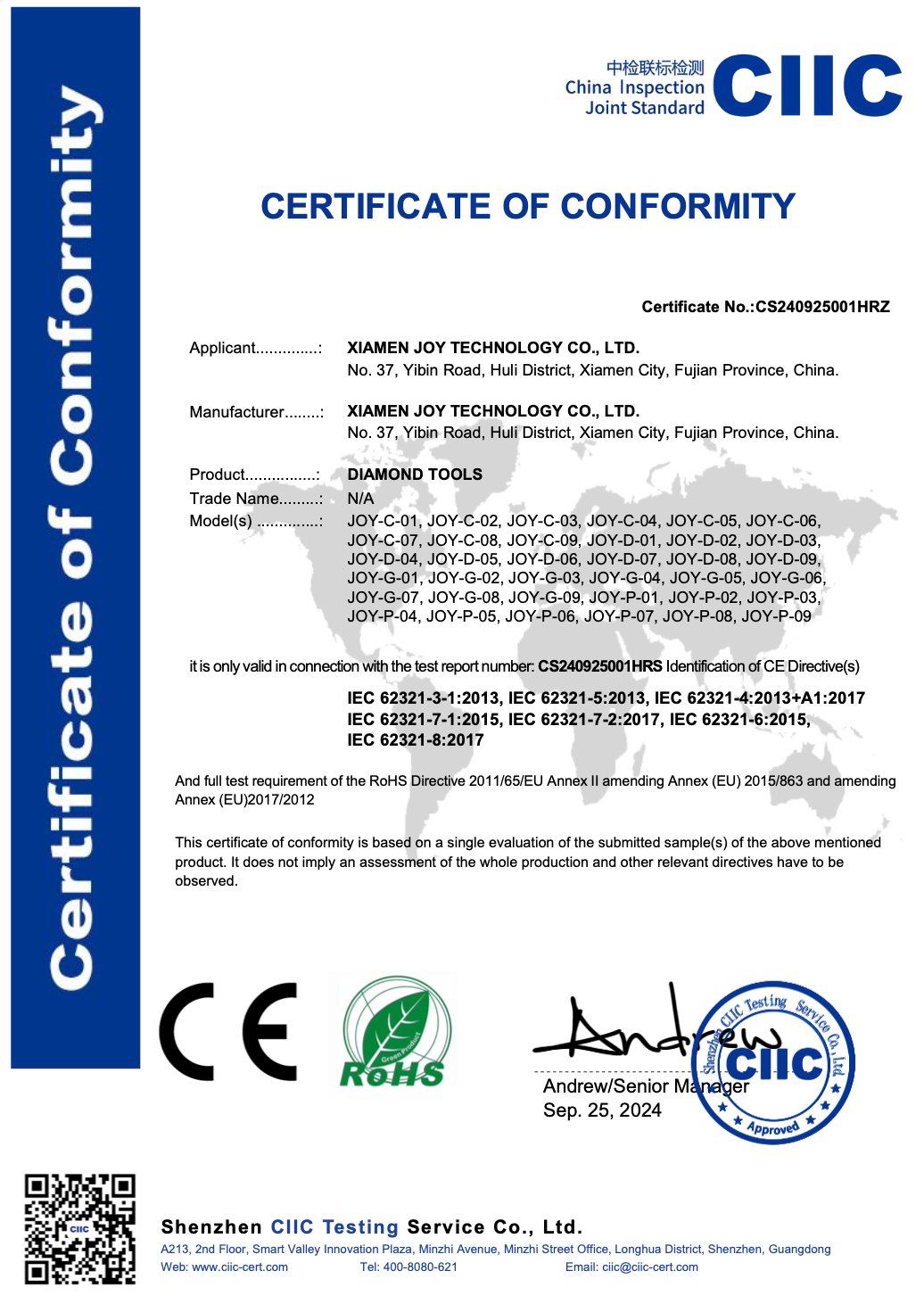
Full certificate copies available on request — request certificates.