

10 Questions to Ask Before Buying Diamond Tools Wholesale
10 Questions to Ask Before Buying Diamond Tools Wholesale
Quick Answer
Before committing to a diamond tools wholesale order, ask these 10 questions: 1) Are your tools certified, and by whom? 2) What is your MOQ? 3) How is bond quality controlled? 4) What materials and grits do you actually offer? 5) Do you support OEM/ODM and private label? 6) Can I get samples, and what do they cost? 7) What is bulk production lead time? 8) What is your QC process? 9) What is your defective-item policy? 10) Can you show me your factory? A factory-direct supplier that answers all ten with verifiable evidence — not vague promises — is the one worth your bulk order.
Why These 10 Questions Matter for B2B Buyers
Diamond tools are consumables: bond quality, diamond concentration and sintering control decide how long a tool lasts and how fast it cuts. A wrong supplier means frequent downtime, re-orders and angry customers. These questions separate manufacturers with real production control from trading companies that simply repackage other factories' goods. Ask them in your first RFQ email, and grade the supplier's answers before requesting a price list.
The 10 Questions — and What a Good Answer Looks Like
| Question | What a Factory-Direct Answer Should Include |
|---|---|
| 1. Certification | Audit report numbers (e.g. SGS/BV) and CE/RoHS certificate numbers you can verify online |
| 2. MOQ | A specific piece count per item, or a flexible MOQ for new distributors |
| 3. Bond & grit control | Bond formulations (soft/medium/hard), diamond concentration, and how they match your substrate |
| 4. Product range | Grinding, cutting, polishing and drilling lines with full size/grit specs — not just one SKU |
| 5. OEM/ODM | Private label, custom packaging, custom bond development |
| 6. Samples | Sample policy, cost and shipping — and whether the cost is credited against bulk orders |
| 7. Lead time | Days for production per order size, with past shipment proof |
| 8. QC process | Raw material inspection, in-process checks and final performance testing |
| 9. Defective policy | Clear replacement or refund terms for QC failures |
| 10. Factory proof | A real factory address, workshop photos or video, audited supplier records |
How to Verify the Answers (Don't Just Trust the Email)
Cross-check three things: certificate numbers against the issuer's website, factory presence via audit reports and trade-platform verified-supplier pages, and past performance through customer references or review platforms. Ask for a short video of the production line — a genuine manufacturer can show powder mixing, pressing, sintering and QC in one clip. If the supplier stalls on any of these, treat it as a red flag.
What MOQ and Sample Policies Tell You
A realistic MOQ (or flexible MOQ for first orders) shows the supplier wants long-term distributors, not one-off deals. Reasonable sample cost with bulk credit shows confidence in their own quality. Watch out for suppliers who refuse samples entirely, or who quote a rock-bottom price but cannot name their diamond source — price without traceability is a cost you pay later in rework.
Frequently Asked Questions
Q: How many samples should I order before a bulk order?
A: One to two samples per SKU is standard. Test them on the actual substrate and machine you use — a grinding tool that performs on a floor polisher may behave differently on a handheld grinder.
Q: Is a lower MOQ always better?
A: Not necessarily. Very low MOQs can mean the supplier is a trader aggregating small orders. Balance MOQ with production control, delivery speed and warranty terms.
Q: What is a reasonable lead time for diamond tool bulk orders?
A: For a manufacturer, 15–30 days is typical depending on quantity and bond customization. Get the lead time in writing and check it against past shipment records.
Q: How do I know the bond will match my concrete hardness?
A: Ask the supplier to specify bond hardness (soft/medium/hard) and recommend a full grit sequence. A manufacturer like JOY TECH's trapezoid grinding discs publishes bond guidance so you can match tools to floors, not guess.
Q: Should certification be part of the first RFQ?
A: Yes. Request report and certificate numbers in your first email. A certified factory — like JOY TECH with SGS/BV audits and CE/RoHS conformity — can provide them immediately.
Conclusion
Buying diamond tools wholesale is a relationship, not a transaction. Run every candidate through these 10 questions, verify the evidence, and start with a sample order. When the supplier answers clearly — with certificate numbers, a defined QC process and a factory you can see — you have found your long-term manufacturing partner. Compare saw blades and grinding tools directly from the factory at alzr.com.
Products used in this guide
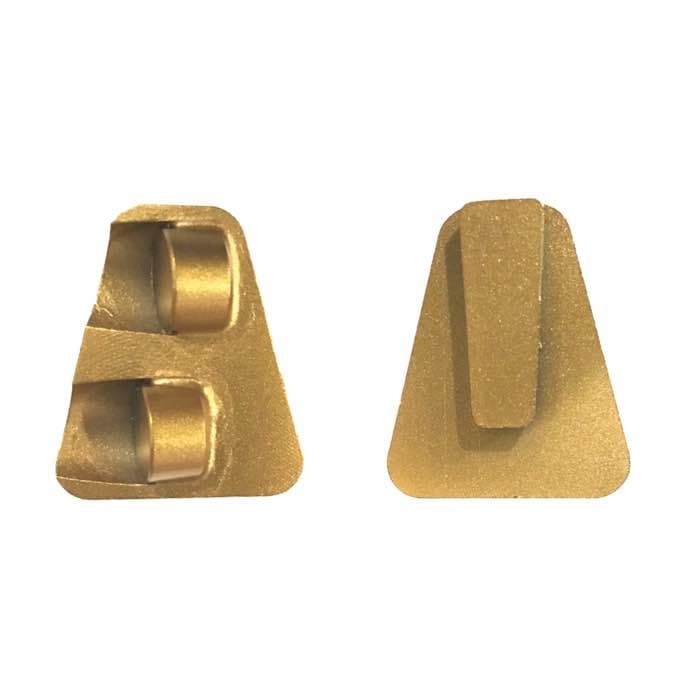
Double Full PCD Diamond Grinding Tools for Scanmaskin (JOY-SC-PCD2)
View specs →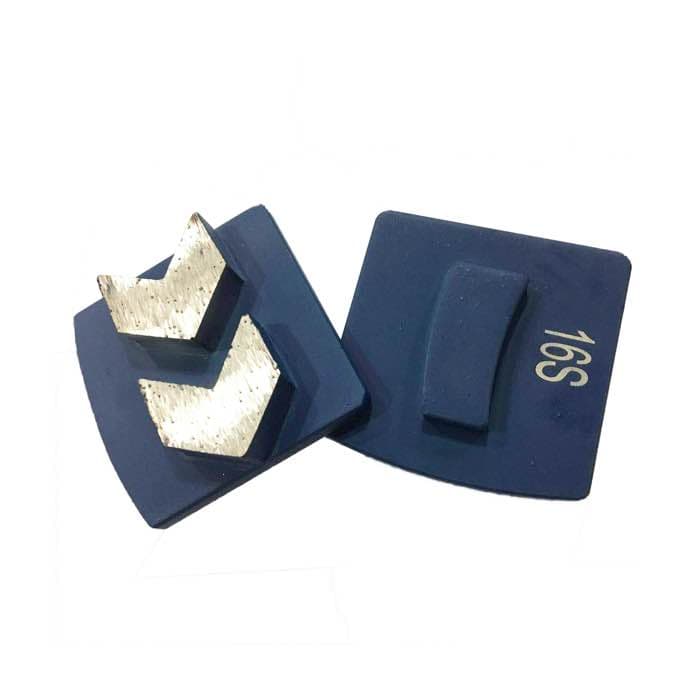
Klindex BTOO Arrow Quick Lock Diamond Grinding Disc (JOY-KLD-T2A)
View specs →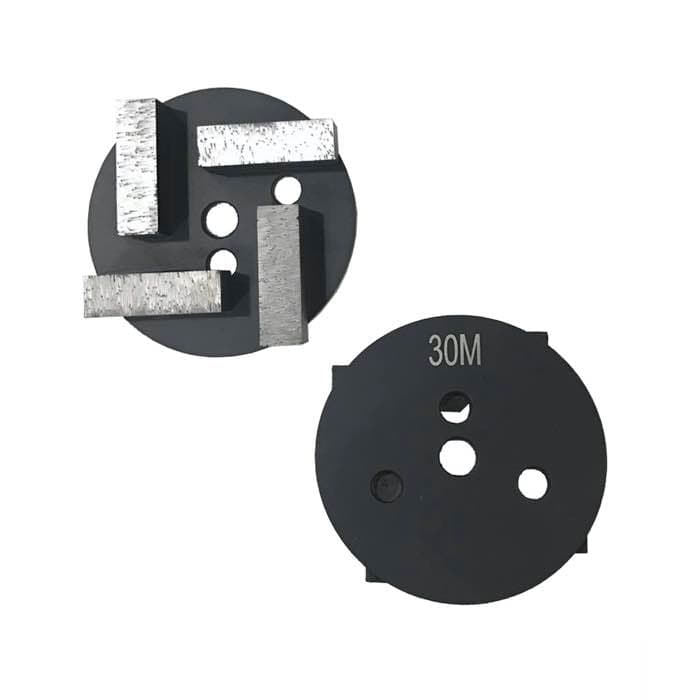
3'' Metal Bond Diamond Grinding Disc with 4 Segments (JOY-TP3-B4)
View specs →Need this tool for your job?
MOQ 1 · 7–30 days by order quantity · FOB & CIF · free sample on request
Author & Manufacturer
Written and reviewed by JOY TECH — an SGS & BV audited, CE/RoHS certified diamond tools manufacturer founded in 2004, exporting to 50+ countries.
Quality & Compliance
Our factory and QMS are audited by SGS and Bureau Veritas. Products meet CE/RoHS requirements and every piece is 100% inspected before packing.
Verified Certificates
- SGS Audited Supplier — Report No. QIP-ASI227442 & QIP-ASR247051 (Audit Jan 29, 2024)
- Bureau Veritas Verified — Report No. MIC-ASR257059 (Audit Feb 20, 2025)
- CE & RoHS Certificate of Conformity — No. CS240925001HRZ (Issue Sep 25, 2024)