

3-Step vs 17-Step Diamond Polishing Pads: What's the Difference?
3-Step vs 17-Step Diamond Polishing Pads: What's the Difference?
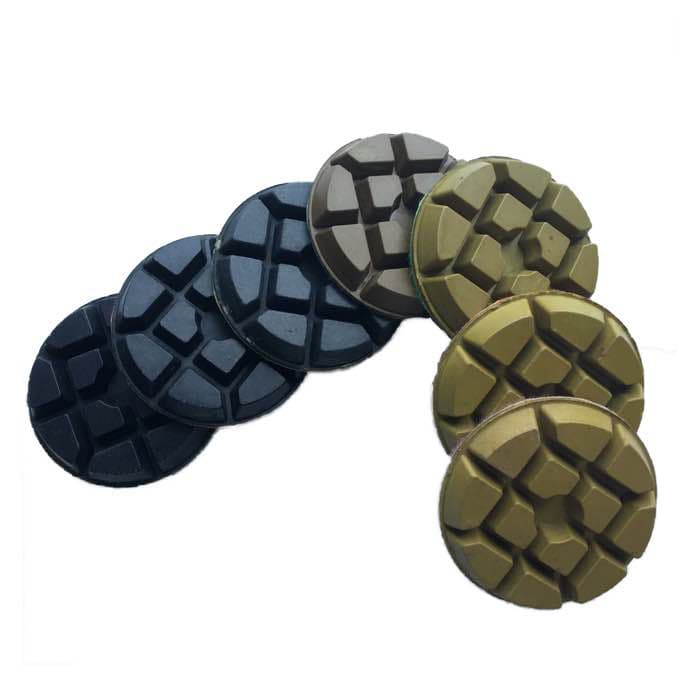
Quick Answer
A 3-step system (typically 50/100#, 200/400#, 800/1500#) delivers a satin-to-semi-gloss finish quickly and economically, while a 17-step system (metal bond through resin bonds up to 3000#) produces a high-gloss, mirror finish. For warehouses and standard floors, 3 steps are enough; for polished-concrete showrooms and retail, you need the full sequence.
What Each System Produces
| System | Typical Grit Path | Finish | Best For |
|---|---|---|---|
| 3-Step | 50/100 → 200/400 → 800/1500 | Satin / semi-gloss | Warehouses, garages, economical work |
| 17-Step | Metal 30-400 → Transitional → Resin 800-3000 | High-gloss, mirror | Retail, showrooms, polished concrete |
What the Grit Sequence Does
- Metal bond (30–400#) — levels the slab, removes coatings and opens the surface.
- Transitional (copper/ceramic bond) — removes the metal scratches and starts the refinement.
- Resin bond (800–3000#) — polishes to gloss; each step removes the previous step's scratches.
You cannot skip from metal bond straight to 3000# resin — every grit step must erase the scratches of the one before it. That is why the full 17-step sequence produces a true mirror, while a 3-step resin system stops at satin.
Choosing Your Process
- Budget and time matter — a 3-step resin-only process is 1/3 the time of a full 17-step system.
- Target gloss — if the client wants a mirror finish, plan the full sequence with densifier.
- Slab condition — rough or coated slabs need metal bond steps first, which pushes you toward the longer sequence.
Our Diamond Resin Polishing Pads cover the resin steps from 100# to 3000#, and Ceramic Bond Transitional Pads bridge metal to resin.
Frequently Asked Questions
Q: Can I get a high-gloss finish with only 3 steps?
No — 3 resin steps reach a satin/semi-gloss at best. True high gloss needs the full sequence including finer resin grits (1500–3000#).
Q: How many steps does a typical warehouse floor need?
A 3-step grind-and-seal or 3-step resin polish is standard for warehouses — the finish is durable, easy to maintain, and much faster to produce.
Q: What is the fastest way to a mirror finish?
Use matched pads and don't skip grits: metal bond to level, transitional to refine, resin 800–3000 to gloss, plus a densifier before the resin steps.
Conclusion
Choose the process by the finish you need: 3 steps for satin and economy, the full 17-step sequence for mirror gloss. Grit jumps are the enemy of a clean finish — build the sequence in order. JOY TECH supplies complete pad sets for both systems.
Products used in this guide
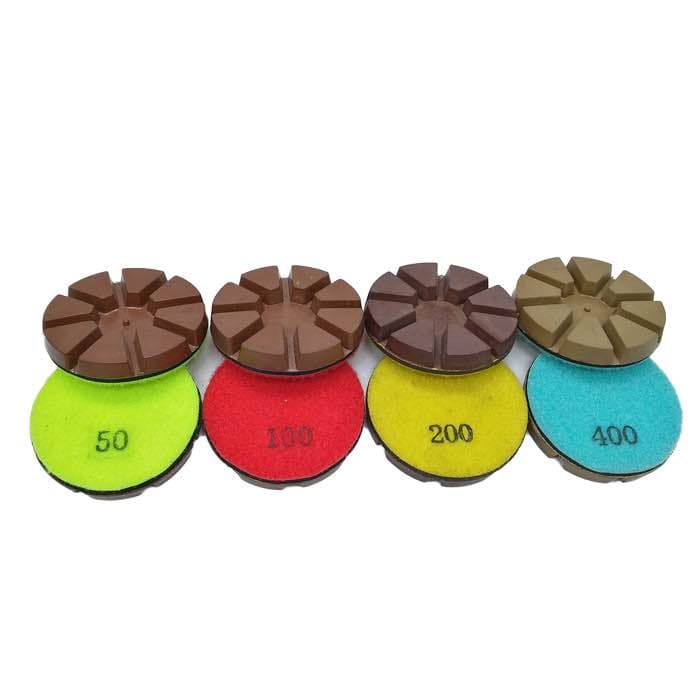
Copper Bond Diamond Transitional Polishing Pads (JOY-RFP-C2)
View specs →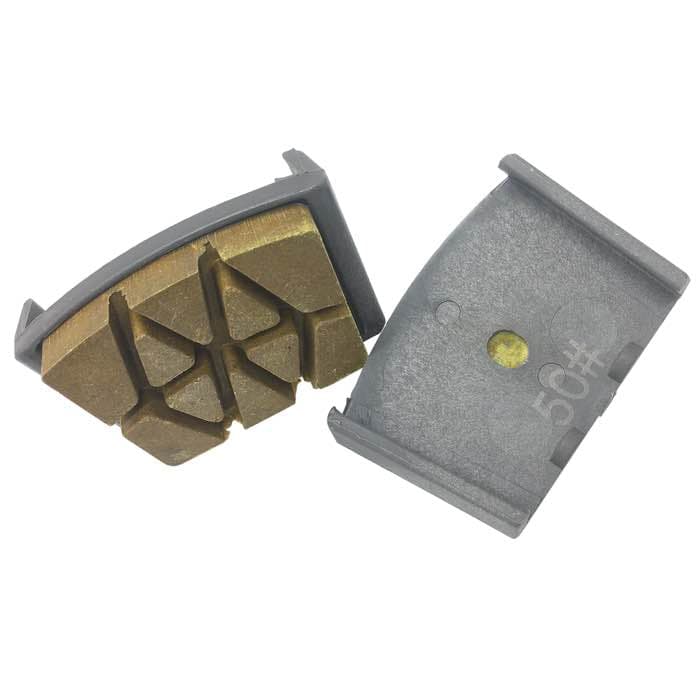
HTC Resin for Concrete Floor Polishing (JOY-HTC-Resin)
View specs →Diamond Resin Polishing Pads for Concrete Terrazzo Floor (JOY-RFP-01)
View specs →Need this tool for your job?
MOQ 1 · 7–30 days by order quantity · FOB & CIF · free sample on request
Author & Manufacturer
Written and reviewed by JOY TECH — an SGS & BV audited, CE/RoHS certified diamond tools manufacturer founded in 2004, exporting to 50+ countries.
Quality & Compliance
Our factory and QMS are audited by SGS and Bureau Veritas. Products meet CE/RoHS requirements and every piece is 100% inspected before packing.
Verified Certificates
- SGS Audited Supplier — Report No. QIP-ASI227442 & QIP-ASR247051 (Audit Jan 29, 2024)
- Bureau Veritas Verified — Report No. MIC-ASR257059 (Audit Feb 20, 2025)
- CE & RoHS Certificate of Conformity — No. CS240925001HRZ (Issue Sep 25, 2024)