Average response time: under 24 hours
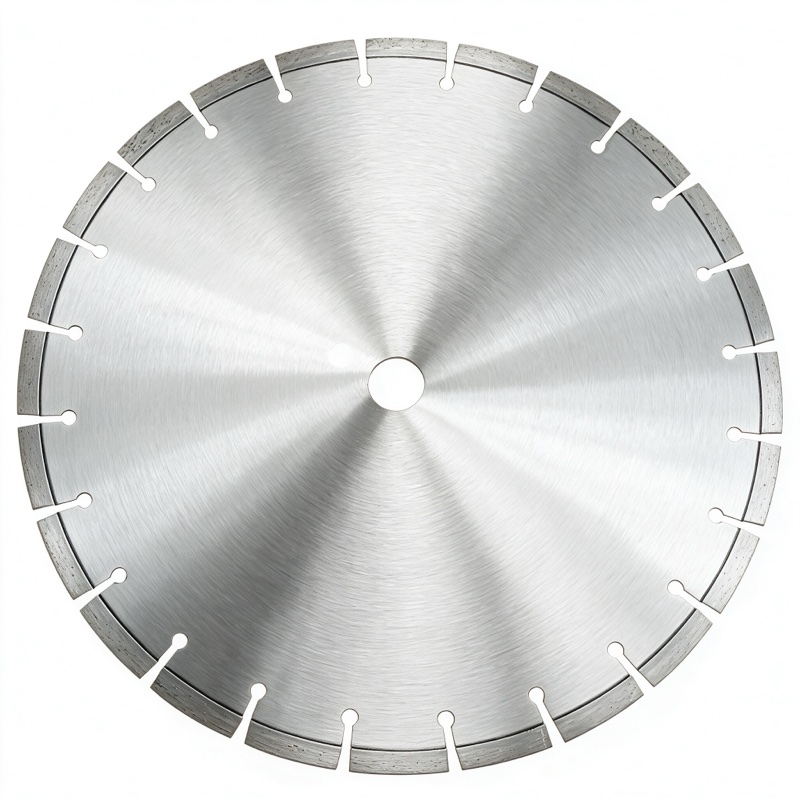
For green (fresh) concrete less than 24–48 hours old, use a laser-welded diamond blade with a soft, free-cutting bond and a narrow kerf — typically the same concrete/asphalt blade you use for cured slabs works, but you must cut wet, hold the correct RPM, and feed lightly. Green concrete cuts fast, but the paste is highly abrasive and strips the bond quickly. A blade that is too hard glazes; one that is too soft wears out before you finish the joint. Early-entry saw blades designed for fresh concrete give the cleanest edges without raveling.
Fresh concrete behaves differently from cured concrete in three ways:
The blade that works best is therefore not the hardest one — it is the one that keeps exposing fresh diamonds at the right rate while cutting cleanly.
When you are cutting fresh concrete for control joints or early-entry saw cuts, look for these specs:
| Spec | What to choose | Why |
|---|---|---|
| Bond | Soft to medium bond | Free-cutting; exposes fresh diamonds against abrasive paste |
| Segment type | Laser-welded, narrow kerf | Strong enough for early hits; thin rim reduces edge chipping |
| Wet / dry | Wet, or early-entry dry with cooling holes | Water keeps the paste from burning the segment and controls dust |
| RPM | Follow the max marking; do not exceed | Too fast glazes the segment; too slow tears edges |
Our Concrete and Asphalt Saw Blade (Laser Welded) — JOY-CA-LW is the standard choice for green-to-cured slabs, and for high-horsepower ride-on saws the Laser Welded High Horsepower Blade — JOY-LW-HH keeps its edge on long joint runs.
Edge quality comes from technique, not just the blade:
Chipping on green concrete is almost always one of these causes:
For light hand-held work between pours, a general-purpose turbo dry blade such as the General Purpose Turbo Dry Blade — JOY-GP-01 covers small joints and patch cuts, but on production green-concrete joints the laser-welded wet blade is the right tool.
The rule of thumb: cut control joints as soon as the concrete can bear foot traffic without scuffing — typically 4–12 hours on a warm day, 12–24 hours in cool weather. The earlier you cut, the less chance of random cracking. If you cannot cut early, wait at least 24 hours and use a standard cured-concrete blade; the soft early-entry bond will wear too fast on hardened concrete.
A: Yes, laser-welded concrete blades work on fresh slabs, but the soft-bond ones wear faster. Plan for a shorter blade life or use an early-entry blade.
A: Raveled edges mean the blade is pulling aggregate out instead of cutting it. Usually a dull blade, a bond that is too hard, or too much feed pressure.
A: As soon as the surface supports foot traffic without scuffing — usually 4–12 hours in warm weather. Early-entry saws can cut within 1–2 hours on proper mix designs.
A: Wet is preferred. Dry early-entry saws exist, but they need blades with cooling holes and a light touch.
The best diamond blade for green concrete is a laser-welded, soft-bond, narrow-kerf blade — used wet, at the correct RPM, with a light feed. Keep it for early cuts, and switch to a standard bond once the slab cures. If you are specifying blades for a paving crew, email [email protected] — JOY TECH manufactures laser-welded concrete blades to your bond and segment spec.
Written and reviewed by JOY TECH — an SGS & BV audited, CE/RoHS certified diamond tools manufacturer founded in 2004, exporting to 50+ countries.
Our factory and QMS are audited by SGS and Bureau Veritas. Products meet CE/RoHS requirements and every piece is 100% inspected before packing.
Verified Certificates
