Average response time: under 24 hours
For grinding concrete with an angle grinder, run the tool at full speed — typically 10,000-12,000 RPM for 100-125 mm grinders — and control the cut with feed pressure and pass depth, not slower RPM. Diamond cup wheels and discs are designed to cut at rated speed; slowing the grinder below about 6,000-7,000 RPM reduces cutting efficiency, overheats the diamonds, and can glaze the wheel. Slow speed is only useful for polishing with resin pads or for precise edge work.
Diamond tools cut because of surface speed — the speed of the segment edge moving across the concrete. On a 125 mm disc at 11,000 RPM the edge speed is roughly 70 m/s, which is the range where diamonds bite efficiently. At half the RPM the edge speed halves and the diamonds drag rather than cut, generating friction heat instead of stock removal. Every angle grinder has a rated no-load speed printed on it; the practical grinding range is about 80-100% of that speed.
Run the grinder flat out and control the work by how hard you feed and how deep each pass goes. Let the wheel find its own pace: if the RPM drops under load, ease the feed until the motor recovers. Do not press — pressing does not add speed, it stalls the wheel and heats the diamonds.
Overlap passes by half the wheel width and keep the wheel flat, exactly as in the angle grinder concrete cutting guide the same tool uses for cutting. For stock removal, coarse grit at full speed removes material faster and runs cooler than fine grit at reduced speed.
Slower RPM has real uses, but not for stock removal:
If your grinder has variable speed, use it as a tool selector, not a throttle for grinding. Keep grinding passes at high speed and switch down only for polishing or delicate work.
Too-slow grinding is the main cause of glazed diamond wheels: the diamonds never fracture to expose fresh edges, the surface polishes instead of cuts, and the wheel stops removing material. A glazed wheel then heats the steel core if you keep pushing. If the wheel glazes, dress it on an abrasive block or grind a few seconds in a softer material, then resume full speed. Match the wheel to the concrete hardness — a wheel that keeps glazing is too hard a bond for the concrete.
Good dust control also keeps the RPM stable: grinding on your own dust loads the wheel and drags the motor. Hook up collection or grind wet (see concrete grinding dust health risks and protection).
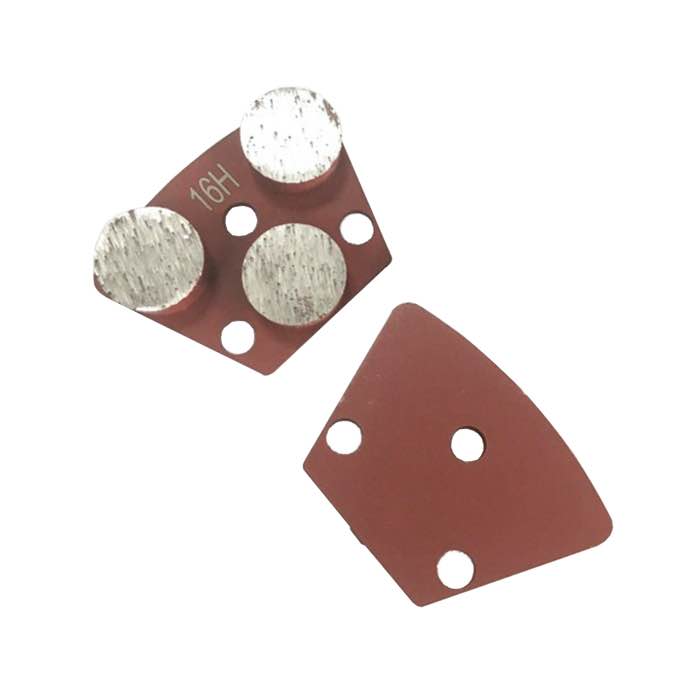
Run a wheel built for concrete at full speed, such as our 12-arrow segment diamond cup wheel.
Full rated speed — 10,000-12,000 RPM for 100-125 mm grinders. Diamond tools cut at surface speed, and grinding below rated RPM glazes the wheel and overheats it.
Only for polishing with resin pads (2,000-4,000 RPM) or precise edge work. For stock removal, low speed cuts slower, glazes the wheel, and damages the diamonds.
It is probably glazed from grinding too slow or pushing too hard. Dress the wheel on an abrasive block and grind at full speed with light feed.
Wet grinding tolerates slightly lower speeds because water cools the joint, but full speed still removes material fastest and keeps the diamonds self-sharpening.
The best RPM for grinding concrete with an angle grinder is the rated full speed — diamonds cut by edge speed, and slow grinding glazes the wheel and burns the diamonds. Control the job with feed, overlap, and pass depth, and use the variable-speed dial only for polishing or fine detail. At the right speed, a cup wheel or disc grinds fast, stays sharp, and lasts.
Written and reviewed by JOY TECH — an SGS & BV audited, CE/RoHS certified diamond tools manufacturer founded in 2004, exporting to 50+ countries.
Our factory and QMS are audited by SGS and Bureau Veritas. Products meet CE/RoHS requirements and every piece is 100% inspected before packing.
Verified Certificates
