Average response time: under 24 hours
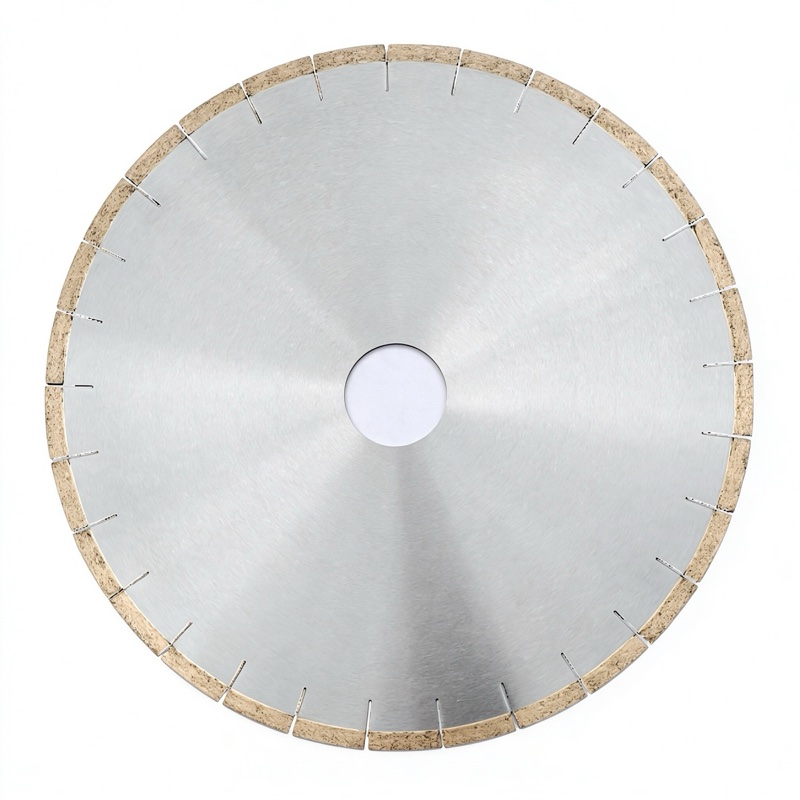
A concrete saw blade wanders off the line because of one of five things: a worn or glazed blade, a bent arbor or loose flange, a warped blade core, dull diamonds on one side, or pushing the saw sideways while cutting. Fix it by inspecting the blade first, truing the flanges, checking the arbor runout, and re-breaking-in the blade with a soft abrasive. Most wandering is not the saw itself but a blade that has gone glazed or a cut that is deeper than the blade can handle in one pass.
When a diamond blade cuts straight, it removes material evenly on both sides of the kerf and the saw follows the line under its own weight. When it wanders, one side of the blade is cutting faster than the other, and the saw is pulled toward that side. The most common reason is that the diamond segment has glazed over: the bond is not wearing away fast enough to expose fresh diamonds, so the blade rides rather than cuts and drifts to the side where the remaining contact is uneven.
Another cause is runout. If the arbor or the flange is bent, the blade wobbles side to side as it spins, and that wobble turns into a wavy cut. On a walk-behind saw, a loose drive belt or a worn front wheel can also make the saw pull left or right, which feels exactly like blade wandering even though the blade itself is fine.
Most wandering problems show up as a mix of symptoms. Before you swap the blade, run through this short checklist:
Mount the blade on the saw and spin it by hand with the power off. Look at the side of the segment: if it is shiny and smooth rather than sharp and textured, the blade is glazed. Look for side cracks on the core, broken segments, or a dished (warped) shape. A blade that has overheated will often show a blue or straw-colored tint around the arbor hole. If you see any of these, stop using the blade; a cracked core can fly apart at 3,000 rpm or more.
Remove the blade and clean the arbor, the washers, and the flange faces. Even a speck of concrete between the flange and the blade will offset the blade by a fraction of a millimeter, and that is enough to make it wander. Use a straightedge across the flanges: they should be flat and parallel. On a high-horsepower saw, a heavy-duty laser-welded blade with a thick core is less likely to wander than a thin-core economy blade, because the thicker core resists side load better.
A glazed blade can often be brought back to life with a break-in cut against a soft abrasive. Run the saw through a block of soft concrete, a concrete cinder block, or a piece of brick for 30 to 60 seconds, pushing slightly to one side and then the other so the segment sides wear. The soft abrasive exposes fresh diamonds and restores a sharp edge. Do this dry or with light water; the friction needs to wear the bond, not cool it. If the blade is still glazed after a minute, the bond is too hard for your concrete and it is time to switch to a softer-bond blade.
A blade wanders most when it is too deep for the pass. The deeper the cut, the more side load the kerf exerts on the segment, and the more the blade can drift. Reduce depth to 30 to 50 mm per pass for handheld saws and up to 100 mm per pass for walk-behind units, then finish the cut in multiple passes. This is especially important on reinforced slabs: rebar catches one side of the segment and pulls the saw off line. If you hit heavy rebar, slow down and make the cut in shorter passes rather than forcing through.
On a walk-behind saw, check the front wheel for play and the track for debris. A stone caught under the front skid will steer the saw off line. On a handheld cut-off saw, the most common alignment mistake is leaning the saw to one side as you walk. Keep the saw vertical on both axes and let the blade do the cutting; do not correct the line by tilting the saw, because that widens the kerf on one side and makes the wander worse. If you need to steer, do it by moving the whole saw forward in a curved path, not by twisting the body.
Choosing the right blade from the start eliminates most wandering. Match the bond hardness to your concrete: soft concrete wears a hard-bond blade quickly, so use a hard-bond blade; hard, silica-rich aggregate wears a soft-bond blade too fast, so use a soft-bond blade. The diamond saw blade catalog lists blades by application; pick one labeled for your aggregate type. For thick slabs or deep cuts, a high-frequency welded blade with a thicker core stays truer than a thin economy blade under side load.
If you have tried a new blade, trued the flanges, and the saw still wanders, the problem is likely the saw itself. Measure arbor runout with a dial indicator: anything over 0.05 mm of runout at the flange face will cause a wavy cut. On an old saw, worn bearings, a bent drive shaft, or a cracked crankcase can make the arbor wobble no matter how good the blade is. In those cases, replacing the blade will not fix the cut; you need to service the saw or retire it. A straight cut depends as much on the machine as on the diamond on the segment.
Written and reviewed by JOY TECH — an SGS & BV audited, CE/RoHS certified diamond tools manufacturer founded in 2004, exporting to 50+ countries.
Our factory and QMS are audited by SGS and Bureau Veritas. Products meet CE/RoHS requirements and every piece is 100% inspected before packing.
Verified Certificates
