

How to Choose Core Bit Diameter for Electrical Conduit
How to Choose Core Bit Diameter for Electrical Conduit
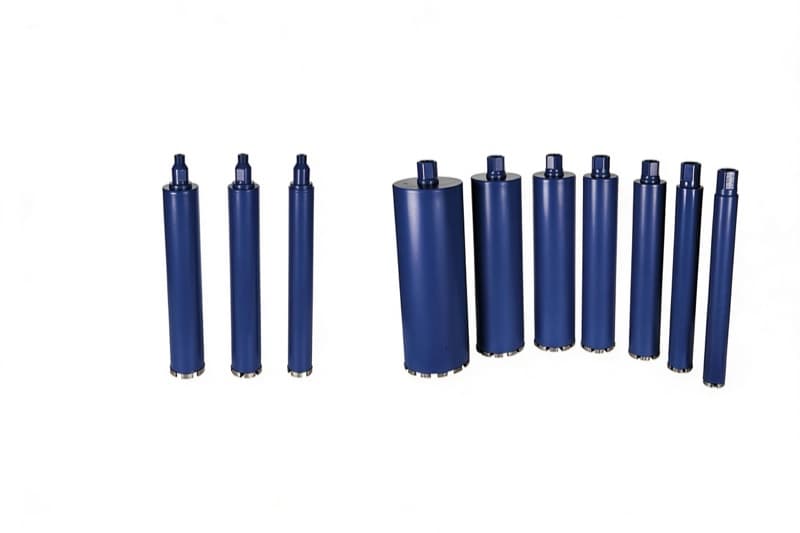
Quick Answer
Size the core bit to the conduit outside diameter plus 3 to 5 mm of clearance. For a 25 mm conduit, use a 28 to 32 mm bit. For a 40 mm conduit, use a 45 to 50 mm bit. If the hole must be sealed with firestop or a sleeve, add the sleeve wall thickness and another 2 mm.
Conduit Size Is Not Hole Size
Electrical conduit is named by trade size, not by the outside diameter. A 25 mm conduit can have an outside diameter close to 25 mm, but the coupling and locknut are larger. The core bit must clear the coupling, not just the pipe.
Measure the actual outside diameter of the conduit and the coupling before you choose the bit. If the hole is tight, the conduit will not sit straight, and the firestop will be thin on one side.
Sizing Table
| Conduit trade size | Typical outside diameter | Suggested core bit |
|---|---|---|
| 20 mm | 20 to 21 mm | 25 mm |
| 25 mm | 25 to 26 mm | 28 to 32 mm |
| 32 mm | 32 to 33 mm | 38 mm |
| 40 mm | 40 to 42 mm | 45 to 50 mm |
Wet or Dry
Wet drilling gives a cleaner hole and longer bit life in reinforced concrete. Dry drilling is used where water cannot be controlled, but it needs a dust shroud and a vacuum. For a through-wall penetration, a wet bit with a water shroud is usually faster and safer.
Thin-wall bits cut faster but are less tolerant of misalignment. Use a pilot bit or a guide plate if the hole must be precise. For conduit runs, a small amount of clearance is more useful than a perfectly tight hole.
Frequently Asked Questions
Q: Can I use a 25 mm bit for a 25 mm conduit?
A: No. The coupling and locknut need clearance. Use at least 28 mm, and check the actual fitting.
Q: How deep should the hole be?
A: Drill through the wall plus the thickness of the finish on both sides. Add 10 mm if the conduit must be sealed with a sleeve.
Q: What bit for a 40 mm conduit through a concrete wall?
A: A 45 to 50 mm wet core bit is the normal range. Use a thin-wall bit only if the wall is free of heavy reinforcement.
Conclusion
Choose the bit by measuring the conduit and coupling, then add clearance. A thin-wall core bit suits clean, precise holes; a standard wet core bit is the safer choice for reinforced concrete.
Products used in this guide
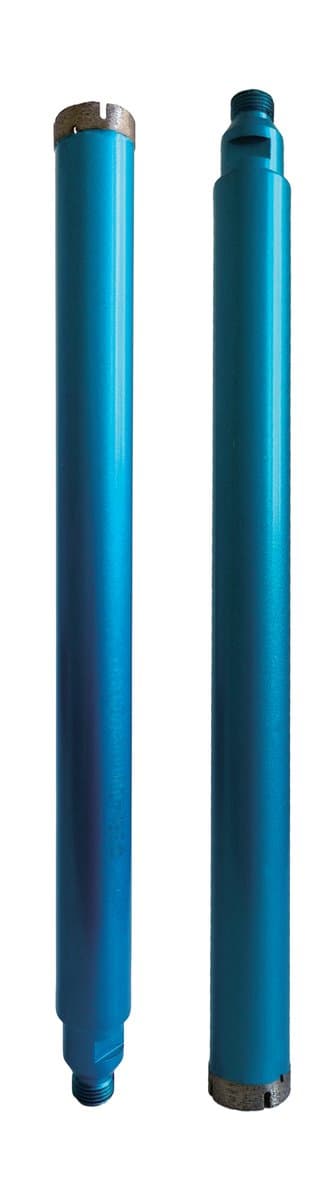
Laser Welded Thin-Wall Core Drill Bit — LWC Series
View specs →Diamond Core Drill Bit (Wet) — JOY-DCB-W
View specs →Need this tool for your job?
MOQ 1 · 7–30 days by order quantity · FOB & CIF · free sample on request
Author & Manufacturer
Written and reviewed by JOY TECH — an SGS & BV audited, CE/RoHS certified diamond tools manufacturer founded in 2004, exporting to 50+ countries.
Quality & Compliance
Our factory and QMS are audited by SGS and Bureau Veritas. Products meet CE/RoHS requirements and every piece is 100% inspected before packing.
Verified Certificates
- SGS Audited Supplier — Report No. QIP-ASI227442 & QIP-ASR247051 (Audit Jan 29, 2024)
- Bureau Veritas Verified — Report No. MIC-ASR257059 (Audit Feb 20, 2025)
- CE & RoHS Certificate of Conformity — No. CS240925001HRZ (Issue Sep 25, 2024)