Average response time: under 24 hours
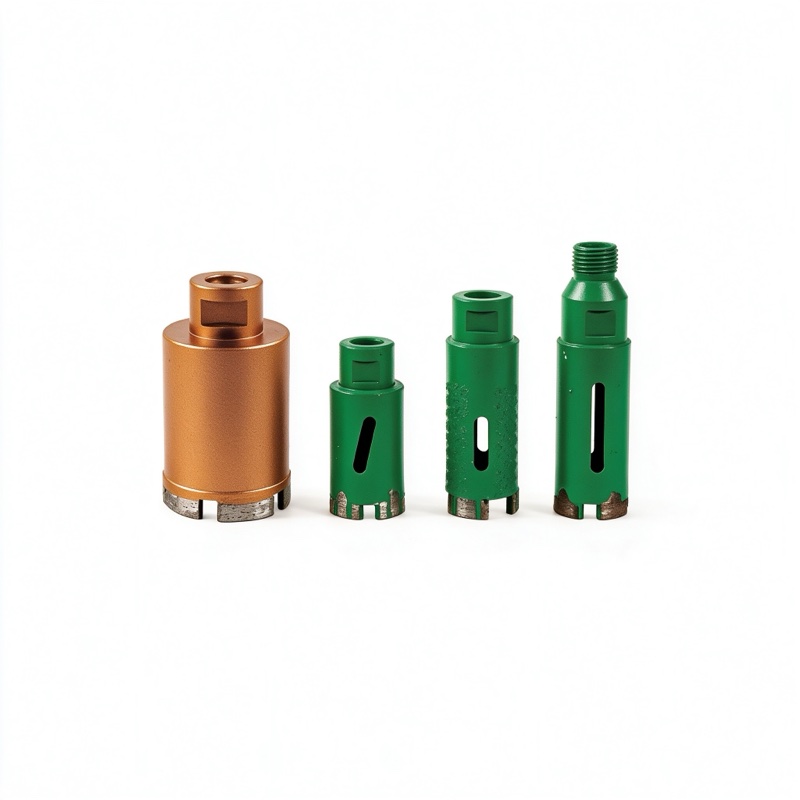
Yes, you can use a diamond bit on cement backer board, but a regular carbide hole saw or multi-tool blade is faster and cheaper for large cutouts. A small diamond stone hole saw cuts clean 25-65 mm holes through 6-12 mm cement backer board (CBU) for shower valves, faucet tails, and toilet flanges without fraying the board edges. Run the drill at 1500-2500 RPM dry or with light water, starting at a shallow angle to prevent walking. For larger openings such as a shower valve box, score the cutout with a utility knife and snap the board; reserve diamond tooling for round penetrations that must match a fixture.
Cement backer board (CBU) is a 6-12 mm thick sheet of Portland cement reinforced with fiberglass mesh, used as a tile substrate in wet areas. It cuts easily with a utility knife (score and snap), but round openings for valves, faucets, and pipe penetrations need a hole saw. Fibre-cement board and Durock are abrasive; a standard bi-metal hole saw dulls quickly on the cement grit. A diamond hole saw cuts cleanly through the abrasive mix and leaves a round edge that seals with thinset.
Backer board is often installed over studs, with a gap to the studs. Drilling through the board into a stud or a pipe behind is a real risk. Mark the hole location, then probe behind the board with a thin awl to confirm there is no conduit or pipe where the hole will land.
Shower valve openings are the most common backer board penetration. A standard single-lever valve needs a 35-45 mm hole; a thermostatic valve needs 50-65 mm. Faucet tails for a tub spout need 25-35 mm. Toilet flange holes are larger and usually cut before the board goes on the wall.
| Cutout | Diameter | Tool | Speed |
|---|---|---|---|
| Shower valve | 35-45 mm | Diamond hole saw | 1500-2000 RPM |
| Thermostatic valve | 50-65 mm | Diamond hole saw | 1200-1800 RPM |
| Tub spout tail | 25-35 mm | Diamond hole saw | 1800-2500 RPM |
| Large niche / box | 150+ mm | Score and snap, or saw | n/a |
Mark the hole center and draw the circle. Start the drill at a shallow angle (30 degrees) with the diamond rim to nick the surface, then bring the drill upright. Feed with light pressure; backer board cuts fast, and pressing hard tears the fiberglass mesh around the hole. Keep the drill perpendicular; backer board is thin, and a tilted bit drifts off the circle.
Dry drilling is fine on backer board, but the cement dust is heavy. Wear a mask and use a shop vacuum near the cut, or run a dust collector adapter on the drill. Light water suppresses dust and extends bit life, but on installed wall board water can run down the studs, so use a drip bottle rather than a hose.
Backer board is easy to score and snap. For square valve boxes, niche openings, or large rectangular cutouts, a utility knife and straightedge are faster and cheaper than a diamond bit. Score both sides deeply, snap the board over a 2x4, and trim the fiberglass mesh with a knife. Reserve diamond hole saws for round openings that must match a finished escutcheon.
For round holes in already-tiled walls, the diamond hole saw cuts through both the tile and the backer board in one pass, wet, at low speed. A long-shank hole saw reaches through tile plus backer board plus thinset without the chuck hitting the tile face.
After cutting, brush thinset or a waterproofing membrane over the cut edge. Cement backer board absorbs water, and an unsealed edge in a shower can wick moisture into the wall cavity. The escutcheon plate covers the edge, but the board itself must be sealed. For shower valve openings, add a waterproof gasket or silicone around the valve body before tiling.
It will cut, but the cement grit dulls the saw teeth in a few holes. A diamond hole saw lasts far longer on abrasive CBU.
Not strictly, but light water suppresses silica dust and extends bit life. Use a drip bottle on installed walls to avoid soaking the studs.
35-45 mm for a single-lever valve; 50-65 mm for a thermostatic valve. Always confirm with the valve manufacturer's escutcheon spec.
Yes, with a diamond stone hole saw, wet, at low RPM. Start on the tile face, feed slowly, and let the bit cut through both layers together.
Diamond bits work on tile backer board, and give clean round holes for shower valves and faucet tails. Use them for round penetrations, score-and-snap for square cutouts, and seal the edges before tiling.
Written and reviewed by JOY TECH — an SGS & BV audited, CE/RoHS certified diamond tools manufacturer founded in 2004, exporting to 50+ countries.
Our factory and QMS are audited by SGS and Bureau Veritas. Products meet CE/RoHS requirements and every piece is 100% inspected before packing.
Verified Certificates
