Average response time: under 24 hours
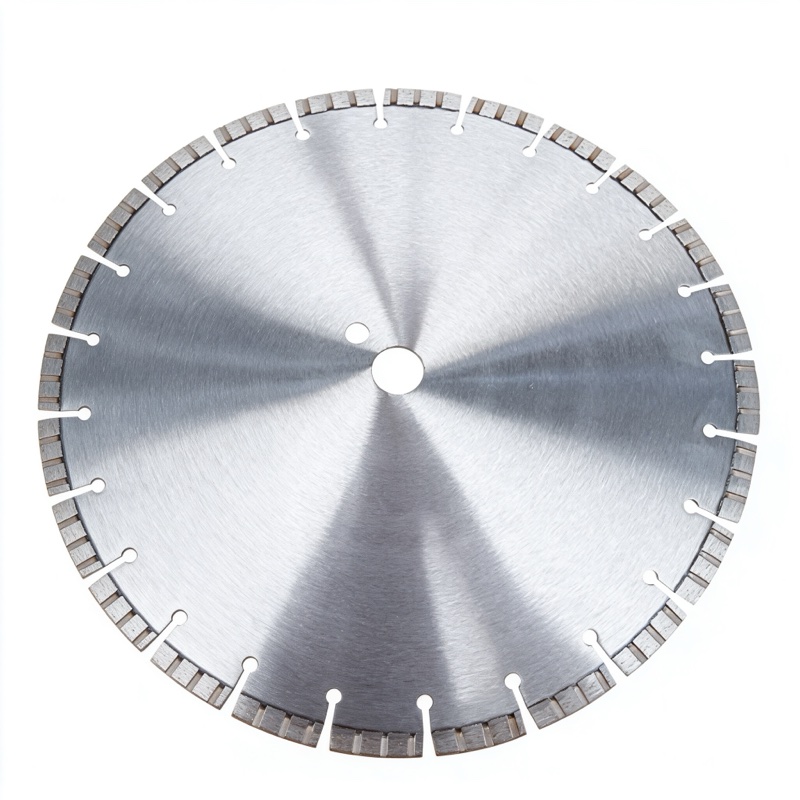
Quick Answer: A diamond blade can cut roughly one-third to half of its diameter in a single pass because the motor, arbor, and blade guard limit how much of the blade reaches the material. A 350 mm blade cuts about 120 to 140 mm deep; a 450 mm blade about 180 to 200 mm. For thicker sections you make multiple passes or step up to a larger saw.
The maximum depth of cut is set by the saw design, not just the blade. Hand-held saws expose less blade because the guard sits close to the work, usually giving about 40 percent of blade diameter. Walk-behind and rail saws expose more, closer to half the diameter. So the practical answer for any machine is: check the saw's stated cutting depth, then buy the largest blade the saw accepts to get the deepest single pass.
Choose the blade diameter the saw is designed for; oversize blades over-speed and can shed segments, while undersize blades rob you of depth. A laser-welded concrete blade handles deep, abrasive cuts, and a high-horsepower blade suits large walk-behind machines. On hand-held saws, keep to the blade sizes marked on the guard and never fit a larger blade to chase depth.
When the section is thicker than one pass, cut a shallow slot first, then lower the depth stop and make a second or third pass over the same line. Each pass deepens the kerf by the blade's exposed depth. Keep the guide aligned so the passes stack exactly, and let the blade cool between passes on long cuts. For slabs thicker than about 200 mm, a wire saw or a larger floor saw is usually faster and safer than fighting a small machine.
Never remove the blade guard to gain depth, never force the saw into a stalled cut, and stop if the blade begins to whip or overheat. Check the blade for cracks or missing segments before deep cuts, since a deep kerf holds the blade tight and a weak blade can bind and kick back. On wet saws, confirm the water reaches the full depth of the cut to keep the core cool.
An 180 mm blade on a typical hand-held saw cuts roughly 60 to 70 mm in one pass. Use it for scoring and shallow work, and switch to a larger saw for full-depth cuts.
Yes, with multiple passes from both sides or by stepping the depth stop, but it is slow and hard on the blade. A rail saw or wire saw is the better tool for structural sections that thick.
Work within the blade-to-saw depth limits: check the machine's cut depth, use the largest rated blade, and plan multiple passes for thick sections. A well-matched concrete blade cuts safely and quickly when you respect the geometry of the saw.
Written and reviewed by JOY TECH — an SGS & BV audited, CE/RoHS certified diamond tools manufacturer founded in 2004, exporting to 50+ countries.
Our factory and QMS are audited by SGS and Bureau Veritas. Products meet CE/RoHS requirements and every piece is 100% inspected before packing.
Verified Certificates
