Average response time: under 24 hours
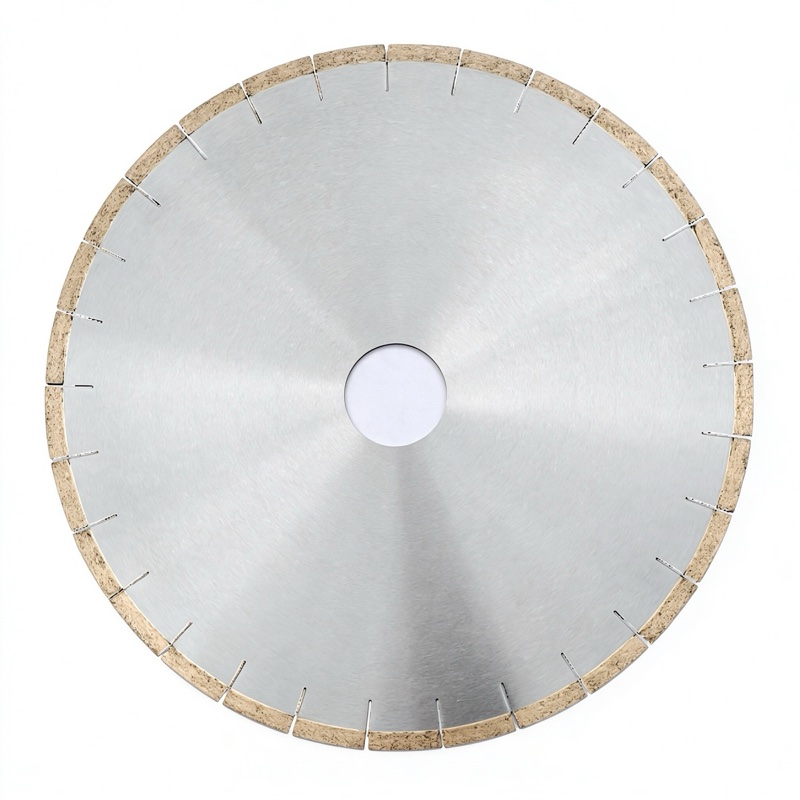
Cut thick concrete in 30 to 50 mm per pass, raising the blade a little each time until you reach full depth, rather than trying to plunge to the bottom in one go. A 450 mm blade on a walk-behind floor saw reaches about 160 mm, so a 250 mm wall footing needs four to six passes. Match blade diameter to depth: a 600 mm blade is the minimum for a 300 slab, and you still cut it in passes. One deep pass binds the blade, overheats the core, and is the number one cause of segment loss.
When you plunge a blade to full depth in hard concrete, the contact area between segment and wall of kerf jumps at once. The saw cannot walk forward, the operator pushes harder, the core heats, and the steel loses tension. The blade then pinches in the kerf and either stalls the saw or pops a segment. In a multi-pass cut, the kerf is already open, so each new pass sees only the bottom 30 mm and the side walls are air.
Thick sections almost always contain rebar or mesh. A shallow pass cuts rebar at its center, where the diamond grit can bite; a deep pass tries to grind a long bar at once and accelerates wear. Plan your pass count from the deepest reinforcement layer so you meet the rebar at a controlled depth, not by surprise.
The blade diameter must exceed twice the desired cut depth plus the arbor offset. For 250 mm slabs, start at 600 mm; for 400 mm footings, run an 800 mm blade on a high-horsepower saw. A JOY LW-HH high-horsepower laser-welded blade is built for deep reinforced cuts and keeps segments under load where general-purpose blades would lose segments.
Set up for thick sections in this order:
After the final pass, clear the kerf with a trowel and inspect the bottom. If a few centimeters of uncut concrete remain in the center, that is normal; a sledge and a crowbar will break the web once the sides are free. For neat openings in finished floors, finish the last few millimeters by hand with a small saw rather than cracking the web.
A blade's rated depth is the distance from rim to arbor, but practical cutting depth is about one third of blade diameter. A 450 mm blade cuts 150 mm, not 225 mm, because the flange and guard eat the middle. Size the saw from the practical number, not the catalog headline.
Walk at 0.3 to 0.6 meters per minute on reinforced thick sections, slower than a thin slab. The saw will tell you: if the engine labors or the cut slows, you are asking too much per pass. Drop back a size and take one more pass; it is faster overall than fighting a bound blade.
Another trap is cutting a square-ended recess all the way to full depth from one side. The trapped concrete in the corner can pinch the blade; always cut the perimeter first, then the interior web, so the waste has somewhere to fall.
Check arbor flange cleanliness, torque the nut, and run the saw idle for a minute to confirm no wobble. On deep cuts, plan for slurry control: thick cuts move twice the water and three times the sludge of thin ones. Compare diameters and bonds across the diamond blade range before you rent the saw, because the saw and blade must be matched.
If you are cutting unusual depths, hard aggregate, or heavily reinforced walls, tell us the slab mix and rebar spacing through our contact page; we will recommend a blade diameter and bond that finish the job without mid-cut segment loss.
Written and reviewed by JOY TECH — an SGS & BV audited, CE/RoHS certified diamond tools manufacturer founded in 2004, exporting to 50+ countries.
Our factory and QMS are audited by SGS and Bureau Veritas. Products meet CE/RoHS requirements and every piece is 100% inspected before packing.
Verified Certificates
